A Setup-and-Trap Move Mayor-Elect Mamdani Must Avoid: “Arresting Netanyahu” — While the Urgent Work Is Expanding NYC’s Best Educational Practices to All Children
The devil is not just a master liar; he is also a master distractor.
“STAY FOCUSED!”
How many times have my former high school students heard me boom that request somewhere in the school building? Perhaps one of my young tenth-grade charges was utterly convinced they had met their forever soulmate—only for that “eternal love” to fade by the time they reached the eleventh grade. Or maybe a student was self-destructively over-focusing on a teacher’s personality, instructional style, or course requirements, instead of centering their attention on the curriculum knowledge and skills they needed to acquire.
My response in all of these scenarios was always the same: Stay focused on what is essentially important. Present academic performance. Promotion to the next grade. Earning the highest-quality graduation designation possible. Creating multiple meaningful, purposeful, and rewarding post-graduation pathways.
Anything else is a distraction.
If I were in the mayor-elect’s place, I can imagine hearing Pauline Johnson offer one of her Caribbean mother’s standard lines of inquiry—only this time, as she often does now, from heaven:
“Why are you focusing on Mr. Netanyahu and not on yourself—and, more importantly, on what God has sent you to do on this earth!”
If Mr. Mamdani’s supporters truly want him to succeed on behalf of so many disenfranchised New Yorkers—and in my particular case, I desperately want him to succeed in raising the academic success possibilities for the majority of NYC’s children, many of whom presently live on the underperforming side of the NYCDOE ledger—then we must grant him the grace and space to step back from this “arresting Netanyahu” foolishness. Nothing good or productive for a new mayoralty can come from it. In fact, that entire distraction is designed to feed the beastly political machine already organizing to turn the Mamdani’s tenure as mayor into a tragic failure.
As a principal, I always warned students that the so-called “friends” who eagerly offer to hold your coat before you fight on Flatbush Ave or Benning Rd are not your friends. And I guarantee you—they won’t volunteer to sit in solidarity with you when you face your judgment in my office.
I also remember warning myself when I became a principal: “You can no longer talk about the ‘educational system’ or the ‘school administration.’ You are the system, and you are the school administrator.” And upon becoming a superintendent, I could no longer complain about this or that district policy—for now, I was the chief policy-maker of a district.
An important reading from my Bed-Stuy St. Augustine Young Fellowship class came rushing back to me:
“When I was a child, I spoke as a child, I understood as a child, I thought as a child: but when I became a man, I put away childish things.”
It is very easy, when you are not responsible for real people, to throw rhetorical rocks at “the system.” But what happens when you are placed in a position of authority within that very system? Suddenly, the language you used as an outsider-agitator, opposition-movement person won’t work once you hold the reins of power. Because real citizens expect real—not symbolic—acts that will improve the quality of their lives and, in my primary concern, the quality of their children’s future lives.
Just to be clear: unfortunately, the world is filled (I’ve got a long list covering multiple continents) with international leaders who justifiably should be arrested. So, is New York City’s mayor now responsible for arresting them all?
Furthermore, as the host city of the United Nations (UN), it should be obvious that the responsibility for arresting “bad leaders” is both impractical and, on some level, violates the rules and diplomatic norms governing the UN. Those rules exist because the international community must monitor, sanction when necessary, and directly negotiate peace-making agreements—even with the most reprehensible leaders—who must still be able to present themselves and be held to account.
NYC can’t have it both ways. We can’t proudly claim to be the great world-class city that houses the historic and globally significant UN—where all of us excited schoolchildren once went on class trips—and at the same time suggest that the mayor should run around the city chasing misbehaving presidents and prime ministers. Really? Because, as I stated earlier, that list would be extremely long, politically explosive, and practically unmanageable.
Further, as any elder old-school Brooklynite has already figured out, this “arresting Netanyahu” idea is a mission-killing setup and trap. Imagine if the prime minister of any nation—India, Great Britain, Denmark, take your pick—were arrested by a New York City mayor. Such a reckless act would instantly trigger a major international and national crisis, one that would consume all of the mayor’s leadership time and energy. And in this particular case, it would unleash an unbelievable amount of internal citywide trauma-drama. It would be nothing short of an unforced political error of historic proportions—an act of serious dereliction of responsibility that would deeply harm those New Yorkers who are suffering the most and who desperately need a laser-focused, morally anchored City Hall administration.
We can already see the outline of this doomsday playbook. Look at how the present mayor, Mr. Adams—acting in one of the most irresponsible and unethical ways imaginable—advanced the false and dangerous idea that children of a certain religious group would be unsafe under a Mamdani administration. And this from someone who, as a former police officer, knows perfectly well that the largest and most vulnerable groups most likely to suffer targeted or random acts of violence in NYC are Black and Latino people, Black and Latina women, and Black and Latino young people.
The mayor-elect should Stay Focused on making NYC schools a model of a system that truly integrates all of its students—not just the lucky, zip-coded few—into some of the greatest educational ideas, projects, programs, and schools in the world. Also, our children are surrounded by one of the richest concentrations of informal educational resources imaginable: museums, libraries, cultural institutions, scientific centers, and artistic enterprises that exist in no other city at this scale.
History teaches us, sadly, that the Netanyahus of the world will come and go. But with the tremendous power the mayor holds to shape the Pre-K–12 landscape, his greatest contribution will not be as an arresting agent of world leaders, but as an agent of hopeful change—someone with the capacity to flood the world with large numbers of well-educated, highly moral, deeply compassionate young people who are sincerely committed to seeking peace with their fellow human beings.
That has always been my educational response to the bad actors of this world:
“I’ll just make more good-acting people in the world.”
Whenever we find ourselves arresting badly acting adults—whether they are prime ministers committing genocidal acts on civilians or inmates on Rikers Island who hit someone over the head to rob them—remember that both types of acts require the perpetrators to first dehumanize their victims. And that, tragically, means that we as a community of parents, elders, adults, and educators collectively failed them during that precious window of opportunity when values and virtues should have been taught, modeled, and nurtured in their childhood.
Ultimately, the work—what many say is the second-hardest job in America—before Mayor-Elect Mamdani is not to symbolically police the world’s misbehaving leaders but, in my prioritized thinking, to profoundly transform the daily lived experiences of New York City’s schoolchildren.
His mandate is to make this city a place where every child—regardless of race, religion, language, disability status, immigration background, or zip code—has access to the highest levels of academic excellence and human flourishing. That is the real fight.
That is the arena where a mayor can change the trajectory of generations. If he stays focused, resists the traps set by those who prefer spectacle over substance, and grounds his administration in moral purpose and educational justice, then his mayoralty can become a beacon—not of arrests—but of uplift, of opportunity, and of hope. And that, more than anything else, is the kind of leadership this moment demands.
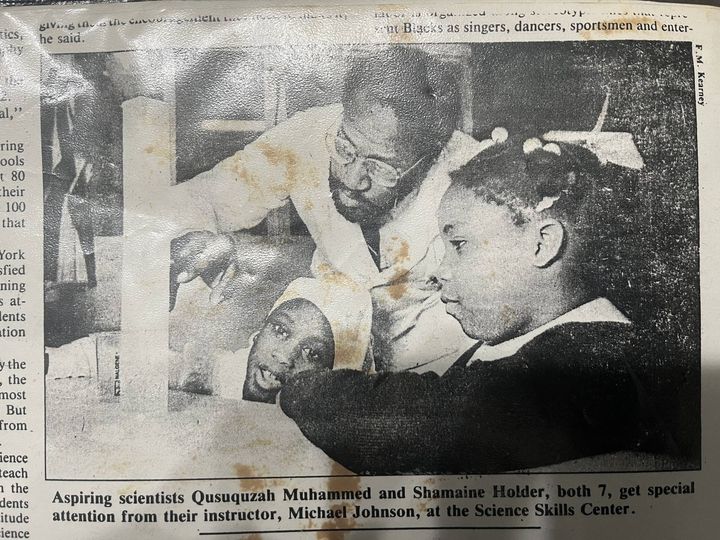
Michael A. Johnson is a former NYC public school teacher, principal, and superintendent, and formally an adjunct professor of science education, the author of two books on school-building leadership. His lifelong work focuses on building just, high-quality learning environments for all children—especially those who have been systemically underserved.