What Would It Mean to “Govern Expansively and Audaciously” in NYC Public Schools?

“…In writing this address, I have been told that this is the occasion to reset expectations, that I should use this opportunity to encourage the people of New York to ask for little and expect even less. I will do no such thing. The only expectation I seek to reset is that of small expectations. Beginning today, we will govern expansively and audaciously. We may not always succeed. But never will we be accused of lacking the courage to try.…A moment like this comes rarely. Seldom do we hold such an opportunity to transform and reinvent” — Excerpt from Mayor Zohran Mamdani’s inauguration speech.

Like many who listened to the newly sworn-in NYC mayor’s inaugural address, I felt both inspired and hopeful about what governing expansively and audaciously could mean for New York City’s children, particularly those who, mayor after mayor, still find themselves, to borrow from my former Columbia University Revson Fellowship mentor Eli Ginzberg, receiving the “short end” of the learning-quality stick.

As I have written previously (Winning NYC’s Affordability Fight Is Impossible Without Public School Accountability), closing New York City’s affordability gap is inseparable from closing its persistent teaching and learning quality gaps. Demographic reality makes clear that large-scale student reassignment schemes, based on race, often offered as morally deficient, and politically placating shortcuts, are neither mathematically feasible nor educationally responsible. There simply are not enough white students to redistribute, and such efforts would create a busing and public-transportation nightmare that would dismantle many great after-school programs, academic teams, athletic sports, and enrichment opportunities that currently sustain learning communities across more than 1,500 NYC schools.

From my eleven years as a Title I high-school principal, one conclusion is unavoidable: the fastest and most durable way to break generational cycles of poverty and despair, and to create genuine generational quality-of-life leaps opportunities, is for public education to do its most fundamental job well. That job is not symbolic integration or rhetorical reassurance, but the creation of learning environments where every child’s intellectual potential is deliberately surfaced, developed, and honored.

Closing the quality learning-opportunity gap is the unfinished, and most fiercely resisted, descendant of the 1954 Brown v. Board of Education decision. Brown did not merely challenge where Black children sat; it also challenged whether the nation would finally accept responsibility for how well Black children were being educated. It is true that separate was never intended to be equal, and that one of the tragic byproducts of so-called “integration” was the elimination of vast numbers of highly competent and highly efficacious Black teachers and school administrators.
What followed was not the end of educational segregation, but its reinvention. Society devised new, evilly ingenious ways to separate Black students from quality education, constructing parallel systems in the same districts and school buildings, that preserved inequality, low expectations, while cloaking it in the language of progressive education.

These systems remain firmly in place, even in the most liberal and bluest of states, including New York. The moment therefore demands a modern, updated Brown movement, one that confronts and dismantles this contemporary form of quality-learning segregation. Any substitution of that real instructional transformation with rhetorical flourishes or “magical” (often costly) initiatives merely extends the present status quo under a different name.

This leaves NYC elected officials and professional educators with a clarifying question they can no longer avoid: if we truly believe there is nothing wrong with the learning capacity of Black and Latino children, yet their academic outcomes consistently fall far short of their potential, then what are we doing wrong in how we organize, resource, conduct and lead schools, and why do we citizens tolerate this massive loss of societal intellectual wealth?
And if, instead, we quietly believe that race, poverty, immigration status, neighborhood conditions, parental education levels, or English-language fluency permanently limit a child’s educability, then professional honesty demands disclaimers. Parents and taxpayers deserve to be told outright that if your child falls into the “wrong” ZIP code or demographic category, the system cannot deliver on its promise to properly educate them.
After all, no rational consumer would purchase a kitchen appliance if the manufacturer warned in advance that there was a 70 percent chance it would fail the moment it was plugged in. Yet we, as citizens, have grown disturbingly numb to the unacceptable terrible outcomes of one of our most expensive, and consequential, civic undertakings: public education.

We already know multiple ways how to effectively educate all children. When we fail to do so, that failure is not pedagogical—it is political.

A physically easier way to avoid a massive school integration busing nightmare, at far less educational and financial cost, though unquestionably a more politically dangerous path; would be to mandate and declare the NYCDOE a Children-First Learning and Adult Accountability Priority Zone. Having served for many years as both a principal and a superintendent in New York City, I understand the extraordinary courage such a declaration would require. I know the system’s ugly undersides. I know the deeply entrenched political forces that have created, and continue to maintain, our present learning-quality apartheid system.

Which is why, if you encounter a principal leading a consistently high-performing Title I school, you should probably buy them a gift card, or a lottery ticket. For, their calm exterior often conceals the daily accumulation of emotional scars earned by serving as a constant rule-breaking and rule-bending counterforce within a system that routinely undermines its own stated mission: educating all children.

These leaders succeed not because the system supports them, but because they are willing to absorb personal, professional, and moral risk on behalf of children.
So when I return to the mayor’s speech and hear the word expansively used in connection with public education, I hear more than rhetorical flourish. I hear the possibility of a governing posture defined by spacious capacity, by a purposeful, strategic inclusion of all children. I hear a commitment that no cohort of students will be excluded from the city’s rich ecosystem of informal learning institutions, cultural resources, and enrichment opportunities. I hear an expansiveness of heart rooted in a moral responsibility to future generations, not merely political viability in the present.

I also share a biographical bond with both the new mayor and his chancellor. As a first-generation Caribbean American, I—like them—am living testimony to the power of education to make the highest promise of this nation real. What drew me, as a young college student in the 1970s, toward a life in professional education was an internal, largely unarticulated conviction that transcends policy and politics: the idea that every child enters the world with inherent worth and untapped potential, and that society bears a sacred obligation to cultivate those gifts rather than squander them.

Public education, at its best, is not merely a workforce pipeline, or, tragically for too many, an incarceration pipeline, it is a moral undertaking, a collective act of faith in human possibility, and a covenant with generations yet to come.

But if expansively signals intentional, ethically mandated inclusion; audaciously signals courage, real courage, untainted by a stage magician’s illusionary distractions.
Audacity is what it looks like when civic, religious, political, and educational leaders fully understand the cost of acting and doing what’s right and then act anyway. It is Harriet Tubman courage. It is Dietrich Bonhoeffer courage. It is Nelson Mandela courage. It is the recognition that once you cross the rubicon of righteous responsibility, there is no turning back, no compromise deal to be struck, no rhetorical cover to be offered for systems that continue to produce educational suffering while claiming it’s reform.

We already know how to effectively educate all children; there is ample evidence to tell us exactly what it would take to achieve that objective. When we nevertheless choose not to educate large numbers of children, that failure is political and ethical, not experientially educational. For example, we know we must address the negative “tipping-point” concentration of inexperienced teachers, the related chronic teacher-turnover problem in high-poverty (Title I) schools, and the blatant disconnection of our most highly experienced, mastery-level instructional practitioners from our most academically struggling students.

To govern expansively and audaciously in NYC public schools would mean declaring, without hesitation, without ineffective initiatives, and without recycling public education’s familiar “greatest hits” of verbal vacillations; that children’s learning is the city’s first priority, even when doing so is politically dangerous, professionally career-threatening, and morally challenging.

It would also require the NYCDOE to confront two decisions it has long avoided. First, whether the purpose of public education, like too much of our criminal-justice system, has been reduced to employment acquirement and containment compliance, rather than human healing, intellectual development, and democratic evolution. Second, whether the system is finally willing to acknowledge that ground zero of any serious, system-wide quality-learning improvement effort is the individual school building itself. That acknowledgment would demand granting principals and their school-based leadership teams, real staffing authority, adequate and stable resources, and sustained professional development so they can become highly valued and highly effective school-building leaders, and then holding them to uncompromising, no-excuses, compelled to pursue high standards for the academic performance success of all students under their charge.

Expansive governance means standing with principals who succeed only by bending and breaking rules in a system that routinely undermines its own stated mission, extending the full reach of the city’s cultural and learning institutions to every child, and rejecting cowardly thinking disguised as realism. Audacious leadership demands courage without illusion, the kind that understands there is no rhetorical compromise capable of justifying the continued educational suffering produced by present conditions.

History is unambiguous: those who acted audaciously knew there was no turning back, no big pay-day for children harming behaviors, no political deal to be struck, no softening narrative to be offered for injustice. We will soon learn whether these words, expansive and audacious, were merely elegant sounds delivered in a speech, or a governing promise finally kept for the most educationally disenfranchised and dismissed children of New York City.

Michael A. Johnson is a former NYC public school teacher, award-winning principal, and school district superintendent. A past adjunct professor of science education and the author of two books on school-building leadership, he writes frequently about educational equity, policy, authentic school improvement, and the moral obligations of those entrusted with the lives of children.

If the New NYC Mayor Truly Wants System-Wide Quality Learning, He Must See Through the Fog of the Fake “Class Size” Misdirection War

Ask any principal: “Is a class size of twenty students better than a class size of thirty students?” The answer you will probably get from most principals is, “Yes, absolutely!”—especially when class size impacts underperforming students and those who are struggling to meet conceptual and skills performance standards.

But then ask the question in a different way: “Would you rather have an experienced and proven master teacher teach a class of thirty students, or a less-than-stellar, not-meeting-the-instructional-quality-standards teacher instruct a class of twenty students?” You might get a different answer—and I know which option I would, and did, take.

As a high school principal, in organizing two departmental courses—9th-grade Algebra and 9th-grade English Language Arts—I placed my “weakest” students (based on transcript and 4th/8th-grade standardized testing scores) in classes of twenty with some of the strongest and most masterly skilled teachers; and I offset the cost by programming larger student class-size numbers in my advanced junior–senior-level classes and in my Advanced Placement (AP) courses.

So, I am the last to say that class size does not matter, because from a principal’s strategic vision to make it possible for all students to succeed in a system structured to only make a few entitled students academically successful, one of those leadership tools that must be used is to absolutely manipulate class size—and it works—as was reported in The New York Times (“Scores Count,” Sara Mosle, September 8, 1996), where a former student who was interviewed was from that coming-from-middle-school, underperforming and below-grade-level cohort; that student went on to take Physics and other advanced courses as a senior.

Therefore, strategically and contextually, class size will always matter, but it should never be considered a substitute for high-quality instruction and dedicated, efficacious practices.

This politically popularized, but pedagogically shallow and falsely binary, “either/or” framing of the class-size question is beneath serious professional debate and actively undermines the learning needs of real students in real schools. Well-informed policymakers and professional educators should instead be engaged in a rigorous, system-level conversation about how class size is deployed strategically—by different schools, grade band, subject area, academic course requirements (e.g., CTE classes), developmental psychology, student need, instructional capability strength, and the overarching school mission—across the entire PreK–12 continuum.

This standardized political approach of, “Well, we don’t know what to do, so let’s just do something that sounds right—and that we can sell to parents and taxpayers as if it will truly and significantly raise student academic achievement,” when in fact these chronically ineffective actions only succeed in wasting a great deal of money (millions) and squandering the precious learning windows of opportunity for thousands of children at all academic performance levels.

With every new mayoral change, the consultants, educational businesses, and those lobbying for someone other than children—who have no lobbyist—come out of the woodwork to “love bomb” and create a fog of confusion around the new mayor, all claiming that what they want (as opposed to what they really want and won’t say, which is a lucrative contract or more dues-paying members) is in the best interest of children, when what they want has no intention of helping children—especially those children in the city who will benefit the least, or not at all, from these expensive but useless initiatives.

Many (I won’t name them out of respect for the very dedicated employees involved) Title 1 school districts—destinations North, South, East, and West in our country—have some of the lowest class-size numbers in the nation; and yet these very high per-pupil-allocation districts don’t see their lower class sizes translate into higher academic-achievement performance, particularly for their most (usually the majority) politically disenfranchised children of color. We can’t blame this on direct racism, although an indirect neocolonial case could be made, because the primary governance officials—the local, state, and federal elected officials, and the district and school administrators—primarily share the same racial and cultural heritage as the vast number of chronically underreaching proficiency-level students. So, what’s up with that?

In the electoral-political sphere, it’s the economy (affordability); in public education, it’s the quality of instruction!

No school or school district (and the New York City Department of Education is technically a school district) can create significant, demonstrative, all-lives-changing, and sustainable high student academic performance—and I’m not talking about the press-kit fiddling with a few percentage-point “improvements” generated by averaging the higher-performing students with the lowest-performing students (like averaging my salary with Jeff Bezos’s salary and then calling me a multi-millionaire)—without establishing an extensive culture of high levels of instructional quality that the child receives year-grade after year-grade and when moving from class to class in middle and high schools.

I am hoping—and every speech I have heard from Zohran Mamdani suggests that my hope is not in vain—that he is smart enough to ignore the peddling pedagogical merchants who want to enrich themselves and not the educational experience of children. Many of these undereducated children are the very ones most in need of a high-quality public educational experience to break them out of a generational cycle of poverty and disappointment.

I am also betting my hope on the fact that two schools Mr. Mamdani attended, and that I visited several times—Bank Street School for Children and The Bronx High School of Science—were schools where the City’s elected officials, parents, school administrators, and the governing oversight bodies had little tolerance for a second-rate, not-properly-preparing-students-for-the-next-level, and terribly inferior educational learning climate. These two schools efficaciously did whatever it took to make their students successful.

Once, a NYC Specialized High School (SHS) principal colleague/friend called me about an African American teacher I was mentoring and had written a letter of recommendation for, who was now seeking a transfer from her present Manhattan high school to the SHS. The principal asked, “She is a great teacher, but does she know what she is in for?” The principal did not need to explain what that “what she is in for” statement meant, because I had already met with the teacher and had a keeping-it-real-honest conversation where I explained, “You will need to operate at your A+ level best every day of school, because those SHS parents are very politically connected, so there is no space for you to show up one day and think you could just ‘phone it in’ with these students” (not that I thought she ever would, but I wanted us to be clear-eyed about this SHS transfer she was seeking). And so, I explained that although she was technically tenured, no labor contract would protect her if she did not teach, as she now does, at a mastery level.

If Mayor-Elect Zohran Mamdani can simply focus on the types of schools he attended—schools that represented excellent, innovative instructional practices, high expectations for students, and an efficacious teaching model—as a standard offering for every NYC child, then the deceiving or misinformed “class size” whisperers will be ignored and will go away, allowing him to embark on an uncompromising pursuit of realizing school-system-wide instructional excellence.

If the new mayor truly wants system-wide quality learning, he must concentrate on the one policy lever that actually moves student achievement: sustained and high levels of instructional excellence in every classroom. That requires rejecting the fog of the fake “class size” misdirection war and instead embracing the school-cultural imperatives that guide places like the Bank Street School for Children, The Bronx High School of Science, and other NYC Specialized High Schools, and programs that demand, expect, and protect rigorous, next-level-preparing teaching every single day. Their leaders and parents do not tolerate weak instructional products, excuses, or adult-centered diversions, because they operate from a clear ethical directive: children deserve the best, and only the best, educational product we can provide.

If the mayor adopts that same standard for all of NYC’s children, the class-size-type distractions will fall away, the fog will lift, and the city can finally begin the urgent work of building a school system defined not by slogans or classroom seating gimmicks, but by real instructional excellence and authentic student success.

Michael A. Johnson is a former NYC public school teacher, award-winning principal, and school district superintendent. A past adjunct professor of science education and the author of two books on school-building leadership, he writes frequently about educational equity, policy, authentic school improvement, and the moral obligations of those entrusted with the lives of children.
Those Who Wanted a Mamdani–Trump Fight Reveal Their True Priorities—And NYC’s Children Aren’t Among Them

Somewhere around my third year as a principal, I vowed to stop saying, “Now I’ve seen everything!” I’m glad I made that vow, because even in my 11th and final year, I left the principalship still being surprised—by the amazing events, both good and bad, that can unfold when leading an urban high school.

So here I am in my 75th year, watching C-SPAN, and I don’t think I’ve ever seen a POTUS throw both the GOP and the DNC under the bus at the same time, in the same press conference.

I can only imagine what some Republicans must be thinking as they watch the same broadcast: “Wait… I built my entire present or future election/reelection campaign on ‘otherizing’ Mr. Mamdani—playing to anti-people-of-color biases, Muslim prejudice, and the widespread ignorance about the difference between communism and democratic socialism (see: https://majmuse.net/2025/11/10/why-so-many-u-s-high-school-graduates-cant-tell-the-difference-between-democratic-socialism-and-communism/). And here is the head of our own party offering praise, adulation, and promises of support for the very man we hoped to demonize.”

And then you had their fellow Democratic Party “under-the-bus mates,” who twisted themselves into knots trying to play the part of the cowardly lion—running away from Mr. Mamdani—only to hear the leader of the opposition party they claim to despise praise Zohran as rational and admirable. No name-calling. No ridicule. No dismissive put-downs. Meanwhile, these DNC folks literally sprinted in the opposite direction of their own constituents, even allowing themselves to be goaded into voting for that ridiculous “anti-socialism” bill, without a moment’s thought about how deeply it would offend many of our closest allies—Finland, Sweden, Switzerland, Denmark. Did these folks skip their high school civics course, or was it simply taught badly? Yes: forms of democratic governance and extensive democratic-socialism systems can coexist—in the same nation, at the same time, without contradiction.

A Large Part of Public Civil-Service Leadership is Taking Responsibility for Real People

Every school-district superintendent knows that nothing good for children can emerge from a public fight with a city, county, or state chief executive. Your first duty as a superintendent is to ensure that no physical, emotional, or educational harm comes to the children under your care. And that means avoiding reckless provocations of those in power—especially individuals who possess the authority to directly or indirectly harm your students. Responsible leadership requires strategic restraint, wise words, not performative bravado.

Mr. Mamdani, soon to be responsible for eight million people, was vocabulary, tone, and pitch-perfect on point, and, interestingly, so was Mr. Trump. Both men demonstrated the discipline to stay on message despite the press gaggle’s repeated invitations to “hold their coats” in hopes of witnessing, and reporting on, an Oval Office brawl. I’ve warned students for years: anyone eager to hold your coat while you fight is not your friend. And the same holds true for those on both ends of the political spectrum who were rooting for a rumble in the White House.

Mr. Mamdani, and, in fairness, Mr. Trump as well (I must “tell the truth and shame the devil”), modeled what strong school-based and district-level leaders do every day: stay focused on the work of making the present world better for young people while preparing them to create a better future.

Those of us who have spent many years working in NYC schools understand the immigration documentation and legal-residency challenges faced by countless numbers of NYC students and their families.

If you, as I have, have ever had a crying 12th-grade honor-roll, model student sitting in your office while you work with lawyers, immigration officials, a U.S. Senator’s office, and the State Department to figure out how to help that student realize a well-deserved college dream, trust me—those moments, and the ultimate victories, never leave your memory. If Mr. Mamdani can buy those wonderful young people and their families some desperately needed time, then his trip to Washington, and the intelligently dignified way he conducted himself, was unquestionably worth it.

Michael A. Johnson is a former NYC public school teacher, award-winning principal, and school-district superintendent. A past adjunct professor of science education and the author of two books on school-building leadership, he writes frequently about educational equity, policy, authentic school improvement, and the moral obligations of those entrusted with the lives of children.

A Setup-and-Trap Move Mayor-Elect Mamdani Must Avoid: “Arresting Netanyahu” — While the Urgent Work Is Expanding NYC’s Best Educational Practices to All Children

A Setup-and-Trap Move Mayor-Elect Mamdani Must Avoid: “Arresting Netanyahu” — While the Urgent Work Is Expanding NYC’s Best Educational Practices to All Children

The devil is not just a master liar; he is also a master distractor.

“STAY FOCUSED!”
How many times have my former high school students heard me boom that request somewhere in the school building? Perhaps one of my young tenth-grade charges was utterly convinced they had met their forever soulmate—only for that “eternal love” to fade by the time they reached the eleventh grade. Or maybe a student was self-destructively over-focusing on a teacher’s personality, instructional style, or course requirements, instead of centering their attention on the curriculum knowledge and skills they needed to acquire.

My response in all of these scenarios was always the same: Stay focused on what is essentially important. Present academic performance. Promotion to the next grade. Earning the highest-quality graduation designation possible. Creating multiple meaningful, purposeful, and rewarding post-graduation pathways.
Anything else is a distraction.

If I were in the mayor-elect’s place, I can imagine hearing Pauline Johnson offer one of her Caribbean mother’s standard lines of inquiry—only this time, as she often does now, from heaven:

“Why are you focusing on Mr. Netanyahu and not on yourself—and, more importantly, on what God has sent you to do on this earth!”

If Mr. Mamdani’s supporters truly want him to succeed on behalf of so many disenfranchised New Yorkers—and in my particular case, I desperately want him to succeed in raising the academic success possibilities for the majority of NYC’s children, many of whom presently live on the underperforming side of the NYCDOE ledger—then we must grant him the grace and space to step back from this “arresting Netanyahu” foolishness. Nothing good or productive for a new mayoralty can come from it. In fact, that entire distraction is designed to feed the beastly political machine already organizing to turn the Mamdani’s tenure as mayor into a tragic failure.

As a principal, I always warned students that the so-called “friends” who eagerly offer to hold your coat before you fight on Flatbush Ave or Benning Rd are not your friends. And I guarantee you—they won’t volunteer to sit in solidarity with you when you face your judgment in my office.

I also remember warning myself when I became a principal: “You can no longer talk about the ‘educational system’ or the ‘school administration.’ You are the system, and you are the school administrator.” And upon becoming a superintendent, I could no longer complain about this or that district policy—for now, I was the chief policy-maker of a district.

An important reading from my Bed-Stuy St. Augustine Young Fellowship class came rushing back to me:

“When I was a child, I spoke as a child, I understood as a child, I thought as a child: but when I became a man, I put away childish things.”

It is very easy, when you are not responsible for real people, to throw rhetorical rocks at “the system.” But what happens when you are placed in a position of authority within that very system? Suddenly, the language you used as an outsider-agitator, opposition-movement person won’t work once you hold the reins of power. Because real citizens expect real—not symbolic—acts that will improve the quality of their lives and, in my primary concern, the quality of their children’s future lives.

Just to be clear: unfortunately, the world is filled (I’ve got a long list covering multiple continents) with international leaders who justifiably should be arrested. So, is New York City’s mayor now responsible for arresting them all?

Furthermore, as the host city of the United Nations (UN), it should be obvious that the responsibility for arresting “bad leaders” is both impractical and, on some level, violates the rules and diplomatic norms governing the UN. Those rules exist because the international community must monitor, sanction when necessary, and directly negotiate peace-making agreements—even with the most reprehensible leaders—who must still be able to present themselves and be held to account.

NYC can’t have it both ways. We can’t proudly claim to be the great world-class city that houses the historic and globally significant UN—where all of us excited schoolchildren once went on class trips—and at the same time suggest that the mayor should run around the city chasing misbehaving presidents and prime ministers. Really? Because, as I stated earlier, that list would be extremely long, politically explosive, and practically unmanageable.

Further, as any elder old-school Brooklynite has already figured out, this “arresting Netanyahu” idea is a mission-killing setup and trap. Imagine if the prime minister of any nation—India, Great Britain, Denmark, take your pick—were arrested by a New York City mayor. Such a reckless act would instantly trigger a major international and national crisis, one that would consume all of the mayor’s leadership time and energy. And in this particular case, it would unleash an unbelievable amount of internal citywide trauma-drama. It would be nothing short of an unforced political error of historic proportions—an act of serious dereliction of responsibility that would deeply harm those New Yorkers who are suffering the most and who desperately need a laser-focused, morally anchored City Hall administration.

We can already see the outline of this doomsday playbook. Look at how the present mayor, Mr. Adams—acting in one of the most irresponsible and unethical ways imaginable—advanced the false and dangerous idea that children of a certain religious group would be unsafe under a Mamdani administration. And this from someone who, as a former police officer, knows perfectly well that the largest and most vulnerable groups most likely to suffer targeted or random acts of violence in NYC are Black and Latino people, Black and Latina women, and Black and Latino young people.

The mayor-elect should Stay Focused on making NYC schools a model of a system that truly integrates all of its students—not just the lucky, zip-coded few—into some of the greatest educational ideas, projects, programs, and schools in the world. Also, our children are surrounded by one of the richest concentrations of informal educational resources imaginable: museums, libraries, cultural institutions, scientific centers, and artistic enterprises that exist in no other city at this scale.

History teaches us, sadly, that the Netanyahus of the world will come and go. But with the tremendous power the mayor holds to shape the Pre-K–12 landscape, his greatest contribution will not be as an arresting agent of world leaders, but as an agent of hopeful change—someone with the capacity to flood the world with large numbers of well-educated, highly moral, deeply compassionate young people who are sincerely committed to seeking peace with their fellow human beings.

That has always been my educational response to the bad actors of this world:

“I’ll just make more good-acting people in the world.”

Whenever we find ourselves arresting badly acting adults—whether they are prime ministers committing genocidal acts on civilians or inmates on Rikers Island who hit someone over the head to rob them—remember that both types of acts require the perpetrators to first dehumanize their victims. And that, tragically, means that we as a community of parents, elders, adults, and educators collectively failed them during that precious window of opportunity when values and virtues should have been taught, modeled, and nurtured in their childhood.

Ultimately, the work—what many say is the second-hardest job in America—before Mayor-Elect Mamdani is not to symbolically police the world’s misbehaving leaders but, in my prioritized thinking, to profoundly transform the daily lived experiences of New York City’s schoolchildren.

His mandate is to make this city a place where every child—regardless of race, religion, language, disability status, immigration background, or zip code—has access to the highest levels of academic excellence and human flourishing. That is the real fight.
That is the arena where a mayor can change the trajectory of generations. If he stays focused, resists the traps set by those who prefer spectacle over substance, and grounds his administration in moral purpose and educational justice, then his mayoralty can become a beacon—not of arrests—but of uplift, of opportunity, and of hope. And that, more than anything else, is the kind of leadership this moment demands.

Michael A. Johnson is a former NYC public school teacher, principal, and superintendent, and formally an adjunct professor of science education, the author of two books on school-building leadership. His lifelong work focuses on building just, high-quality learning environments for all children—especially those who have been systemically underserved.

For NYC Schools to Succeed for All Children, the New Mayor Must Heed the Experientially Wise Counsel of School-Building Supervisors and Administrators

One of the most important leadership decisions—and some would say the most important—made by a superintendent is the appointment of School-Building Administrators (SBAs), that is, school-based supervisors, assistant principals, and principals.

A school can survive a great many challenges and still thrive academically, but one thing it is very hard for any school to overcome is the presence of incompetent, unethical, or ineffective school leadership. That’s why the highest-performing—and most entitled—private and public schools invest so heavily in getting the principalship appointment decision right. They understand that a wrong decision can inflict severe and long-term damage on the future success of children and on the well-being of the staff entrusted with serving them.

This became shockingly clear to me when a group of parents from a specialized high school approached me quietly at a high school fair and asked if I would consider applying to replace their departing principal. It was evident that this majority-white parent group was not concerned about my being an African American; their sole focus was on securing the best possible educational opportunities for their children. I thanked them, told them I was honored by their confidence, but respectfully declined.

School-Building Leadership Matters. School-District Leadership Matters. School-System Leadership Matters. And the Quality of Children’s Futures Depends on All Three.

Needless to say, the SBA screening and selection process a superintendent employs must adhere to the highest standards of school-building leadership practices: professional knowledge, skills, competencies, ethical conduct, emotional steadiness, and sound temperament. But it is also a principled moral decision on the part of the superintendent—one that must place the emotional and educational well-being of children above all other considerations.

This is the same challenge that mayor-elect Zohran Mamdani now faces as he contemplates who he will select as the next NYC Chancellor. And the overarching question is this: Will his decision be driven primarily by future electoral values or ethical pedagogical values?

There are many essential questions that mayor-elect Mamdani must pose to prospective chancellor candidates, questions they must be able to answer not through rhetoric alone, but through demonstrated past actions that show a courageous commitment to just, equitable, significant, and sustainable school improvement that reaches every zip code and neighborhood in the city.

NYC’s most underserved and vulnerable students cannot endure yet another status-quo, “political favor” chancellor appointment. The parents of these students are desperately pleading for educational quality justice. Yet for too many years, these Black and Latino voices have been unable to reach the great halls of state and municipal power.

This newly elected NYC mayor has repeatedly promised to uplift the city’s least heard and most locked-out citizens. His chancellor selection offers him the opportunity to make good on those powerful, uplifting, and in the case of public education, children’s dreams lifting words.

If the next Chancellor cannot articulate a credible plan for producing equity, sustainable improvement, and system-wide instructional excellence, then they should not be hired.

Recently, when watching an interview with the mayor-elect and his designated first deputy mayor, Dean Fuleihan, I noticed that when the interviewer pressed them about “getting those hard policy things done,” they confidently affirmed their commitment and stayed on a positively focused message: “We are starting from a place of yes!”

NYC parents therefore have every right to expect that a “starting from a place of yes” philosophy in public education translates into a no-excuses approach—one that refuses to accept any rationale for why every NYC child cannot receive the highest-quality education available. The city needs a Chancellor who understands that educational justice and academic achievement are inseparable—and who can articulate concrete, actionable proposals rather than slogans.

After decades of uneven progress—progress often misleadingly claimed through statistically averaged performance scores that conceal the city’s academic underperforming deserts—only candidates willing to confront structural inequities with courage and competence deserve serious consideration.

The next NYC Chancellor must be prepared to disrupt and dismantle entrenched bureaucratic failures, not cosmetically repackage them. And they must accomplish this feat without lowering standards or punishing any students who are already performing at or above grade-level and at the highest academic achievement levels. Serving all students well, at every performance level, is the essence of educational leadership excellence.

For hundreds of thousands of children, the difference between a profound visionary, and serous actionary Chancellor and a status-quo manager is life-changing. And for entire neighborhoods, it can determine whether they experience long-denied generational-improvement leaps—an essential objective of public education—or continue to endure the recurring nightmare of Black and Latino community underdevelopment.

This moment should push both the mayor and his chosen Chancellor out of their “play-it-political-safe” comfort zone—and it should—because that difficult, truth-facing space is the only place where the children of disenfranchisement have any real chance of receiving the quality education they deserve.

Further, the mayor-elect’s chancellor choice will determine whether NYC schools move toward real improvement or drift deeper into the kind of performative reform that makes consultants rich while leaving most of the city’s children educationally poor.

The question is simple: Is this new administration prepared to lead on the issue of quality education for all, or are they merely prepared to talk about it?

If any prospective chancellor candidate’s interview with the mayor-elect falls back on the standard educational “throw-away” lines:

“It takes a village…”
(Let’s begin with the village’s professional educators doing their jobs—taking professional responsibility at a higher, better, and more effectual level.)

“All children can learn!”
(We already know that; the real challenge is how you actually make that happen with real children in real schools.)

“Children First!”
(That’s not going to happen in a system where children are too often placed second to satisfying adult employment needs.)

“Empower parents and teachers to have more say in the running of schools.”
(Often used as a good political soundbite—a faux-collaborative distraction trap that enables civic authorities and public-school leaders to abdicate any real responsibility for whether children learn. If everybody is responsible, then no one is responsible)

If these four, and similar sounding statements represent the type of oratorical drivel the mayor-elect hears from a chancellor candidate, then he should politely end the interview, thank them for their time, and move on. NYC’s school system is far too large and far too complex to waste time entertaining amateuristic pretenders. He should continue interviewing until he finds a serious candidate willing to risk everything—including political safety—to save children.

Explore All Avenues of Information and Knowledge—Not Just the Self-Serving and Politically Motivated Entitled

School-Building Administrators (Assistant Principals, Supervisors, and Principals) represent a critical catalytic force behind any academic improvement that happens inside a school—and therefore across the entire system. Thus, a central question becomes:
What is the new mayor’s plan to consult with, and incorporate the insights of, SBAs in his effort to make the NYCDOE a first-class educating system for all students—not only those from the city’s most entitled zip codes?

Will he include, as authentic partners, the Council of Supervisors and Administrators (CSA) in discussions around the chancellor selection, major policy decisions, or system-wide initiatives? SBA exclusion has been a painful issue for many school-based supervisors, assistant principals, and principals (myself included) for far too many years. Out of professionalism and commitment to their schools, SBAs have largely remained quiet about this marginalization.

But something I learned as a superintendent is that the quickest—and most sustainably effective—way to raise student achievement performance is to ensure that every school has highly effectual school-building leaders. These leaders serve as the most powerful individual forces in making a school succeed for all of its children.

Yes, I understand the political reality: elected officials are often inclined to shape decisions around the groups with the most electoral weight. But the ethically correct move—the morally grounded move—is to do what is in the best interest of children, not what pleases this or that adult interest group.

If the mayor-elect’s first act is not to include the voices of educational leaders—superintendents, deputy superintendents, supervisors, and SBAs—then the system will remain stuck in its long-standing, professionally ineffective default mode. In that mode, parents can only hope and pray that their child happens to land in a school led by a radically off-beat, good-trouble-making group of school administrators and a courageous efficacious teaching and support staff—a team willing to do everything in their power to make the school work for every child in that building.

District-Level and School-Based Supervisors and Administrators Hold a Wealth of Institutional Knowledge and Wisdom

This valuable information can stop the destructive cycle in which every new “face of school governance” repeats the same ineffective (and very taxpayers expensive) decisions—decisions that have historically failed the majority of NYC’s students.

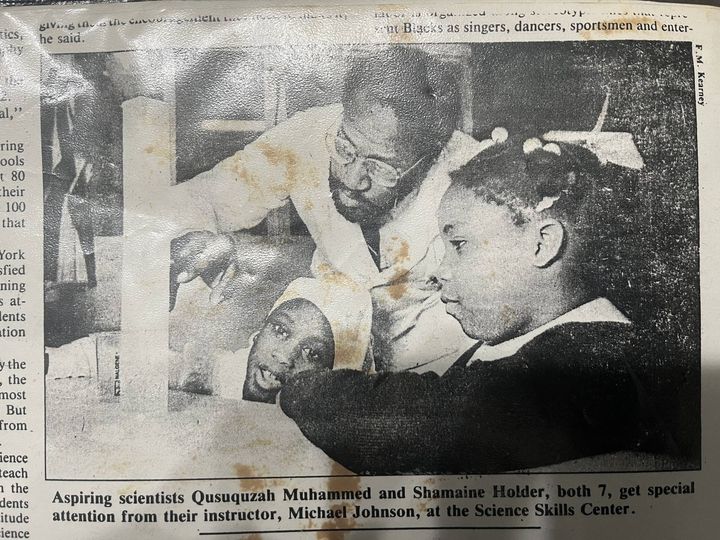
The best NYC principals spend an unbelievable portion of their day breaking or bending school-system rules so that children can learn. As a former NYC principal (Science Skills Center High School) of what many inside and outside the profession labeled a “good and effective school,” I must admit something I am not proud to confess that a staggering amount of my daily leadership time was spent breaking or bending bureaucratic rules, regulations, and blocking politically driven procedures that—ironically—worked against the very mission the public school system proclaims: effectively educating all children.

I also, every year, had to raise—beyond my standard budget allocation—hundreds of thousands of dollars through the school’s 501(c)(3) foundation to provide my Title I students not only with basic living and school supplies needs, but also with educational, cultural, and informal learning opportunities, as well as advanced enrichment learning experiences. For example, I once had to raise $20,000 in just two weeks to send our FIRST Robotics team to the national finals in Florida. These are opportunities normally reserved for NYC’s most wealthy and entitled children. I’m not complaining; I did what I had to do. But the enormous resource inequalities that still exist in the NYC public school system make any rhetorical claim of “quality education for all” ring insincerely hollow.

And I learned quickly that my principalship experience was not unique. When I became a NYC superintendent, I found myself once again engaged in a constant cycle of corrective actions—undoing bad policies, practices, and regulations, and closing opportunity gaps that were actively harming good teaching and learning experiences. It was déjà vu, only now with higher district-level stakes.

This is the painful truth: we have a school system that often seems structurally designed to undermine its own stated mission—one that loudly proclaims it will do “everything possible” to ensure that all children have a promising future rather than a path to prison. Yet the internal machinery of that same system frequently drives outcomes that contradict those noble aspirations.

There is something profoundly wrong—ethically, operationally, and organizationally—when the very school leaders most directly responsible for student learning must spend so much of their time “tricking” the system simply to help children succeed. When principals and superintendents feel compelled to constantly perform work-arounds in order for the system to fulfill its primary mission, that institution is not merely misaligned—it is in desperate need of dramatic, dynamic repair, and certainly not the kind delivered by lofty, superficial word-playing games.

My years as principal and superintendent taught me that the people who know the system best—and who can make it work at its best—are often the ones forced to fight it the hardest. That contradiction is neither sustainable nor morally defensible. The next NYC Chancellor must recognize that the wisdom of school-building administrators is not optional—it is essential. And, until the city embraces that truth, the burden of “tricking and offsetting the system” will continue to fall on those fighting to save children, instead of on the leaders empowered to fix what is failing them.

Michael A. Johnson is a former New York City public school teacher, principal, and superintendent (Community School District 29, Queens), a district STEM education program director, and a former adjunct college professor of science education. He is the author of two books on school leadership, designed to prepare the next generation of Assistant Principals and Principals. Johnson writes frequently on educational equity, leadership ethics, and real systemic reform in public education.

Mr. Mamdani Must Wage a Two-Front Battle for New York City’s Forgotten Students

Both CNN and MSNBC owe Rep. Alexandria Ocasio-Cortez (AOC) a guest-appearance fee for her excellent, instant post-election analysis of New York City’s mayoral campaign. She said something essential that none of the “in-house” regular commentators would—or perhaps could—say. Paraphrasing her point: Mr. Mamdani’s win, unlike any other Democratic candidate’s victory that evening, was achieved even as he was forced to fight on two fronts throughout his entire campaign.

There’s a very good reason military strategists have long advised against waging a two-front war, and the history of global conflicts supports their caution. The new mayor, Mr. Mamdani, indeed faced fierce opposition from right-wing Republican forces who barely concealed their anti-Islamic and racial animus toward him. But the other front—the one more adept at disguising its Islamophobia and bigotry—was made up of the familiar figures every organizational leader recognizes: the passive-aggressive insiders. In this case, they were Democratic Party leaders, politicians, and candidates who refused to endorse Mr. Mamdani, even though he had won the primary fair and square.

Some offered slow, tepid, and perfunctory endorsements—what can only be described as “wimpy support.” This double-standard hypocrisy, the idea that “voting blue is good for you, but not always for me,” is a betrayal all too familiar to African Americans, including Brother Kwame Mamdani himself.

Now, I am convinced that those two anti-Zohran antagonistic forces—though severely wounded on November 4—are far from dead. In fact, I believe they are already regrouping and developing plans to ensure that Mr. Mamdani’s tenure as mayor ends in failure.

I know what you’re thinking: “But many of those oppositional people are ‘liberal,’ professional Democrats, and people of color.” It doesn’t matter. I learned that lesson painfully during my tenure as superintendent of Community School District 29 in Queens (CSD29Q) from 2000 to 2003.

It didn’t matter that we sought only to do what was right and good for our citizens—in our case, to dramatically and sustainably raise academic achievement in every school, for every student cohort across the district. It didn’t matter that our intentions were noble or our goals equitable. An alliance quickly formed among those wounded by my appointment. They were injured, yes—but not dead. And soon, I found myself fighting on two fronts: one against white racist indifference, and the other against Black leaders, many of them elected officials, who wanted to restore the corrupted status quo that had necessitated my assignment to the district in the first place.

One of the NYCDOE administrators assigned to brief me on the district compassionately went off script, warning me—something I would later hear echoed by several senior officials—that Community School District 29 in Queens (CSD29Q) was “pound for pound, the most underachieving district in the city, given its large Black middle-class homeownership and strong, often two-parent working families.”

When I moved to Southeast Queens, I quickly understood that assertion. On my block in Cambria Heights, every Black family lived in a well-kept home, with both parents often holding solid city, state, or federal civil service jobs. So, the natural and haunting question emerged: Why aren’t these children doing better academically?

Over the next three years, I learned that my block was no exception. The pattern repeated itself across the district. Complaining about socio-economic obstacles—accurate as such complaints may be—has unfortunately risen to an art form in my profession. But as I often reminded the CSD29Q staff: “If we can’t get these Southeast Queens children to succeed academically, then what are we doing as public educators?”

So, like me, Mr. Mamdani will need to continue waging a two-front war if he truly intends to serve and protect our most disinherited and disenfranchised New York City citizens. But unlike me, I hope he remains in office long enough to enact irreversible positive change.

We will soon know whether the new mayor truly plans to fight for our most educationally vulnerable children—those condemned by their zip codes to live in a learning-rich city that too often provides them with an inferior, second-class education.

Much will depend on whom Mr. Mamdani appoints as Schools Chancellor. Will it be someone from the “go-along-to-get-along” leadership side of the table—a professional educator fluent in bold rhetorical flourishes and the latest slogan-filled pedagogical sound bites, yet firmly committed to maintaining the educational status quo?

If so, thousands of Black and Latino children, and their families, will remain trapped—denied the beauty of generational-leap improvement, which is one of the true moral missions of public education. And if that happens, the new mayor may as well keep Rikers Island open, because he will surely need the space.

In the end, every leader who dares to confront entrenched systems of inequity must learn to fight on two fronts: against the obvious adversaries outside the gates and the quieter, more insidious forces within.

Mr. Mamdani’s true test will not be in his campaign slogans or early policy speeches, but in his willingness to stand firm when the comfortable, the connected, and the complicit push back. If he can hold that line—fighting both battles with integrity, courage, and love for those children whom this city too easily forgets—then perhaps New York will finally live up to its promise of being not just a great city, but an educationally just one.

Michael A. Johnson is a former New York City public school teacher, principal, and superintendent (Community School District 29, Queens), a district STEM education program director, and a former adjunct college professor of science education. He is the author of two books on school leadership, designed to prepare the next generation of Assistant Principals and Principals. Johnson writes frequently on educational equity, leadership ethics, and real systemic reform in public education.