Responding to Racist Attacks on Popular and Heroic Black Public Figures: An Educational Imperative for Adaptive, Corrective, and Protective Lesson and School-Wide Response Planning

As the bulk of the decent, non-prejudiced poisoned citizens left in America express, justifiably so, righteous anger and moral indignation at the U.S. President’s escalation toward more explicit visual expressions of the ugly beliefs and policies that undergird his reign of racism; professional educators, who are human beings and ethically embarrassed citizens (we take any form of ignorance personally), will also feel the pain of this moment. And that pain will not be limited to Black educators only. We therefore must “stay focused, and stay on the job.”

First, we must recognize, from a pedagogical perspective, what Barack and Michelle Obama meant, not only (but especially) to Black children in our own country and beyond, but also to children of every color, ethnicity, and nationality, in schools not just across the United States, but in schools all over the world.

So, our first job is to develop age- and grade-appropriate lesson plans, across multiple content areas, including active involvement with guidance and counseling departments, that support healthy healing, conceptual correction, and, particularly in light of the current ICE brutal assaults on human beings, a reassuring sense of both group and personal protection.

We know enough developmental psychology to understand that when young people are hurt, angry, or frightened, they will not always express or act out those feelings in the most positive or productive ways; therefore, professional educators must step in directly into the present fray, and help students process this disgraceful moment in our history in the most positively edifying and emotionally strengthening manner possible.

Each school-based administrator must make a personal and professional decision regarding how far to go, and in what format; therefore, I would not offer a blanket recommendation for how school leaders should respond to these types of historical moments.
That said, based on my past experiential practice as a high school principal, where we understood that whatever major event existed in the public atmosphere, our students already knew about it, so instead of hiding from the obvious, what I did then, and what I would do now, is to shift into full response mode.

I would immediately convene a crash cabinet, school-leadership and departmental emergency meeting to design a school-wide classroom, and guidance-counseling response strategy, beginning with four grade-level assemblies that I would personally lead. After all, we invested a great deal of time—eight years—building students’ pride, resilience, hope, and aspirations around the exemplary model and public leadership excellence of the Obama family; and we cannot allow all of that deliberate self-esteem-building work to be attacked without a purposeful teaching-and-learning response.

A note of caution for principals: understand that superintendents are, by job description, though not necessarily by personal preference, both educational and political actors. You must therefore read the present situation within that dual context and know your superintendent’s position on this matter before acting.

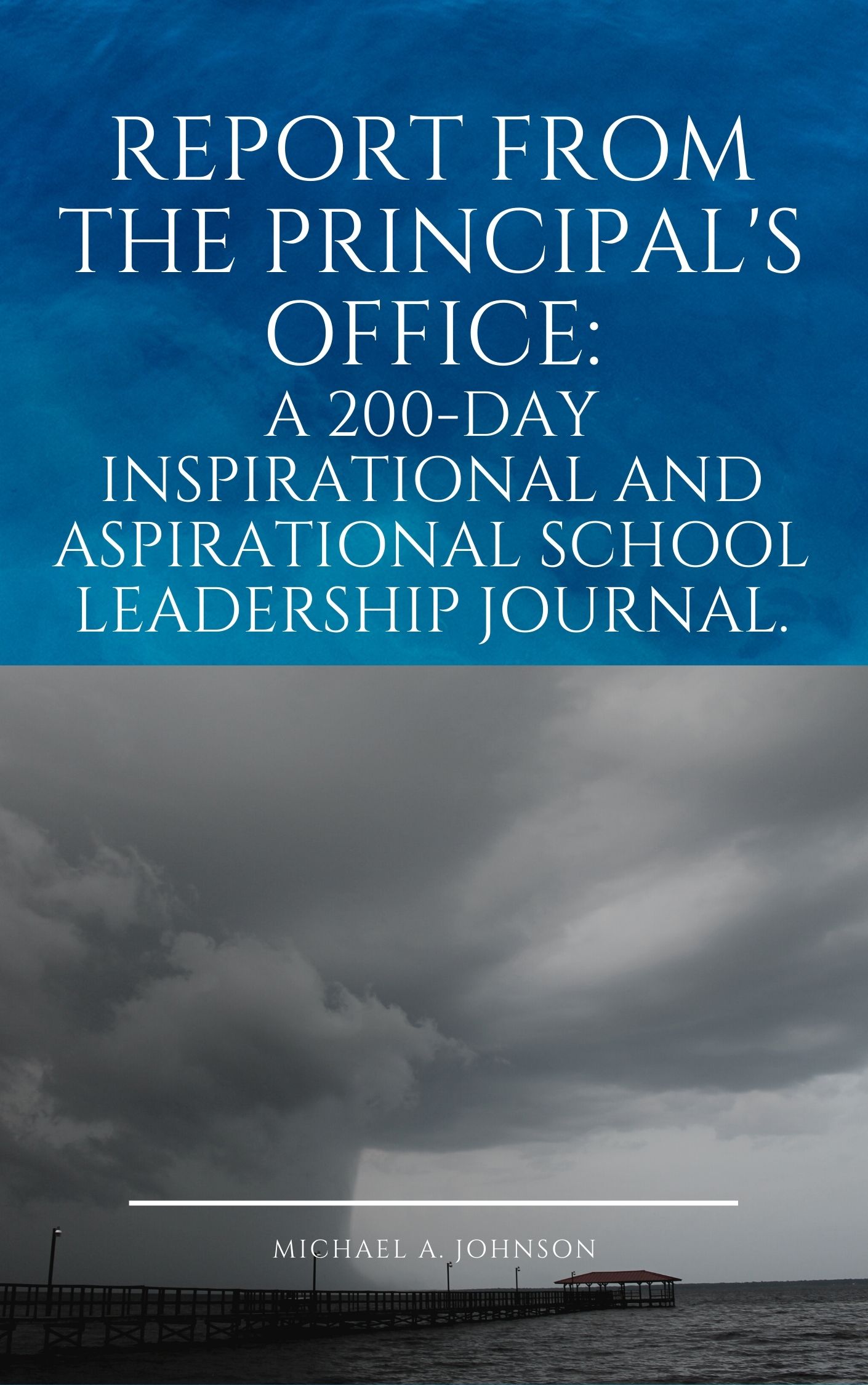
As for me, I have articulated my own self-guiding response position to moments such as these across several chapters of my book, Report From the Principal’s Office: A 200-Day Inspirational and Aspirational School Leadership Journal, including:

13. The Ethical Principalship.
20. Ethical Righteous Authority Means You Can’t Always Ask for Permission to Act.
21. Wise Righteous Authority Means There Are Times When You Should Ask for Permission to Act.
32. The Authentic Principalship.
64. The Mindful Principalship.
And very relevant to our present concern:
75. Part of the Effective Principalship Practice Is Not Throwing Yourself Under the Bus!

So, act according to your ethical inclinations, pedagogical responsibilities and your district political realities.

I do not want to get any principal in trouble, so full disclosure: my leadership style is my leadership style, and even when teaching future school administrators, I always explain my leadership approach with a clearly stated warning label. That said, I firmly believe that the most moral, ethical, and pedagogically sincere educators, and especially educational leaders, are, in fact, made in and for this moment.

This is not a moment for professional silence, instructional avoidance, or moral retreat disguised as neutrality. Racist attacks on major well-known by students Black public figures, particularly those who represent dignity, excellence, and aspirational possibility, inevitably, one way or another, land in our classrooms, whether we invite them or not.

The question before educators is not whether students will be affected, but whether we will meet them with intentional guidance, protective care, and intellectually honest instructional practices. If we truly believe that education is both a moral and civic endeavor, then this is precisely the moment when principled, prepared, and courageous educational leadership must rise to meet the work.

Michael A. Johnson has served as a NYC public school teacher, an award-winning principal, and a school district superintendent. A former adjunct professor of education and the author of two books on school-building leadership, he writes about educational equity, policy, and the ethical and moral obligations that come with safeguarding the educational lives and promising futures of all children. Inspired by ancestral heroes such as Dr. Gerald Deas, John Lewis, and W.E.B. Du Bois, he strives to make as much “good trouble” as possible before closing his eyes for the final time.

Winning NYC’s Affordability Fight Is Impossible Without Public School Accountability

When public schools fail to educate with integrity and accountability, families are priced out of the future.

When a city’s school system fails to deliver high-quality education to its most educationally, politically, and economically disenfranchised students, and does so without intentional, effective integrity or, no possibility of facing the threat of meaningful consequences for failure; the families of those children, and the communities in which they live, pay severe and permanent costs.

Those costs are psychological, financial, and social, paid through diminished opportunity, eroded trust, and the stolen hope public education is meant to make possible for all students: real, meaningful generational leaps in the quality of their lives. Any city will remain unaffordable, generation after generation, for families whose children are denied access to the kind of rigorous, accountable education that breaks cycles of poverty rather than reproduces them, regardless of zip code, socioeconomic status, immigration status, race, or nationality.

No city, state, or nation can sustainably outperform, economically or otherwise, the level of educational quality it is willing to invest in all of the children under its care. I learned this lesson viscerally years ago, sitting in my principal’s conference room, when I posed a blunt question to a visiting international delegation of senior public-education officials: Why travel halfway around the world to visit a 99.9 percent Black and Latino, Title I urban American high school?

The answer, delivered with striking honesty, left no room for ambiguity. I paraphrase, but not the intent: “To fully develop our country, the People’s Republic of China (PRC), we must close the quality gap between our rural and urban schools. National strength depends on educating every child to their highest potential.” They had studied our work, referencing the New York Times (“Scores Count,” Sept. 8, 1996), and noted something they found instructive: students who entered our high school with significant academic deficiencies were graduating four years later performing at high academic levels.

That PRC delegation was operating with a clarity of purpose too often missing from American debates about “school improvement,” what they described simply as “seeking truth from facts.” Their thinking echoed the famous words of former Chinese Vice Premier Deng Xiaoping: It doesn’t matter whether a cat is black or yellow, as long as it catches mice. In other words, results matter. And nations serious about their future do not knowingly leave large segments of their children educationally underdeveloped and then expect long-term economic prosperity, innovation, or social stability to follow.

The history lesson here is unambiguous. Societies that deliberately deny any group of children, by race, gender, geography, or circumstance, access to a rigorous and empowering public education are choosing chronic underdevelopment across every sphere of civic life. Economic vitality weakens. Scientific and medical advancement slows. Cultural and artistic innovation withers. The tremendous human potential necessary for national progress is squandered.

Replacing educational opportunity with missed-opportunity incarceration is neither a sound economic strategy nor a defensible educational one. A prison industry fed by failed public schooling outcomes is a moral failure masquerading as public policy. With courageous civic leadership and sustained determination, public school systems can move beyond models that tolerate mediocrity for some children while reserving excellence for others.

Moral, ethical, intellectual, and technical capacities do not emerge by accident. They are built, child by child, class by class, school by school, through a compassionate but uncompromising commitment to high expectations, instructional excellence, and equal access to opportunity. But accountability must be real. It must be shared, and it must be tied to meaningful consequences, not borne solely by students, parents, and the communities with the least political protection.

Public school systems cannot serve two masters. Schools must be places where children’s learning is the non-negotiable priority, not adult employment agencies protected from the outcomes they produce. At the very least, parents and taxpayers deserve honesty about which path has been chosen. Without that truth, what passes for “reform” is little more than the rationalization of failure.

And as long as a city is willing to accept devastating public education outcomes for its least politically connected and least protected children, that city will remain unaffordable for them, generation after generation, regardless of who occupies City Hall.

Michael A. Johnson is a former NYC public school teacher, award-winning principal, and school district superintendent. A past adjunct professor of science education and the author of two books on school-building leadership, he writes frequently about educational equity, policy, authentic school improvement, and the moral obligations of those entrusted with the lives of children.

PreK-12 educators must uphold the valuable pedagogical principles of Diversity, Equity, Equality, and Inclusion in their conceptual and behavioral learning objectives.

As professional educators, we must take an enlightened and ethical step up and away from the common uninformed and often divisive ‘politically toxic’ current conversations concerning the application of the principles of Diversity, Equity, Equality, and Inclusion (DEEI). We understand the educational value of each DEEI principle individually and how they work together in a school building. Additionally, we recognize that, operationally and pedagogically, Equity and Equality are profoundly different teaching and learning strategies. And even if some of our university colleagues, now under political and financial siege, are forced to abandon the efficacious teaching and learning power of applying (or even discussing) DEEI, we must hold the line. For in our PreK-12 world, these core doctrinal conceptual and behavioral learning standards are inseparable from the type of schools we want to create, the learning objectives we want to teach, and the profiles of the kinds of students we want to send into a very diversely integrated and growing internationally-interactional nation and planet. We must seek to empower students with a broad spectrum of communicative competencies and a rich reservoir of applicable knowledge and intelligences. Their neighborhood, the city, the state, and the region of the nation where they reside, along with their nation itself, is not the entire planetary humanity story, not even close! Our job as intellectual capacity builders is to broaden and not limit and shrink the child’s locus of power and influence. In a good and wise Democracy, its public education system will build a greater unity of purpose that fully embraces and develops the gifts and talents of all of its citizen children.

Cell Phones in Schools Operational Follow-up: As a profession, how many bad policy historical experiences do we need?

Gallery

Yes, there have been many instances where some student somewhere, in some classroom, has used a pencil, pen or a computer in an unintended, not so good, and perhaps, even in a dangerous way, should we then ban those writing and educational instruments from schools? Continue reading

If you want to start as a public school-based administrator (SBA), then get the process started right! Part 2: The state/local SBA job requirements, the official administrative SBA job posting, and the applying process is the process, so meet and follow them faithfully.

If you want to start as a public school-based administrator (SBA), then get the process started right! Part 2: The state/local SBA job requirements, the official administrative SBA job posting, and the applying process is the process, so meet and follow them faithfully.

(Excerpts from an upcoming book for educators aspiring to be or attain the next level of their school-based leadership careers.)

“…Seeing a discombobulated, disorganized, inattentive to details like spelling/grammatical errors on a CV or other personal, personnel office documents, a grossly unserious or clearly unstudied SBA applicant could cause the superintendent’s interviewing team to ask: “Well if they cannot organize and optimize their own personal and professional job search life, what does that say about their capabilities with taking on the awesome task of organizing and optimizing the people skills and talents of an entire school building family? But, not being fully certified and licensed is an automatic disqualifier. There is a long, unfortunate list of aspiring to the next leadership level SBAs who, in one way or another, were unprepared to “legally” step up and step in when a school-based leadership position suddenly and unexpectedly (and they do!) opened up. It’s crucial to be proactive in your preparation practices, taking serious responsibility for your future career advancement readiness….”
Once you have decided to become a school-based administrator, get School Supervision and Administration (SS&A) credentialed, become state (And if appropriate, locally) certified and licensed by a “recognized and respected” university’s school of education graduate SS&A graduate school program as soon as possible. The university SS&A graduate program should have some face-to-face residency requirements and a field experience component. People in SBA appointment decision-making positions may not want (for lawsuit reasons) to say this, but I will. Superintendents and their district-level screening teams can be suspicious of any SS&A graduate school degree-granting program that does not allow professional and experienced educational faculty to, for a considerable amount of time, at least “lay intense eyes on” the SS&A graduate student—my goodness, children’s emotional and academic well-being is at stake; and so who is being certified by these “emailing-it-in” graduate programs to serve as a school administrator?

You should only be able to partially email-it-in and study online to earn a full SS&A degree. There is a need to fully engage in person with a professor and other SS&A students. Understandably, the distance-learning approach might be the only realistic option for many (especially rural) educators who do not have easy access to an established private or public university SS&A graduate school program near them. Nevertheless, if you can, seek out a “physical residency” in-contact class (not completely virtual) SS&A graduate degree-granting program, even if it is structured for you to attend classes during the summer and concentrated “school-break” sessions. Dialogical interactions with a professor and fellow SS&A students are integral to the learning about school leadership process. I also can endorse taking the “local lane,” meaning taking the class load or credits per year you can manage with your present professional, personal, and family responsibilities; just be consistent with whatever full- or part-time schedule you choose.

Furthermore, whatever SS&A study path you choose, study with intense sincerity; this is not simply a SBA job search “check-off” box issue, but instead, it is an opportunity for you to invest time in serious leadership thinking, the learning of the many theoretical formations of the best school leadership practices, for there is much to be learned about the valuable craft of school operational and managerial techniques that can be taken from these SS&S courses. Some of the SS&A knowledge and information you acquire (e.g., the history of education, curriculum theory, etc.) may even seem to not be helpful or “relevant” to your imaginations of what school leadership work consists of, that is, until you are an appointed SBA, and then, the true applicable power, the “putting together” of all of your SS&A studies will make perfect sense.

In addition, the idea that all graduate SS&A programs are equal is untrue. For example, attending an SS&A graduate program rich with faculty members who themselves are former licensed, certified, and practiced SBAs means they have both school-based practical PreK-12 experiential and theoretical knowledge to share and (for SBA job searching benefits) even better if they served as a district-level officer (e.g., director of operations, content area specialist, etc., or in the superintendency).

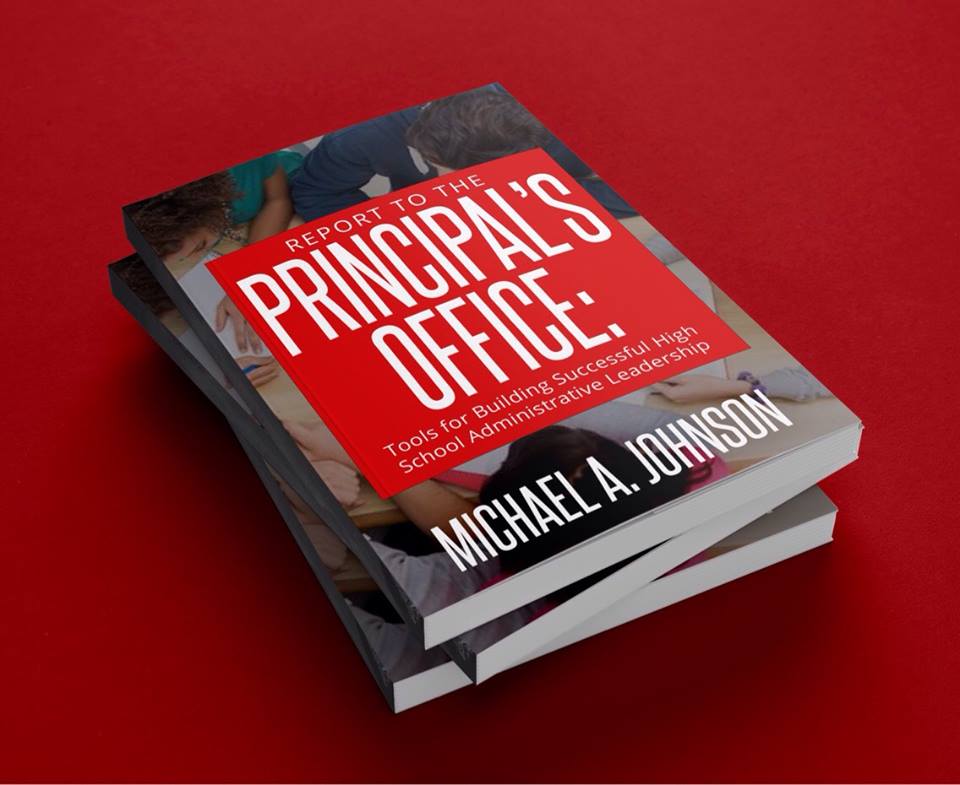
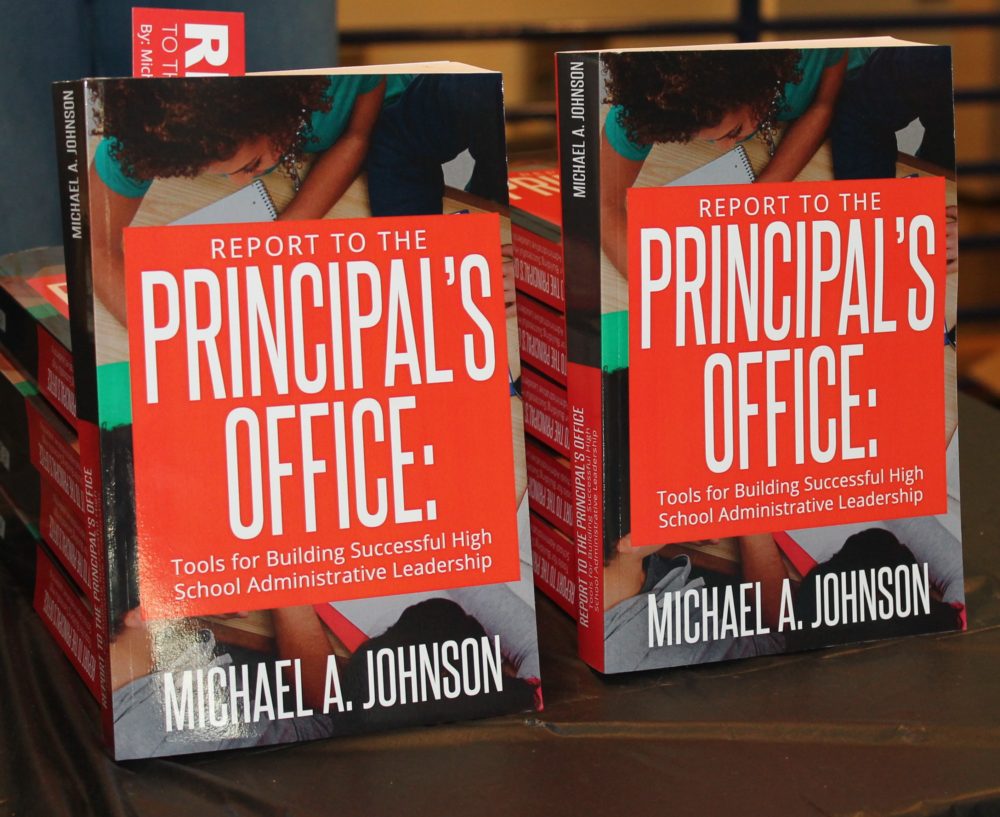
This practical knowledge and expertise they bring to the school leadership learning space are crucial because it takes an accomplished and qualified SBA to explain what the SS&A student will encounter with those many critical “hidden” and unwritten but absolutely required on-the-job description-expectations tasks I cover extensively in my two previous books: Report To The Principal’s Office: Tools for Building Successful High School Administrative Leadership (https://majmuse.net/report-to-the-principlas-office-tools-for-building-successful-administrative-leadership/ ). And, Report From The Principal’s Office: A 200-Day Inspirational and Aspirational School Leadership Journal (https://majmuse.net/report-from-the-principals-office-a-200-day-inspirational-and-aspirational-school-leadership-journal/).
Moreover, later in this book, I discuss how these not-so-soft school leadership skills and knowledge can significantly impact the SBA job search and selection process.

I admittedly have a personal bias here, and here it is, gained from interviewing a lot of AP and principal candidates, that for SBA job searching purposes, I believe those SS&A university programs that have a significant number of faculty members who have served in the job capacity of having been a classroom teacher, school-based administrator, district-level director, deputy or superintendent, will more easily be able to engage in real school world “what to do when or if…” practicum teaching and learning sessions. Further, faculty instructors who have served at the district level could be very familiar and helpful in sharing those “not-widely-known” aspects of the school system’s career ladder ascending and school leadership job promotion challenges. Additional job searching/acquiring benefits exist to having experienced school-based or district-level experienced administrators as your SS&A faculty instructors.
I talk later in the book about how the SBA job-seeking process is like an iceberg because so much of the “unofficial” (not to be confused with the unprincipled, political, or illegal) elements are known only to those who are informed by those who know the complete “inside” story. Then, there is the “helpful contacts factor,” which is always a factor in any employment sector situation and central to every aspect of the school leadership job-acquiring process. As a former superintendent serving on a university faculty, I was in touch with many presently serving superintendents and principals (many of whom I appointed) or APs I mentored, coached, and appointed who are now principals. I can honestly tell you that all letters of recommendation (LOR) are not equal. Some verbal or written referrals and recommendations carry more weight than others.

Furthermore, unofficial “off-the-record” assessments can carry the same influencing power as the official “on-the-record” assessments. Simply because your superintendent days are over, it does not mean that your “school leadership talent scouting” instincts disappear; besides, you want the principals you appointed to have the best APs, and your superintendent collogues/friends to have the best APs and principals. Moreover, you could be fortunate (as is my case as a former high school principal) to be in a position to help your former students who have arrived or are making their way up the school-building leadership career ladder. However, most importantly, for the educational well-being of children, you want to do the best preparation work for all SS&A students. Therefore, you want to get the best (of the best) SBA candidates in the best possible position to win a SBA appointment.

Full confession: As a rule, I never write a recommendation that I do not believe that I could stand 100% behind my laudatory assessment comments; yes, this, at times, has led me to say “no” to a request for a Letter of Recommendation (LOR), because I cannot comment insincerely when I know parents, staff members, and students’ lives are at stake. And based on the quality of some of the many AP or principal job candidates I have interviewed, I suspect that not everyone shares my approach of not providing an unearned and unwarranted “positive” LOR, or do we simply have different standards? In any event, the upside of those rare (because folks quickly figure out my standards) uncomfortable “no recommendation” moments is that principals, district-level staff, and superintendents know that when I endorse an SBA candidate, I am saying (because I do not know the present particulars of the school), that this person I am recommending should, all things being considered, at least be on your “finalist” list of SBA interviewees becouse of their highly-valued status (later in the book I talk about the psychological and practical importance of making it to the SBA job appointing final 3 or 4 top candidates).

In addition, as was the case in my own SS&A graduate school experience, faculty members can become a coach and mentor of your immediate SBA job search and appointment efforts; and long-term advisors and recommenders of promising SBA candidates after your AP or principal tenure begins. SS&A faculty mentoring involves tasks such as enhancing your CV and assisting with the organization of your Professional Performance Portfolio (PPP). Later in this book, I discuss how the PPP can serve as an effective self-study tool, empowering SBA candidates to strategically “guide” district-level interviewers toward their areas of expertise and strengths.

Finally, beware of the widespread flawed belief among some young educators that suggests you are living a failed career life if you are not an assistant principal by age twenty-five! How about “mastering” the instructional practitioner role, a model deanship, a highly efficacious guidance counselor, the teacher who is an excellent grade or content leader? Schools are emotionally dense, often politically tense, and psychologically complicated places; therefore, a calming, compassionate/passionate steady hand and a serious discerning maturity are needed to be an effective school-based leader. There is no reason to rush the process artificially. It is a case of earning the school leadership role by learning the many complex roles a school leader must play throughout a school day. Instead, take the time to acquire and work with a “proven” presently working or retired SBA mentor-coach, learn good and effective curriculum theory, school-building management strategies, “people skills,” budgeting, student/staff scheduling, explore school improvement/raising achievement ideas, and the best instructional coaching practices since a school’s success is primarily predicated on the quality of its learning culture environment, which is very much driven by the quality (and the quantity of that quality) of its teaching and learning activities.

Most importantly, take the time to study and get to know your(authentic)self as an educator and a seriously committed school leader of educators! You should also, for district-level interviewing purposes, take as much necessary time as you need to “sharpen” your gifts and talents, strengthen your areas of leadership skills and knowledge “weaknesses” (cue the mentor-coach), and eliminate those professional flaws, unprofessional people-to-people terrible tendencies, and behaviors (e.g., unbefitting of an AP social media postings) that question your school-building leadership “temperament” and thus weaken your ability to earn an AP appointment. Understand that the district is not professionally developing your job-search skills obligated or legally responsible for telling you why you were not selected for the AP position.
Your somehow “professionally connected” veteran SBA mentor-coach could discreetly, in some situations, find out your presentation/interviewing strengths and weaknesses. Try to gain a more complete and deeper understanding of what it means to be a professional educator, and specifically, what it means to take on the responsibility of an educational leadership position in today’s world, particularly in a Title-1 school where the children and staff desperately require maximum school leadership skills, not a mediocre and knowledge deficient performance. However, all schools surely do not need someone who rushed through their school leadership learning development stages, someone who could dangerously become a poorly performing and dream-killing ineffective assistant principal. You must be able to answer in a standards-based/rubrics-ruling way the following question honestly:

“Why would a superintendent want to appoint me as an AP?”
If you want to start as a public school-based administrator (SBA), then get the process started right!

If you want to start as a public school-based administrator (SBA), then get the process started right!

(Excerpts from an upcoming book for aspiring to school-based leadership educators)

Part 1: Aspiring to the Assistant Principalship

Being a school-based AP or principal is one of the most critical personal and professional decisions an educator can make. The quality of your career life and the quality-of-life futures of your potential School Family Members (students, staff, parents) are at stake. How you qualitatively start out with the School Based Administrator (SBA) job acquisition process is how you will qualitatively carry out that process and, ultimately, how the process will qualitatively end up for you!

“I am presently a teacher (or: dean, librarian, guidance counselor, staff developer, instructional coach, etc.), and I want to be an assistant principal––what do I do next?”

“What do I do next in my school leadership career journey?”

First, be an excellent, exemplary and highly-efficacious educator in your present job assignment!
Which means, I hope you have professionally distinguished yourself based on objective, operational performance standards in your current job position. In addition, you have received positive competency performance feedback from the district-level leadership (e.g., content directors) team. Further, your school-based supervisory administration team’s formal and informal ratings and evaluations (and maybe even written commendations) are noteworthily positive. You may have been called upon on the school or district level to present yourself or your classroom as a demonstrated example and model of high effectiveness and excellence. Or you have been asked to serve in the role of a professional development presenter? As a teacher, you may already hold a selective, distinguished leadership position in the school (e.g., mentoring, content or grade leader, departmental chairperson, curriculum writer, instructional coach, staff developer, or teacher PD center facilitator). You may be serving on a school or district-level task force or committee or have done so in the past. Your collegial peers consider you eminently respected and highly regarded. And (an excellent sign), when visiting your school, the superintendent, a deputy, or district director/coordinator (privately) ask you if you have ever considered pursuing an AP position! It is a good guess to think that they would only ask you that question if they felt you fit the AP profile and the district would benefit by your being in that SBA position-seeking “pool.” And finally, most importantly, the students under your pedagogical care make significant academic or social progress despite the challenges and deficiencies they may bring to your classroom.

Even if you are committed to pursuing an educational leadership position, remember the real-world impact of your potential role. Strive to be the best in your current role, not just for the sake of your school-building leadership job aspirations but because your actions can shape the future of children. Wait, observe, think, and listen for the authentic ‘heart’ and ‘head’ calling you into a leadership role. If the calling is true and accurate, it will persist until you answer correctly and purposely. Remember, schools deal with real people, not widgets. Your leadership can turn dreams and aspirations into reality; SFMs are not just abstract data points or names attached to official documents.

Perhaps the career advancement grass looks greener on your neighbor’s (appointed AP or principal) side of the fence because you don’t see all the extra time, hard work, planning, and strategic commitment to unpaid hours they put in to make those positions work! —So, be careful and know what you are asking for aspiring school administrators because (after studying this book) you might get that position!

Next: Part 2, The state/local SBA job requirements, the official administrative SBA job posting, and the applying process is the process, so meet and follow them faithfully.