Why Principals Must Not Confuse Morally, Ethically, and Pedagogically Guided Dissent With Malicious Mission-Undermining Behaviors

Facing resistance is not an anomaly for highly effective school-building leaders; it is an expected condition of the work.

One piece of superintendent advice I routinely offered principals navigating school-building people-personality challenges was this:

“As the principal, by design of the profession, you are already the centrally casted aloneness character in the public-education show; so don’t do and say things that will make you even more alone and isolated in the school building.”

The work is isolating enough without compounding it through avoidable leadership missteps, especially the misstep of confusing principled dissent with malicious mission-undermining behavior.

That confusion has quietly derailed more promising principals, and more school improvement efforts, than most leadership preparation programs are willing to acknowledge.

What SUPERVISION Really Means

There is a practical reason the school-based administrator’s role is called SUPERVISION. It implies the capacity to see beyond ordinary vision, beyond where a school currently exists (and sometimes comfortably underperforms), toward where it is capable of performing at its optimal best.

This is not abstract optimism. It is disciplined foresight, grounded in evidence, strategic planning, and moral purpose.

SUPERVISION allows principals to:

• Hold uncompromisingly high expectations for both students and the adults entrusted with their learning, as well as their emotional and physical well-being

• Recognize unrealized, but improvable instructional capacity within the school’s teaching personnel and deliberately cultivate it; ultimately, the work of public education is always about the quality of instruction

• Surface and address questions or concerns early, before ambiguity, misinformation, or uncertainty hardens into resistance

• Anticipate the sources, motivations, and mechanisms of resistance in their proto-operational stages, long before they calcify into organized opposition

• Enforce school-wide, efficacious adult accountability to safeguard the non-negotiable principle of protected instructional time and high-quality learning conditions for all students

This is not brutish managerial authority. It is a compassion-based, moral, instructional, and professional stewardship practice exercised before a crisis of disunity takes hold. And because this school leadership work is so demanding, and so human orientated, it means that principals must be fundamentally motivated by LOVE: love of people, love of the school, and love of the overarching academic-achievement mission entrusted to their care.

It is intentional leadership foresight, thinking deliberately about the beginning, functional middle, and end-product results of how any potentially challenging idea is introduced, moves through, and ultimately reshapes both the school’s operating systems and its human relational environment.

It is having the disciplined capacity to see yourself and your entire staff as one team, pursuing a shared, championship-level mission, while fully accounting for human frailty, including your own. It requires anticipating where that frailty may surface and deliberately creating the conditions for it to be addressed, corrected, and strengthened, rather than being denied, ignored, or punished.

This SUPERVISIONARY vantage point is essential because schools, contrary to the untrained and often unprofessional external gaze, are extraordinarily complex organizations. They are filled with personal psychological histories, converging and disjoining alliances, individual life ambitions, competing needs, and multiple legitimate interests operating simultaneously, all within the same proscribed timeframes, physical spaces, finite resources, and under the stewardship of one single principal.

Leadership decisions made in this context will almost never be universally popular. Principals, therefore, can only strive to do the greatest possible good while causing the least amount of possible harm, and to do so with sincere concern, moral clarity, and ethically enriched judgment on behalf of every member of the school building family.

Which leads us to an essential distinction.

Being “Liked” Is Not the Same as Being Trusted

From a superintendent’s lens, this distinction is not merely semantic; it is leadership competency diagnostic and evaluative.

It is not uncommon, for example, for a teacher to urge a principal to impose disciplinary consequences on a student with a disability that exceed what is permitted under special-education disciplinary law or, it will directly contradict the protections and interventions stipulated in the student’s Individualized Education Program (IEP).

No serious or sane school administrator purposely wants staff members to be unhappy. But staff happiness cannot always be the decision-making objective when that “happiness” would compromise a student’s educational rights, undermine instructional access, or violate codified legal and regulatory mandates.

In such cases, the principal’s obligation is not to appease adult frustration, but to protect the student’s learning rights, faithfully follow the law, and uphold the integrity of the principalship, and yes, to avoid unnecessarily testing the patience of your superintendent.

When a parent rightfully seeks an appeal under these circumstances, no superintendent, whose time, credibility, and authority have been needlessly expended, can support or sustain a decision that is legally indefensible, ethically unsound, and pedagogically harmful.

These (IEP violations) are among the most easily avoidable, self-inflicted errors of the principalship, and they are precisely the kind that drive superintendents crazy, not because they are complex, but because they are so easily preventable. And yet, principals continue to make these types of career-harming mistakes.

This type of bad decision-making incident is not a failure of compassion; it is a failure of judgment. Appeasement may feel humanely good in the moment, but legality, access-equity, instructional, and institutional integrity must always prevail (as well as not annoying your superintendent).

Highly Effective Principals Understand:

• Leadership is not an exercise in appeasement, nor does it require compromising core values or organizational objectives.

• Collaboration and consensus are both powerful leadership tools, but not universal solutions. When misapplied or overused, they can delay necessary action, dilute purpose, and ultimately undermine positive outcomes.

• Surface popularity is not evidence of effectiveness; in some cases, it signals a school leader’s avoidance of making hard, discomforting decisions, the very daily, high-stakes school-building judgments that a true school-based leadership practice demands.

True trust is not built through superficial agreement or blind chain-of-command obedience, nor is it earned through insincere or unprincipled acts of staff-members surrender. It is built through respect for leadership clarity, consistency, and courage, especially when decisions are difficult, contested, stretch the staff, or are unpopular.

True trust is established when a school community comes to collectively believe that even when leadership decisions are uncomfortable or challenge the way things have traditionally been done; those decisions are being made in service of a clear, student-centered mission, applied consistently and faithfully over time.

And further, your rating-supervisor superintendent is not asking, “Do your people like you?”
They are asking:
“Will your people trust you to lead them, especially when the path forward, or even the end-of-the-journey objective, is not immediately clear or agreeable to everyone?”

Know this, Principal: popularity and likeability, depending on the issue, the context, and who in the school building is helped or less helped by your decision, can arrive quickly and fade just as fast, sometimes within the very same school week.

Trust and Respect, however, endure. Even when a school family member does not “like” your decision; trust and respect, often unspoken in the raw-feelings moment, settles in over time when people recognize that the decision you made was principled, ethically grounded, student-centered, and consistently applied.

Principled Dissent vs. Mission-Undermining Behavior

This is where many principals get themselves into unnecessary trouble.
Morally, ethically, and pedagogically guided dissent is not inherently disloyal, nor is it an act of leadership defiance. More often, it is a sign of professional seriousness and authentic instructional commitment. Principled dissent is acceptable, and valuable, when it is:

• Grounded in improved student learning and principles of equity or equality access

• Qualitatively and quantitatively outcomes-based, rather than rooted in personal preference, discomfort, or “this is not how we’ve always done it”

• Expressed respectfully and professionally, recognizing that every initiative has a human author attached to it; principals must therefore establish clear norms and rubrical expectations for raising principled objections

• Focused on system improvement, consistently tethered to the essential question: Does this action move us closer to, or further away from, the school’s overarching academic achievement mission?

• Willing to move beyond critique and actively engage in problem-solving, solution-building, and collaborative “how-can-we-make-this-work” efforts

By contrast, malicious mission-undermining behavior is not dissent, it is organizational sabotage. This behavior often emerges from, and reveals itself through:

• Fear of change masquerading as thoughtful or righteous opposition

• A commitment to preserving the unworkable status quo at all costs

• Public disparagement without constructive analysis or evaluative intent

• Quiet oppositional noncompliance disguised as false “concerns”

• Critical conversations occurring in staff lounges rather than professional forums

• Cynicism, misinformation, or the recruitment and organization of oppositional factions

• Personal grievance or animosity repackaged as moral, ethical, or professional objections

• Refusal to accept accountability paired with a distorted claim of professional autonomy

At the surface level, principled dissent and mission-undermining behavior may sound similar. But their origin, intent, and impact are demonstrably different.
The principal’s responsibility is not to eliminate disagreement or deny it. It is to discern it accurately, manage it deliberately, and direct it into a structured, accountable, dialogical space, where the end product is always improved quality teaching and learning for students.

Silencing principled dissent weakens a school and opens it to possible underperformance across multiple operational domains; on the other hand, tolerating and enabling mission sabotaging behaviors will absolutely destroy a school’s capacity to be any version of the best performing iteration of itself.

The Principalship Burden: Act With Discernment, Not Defensiveness

Principals must exercise a high level of emotionally intelligent leadership maturity in order to:

• Separate ego injury intent from legitimate critique

• Evaluate dissent on pedagogical merit, not tone or delivery

• Distinguish truth-telling from trouble-making

• Channel disagreement into professional, accountable structures

• Focus on the corrective value of the message, not the messenger

This level of discernment is not instinctive. It is a form of practiced emotional intelligence, and it must be operationalized even when you do not feel like it, or when your positional authority might suggest that you do not have to.
Leadership maturity is revealed not when authority is unchallenged, but when it is tested.

How Highly Effective Principals Lead Through Resistance Without Abdicating Authority

Resistance should neither be ignored nor reflexively punished. It must be diagnosed, addressed, and responded to proportionately and professionally.
Too often, principals expend disproportionate energy managing staff members who openly raise legitimate questions, while overlooking those who remain silent in meetings but quietly plan to undermine the successful implementation of the new effort. Many leadership failures could be prevented by addressing misunderstandings early, before resistance hardens into passive sabotage.

Effective principals always use a calibrated response to receiving uncomfortable information. This is an essential skill to master, because much of a principal’s day, and much of the information they receive, is problem-solving-centered. A principal is in serious trouble when staff, students, or parents begin withholding critical information because:

• They fear the principal’s reaction (including nonverbal responses), or

• They have become so disengaged from the school’s mission that they no longer believe raising concerns is worth the effort

Both conditions signal a breakdown in trust, and both will seriously undermine any school improvement possibilities.

The Principal’s Resistance Response Ladder

Level 1: Active Listening to the Point of Understanding (Diagnostic Phase)
Purpose: Determine the true source and content of the dissenting concern.
Principals engage in calm, private dialogue, asking clarifying questions without assuming bad intent. The principal restates the concern to ensure accurate understanding of the dissenting concern being expressed.

At this stage, resistance often stems from confusion, fear, a shift in authority, workload pressure, or misinformation. Listening here does not signal agreement, it signals professionalism, respect, and leadership discipline.

Level 2: Clarifying Process, Expectations, and End-Product Objectives (Alignment Phase)
Purpose: Remove ambiguity and establish shared clarity.
At this stage, the principal restates the intentionality of the initiative being introduced and explicitly checks for alignment with dissenting staff member(s). The work here is to move the conversation from reactive resistance to a shared, student-centered purpose.

The principal deliberately rearticulates why the initiative exists and what success looks like, shifting the discussion away from immediate emotional reaction and toward collective professional responsibility.

For example, in response to resistance to a new (actual scenario) instructional initiative designed to help students master extended-response prompts on standardized exams, a principal might share the following during a discussion with dissenting staff member(s).
Doing so immediately shifts the conversation away from personal preferences, including the principal’s and into a professional, quantifiable, evidence-based rationale for introducing the initiative, allowing the principal to authentically convey, without ever stating: “this is not about me, and it is bigger than both of us.”

The Principal:

“This strategic initiative emerged from the history department’s analysis of student extended-response answers on state assessments, which revealed a consistent pattern: students often demonstrated strong conceptual understanding, yet were ‘giving away points’ because they struggled to express that understanding clearly and coherently in an essay format.”

The issue, therefore, was not only about “helping the English department,” nor about “forcing other content-area teachers to teach spelling, punctuation, and grammar.” Rather, it was about expanding students’ ability to communicate mastery through structured academic writing, a skill required across all disciplines and essential for success on standardized assessments.

The Principal Continues:

“We are probably in agreement that students must perform better on open-ended essay responses on standardized exams. The purpose of this initiative is to ensure that all students in the school can ‘nail the essay format.’ Here is how every department, including mathematics, can support that outcome. When mathematics teachers say, ‘spelling and English don’t count’ when students are asked to explain their answers, that sends a counter-message that undermines our ‘nailing the essay’ initiative. Instead, mathematics teachers should insist on complete and correct written explanations using ELA standards. This reinforces student success in ELA courses, strengthens the ‘nailing the essay’ initiative, and improves students’ ability to explain reasoning on math exams as well. Together, this raises accountability, coherence, and instructional quality across the entire school.”

(And, in direct response to the mission-undermining act of departmental, selfish, siloed thinking, not uncommon in high schools, the principal might further clarify)

“We are organized into academic departments to improve instructional efficiency and efficacy, deepen professional teaching expertise, and strengthen curriculum, pacing and formal assessment planning. But our departments are not independent organizational silos competing for pedagogical advantage. We are one school, responsible for delivering one coherent, high-quality learning experience for all students. When students are required to write clearly, explain their reasoning, and communicate their thinking in every classroom, they are not being burdened, they are being properly prepared.”

This reframing makes clear that the initiative is not a departmental imposition, but a school-wide commitment to instructional coherence, one that will serve students across all content areas rather than the interests or preferences of any single department.

This explanation intentionally shifts the narrative from “this is what the principal wants” to “this is what we, as a school community, must do collectively to strengthen and empower our students.”

It reinforces that school-wide improvement efforts are not principalship pet projects, nor favors to a single department, but a collective commitment to excellence grounded in professional ethics and student need.

At Level 2, the principal explicitly connects the new initiative to evidence-based, non-negotiable expectations by emphasizing:

• Letting evidence guide instructional practice and initiative decision-making, rather than personal preference

• Professional ethics and instructional responsibility superseding individual comfort or habit, which ultimately raises academic standards for all students

• Information-sharing, supportive assistance, and capacity-building as the leadership objective—not coercive compliance

• Improved student performance outcomes across all subject-area state and national assessments

• Cross-disciplinary coherence, reinforcing that everyone has a stake in the initiative’s success

• Unity of purpose, affirming that the school operates as one system with one overarching academic-achievement mission

When done well, and when received fairly, thoughtfully, and professionally, this phase replaces confusion with clarity, suspicion with coherence, and fragmented effort with shared resolve.

Alignment at this level does not require agreement on every tactic. Principals must always remain open to improvement-strategy suggestions. However, it does require agreement on purpose, expectations, and outcomes.

Even in an era where individuals may claim subjective “personal truths” or realities, the principal must insist, both for themselves and for others, on the disciplined use of objective, qualitative and quantitative analysis in problem-solving and decision-making. This evidence-based approach is essential to guiding the school toward high operational effectiveness and sustained educational performance.

Schools can only improve academically through studied evidence agreement, not personal opinion.

That is how principals transform resistance rooted in confusion into professional commitment anchored in mission.

Level 3: Active, Positive Support for Compliance (Capacity-Building Phase)
Purpose: Address legitimate barriers while maintaining expectations.

At this stage, principals introduce supports that make success more likely, without lowering standards. The intent is to remove skill, knowledge, or resource barriers that may be contributing to resistance, while making clear that expectations remain intact.

Examples of appropriate supports include:

• Targeted professional development aligned to the initiative

• One-on-one instructional coaching for individual teachers or teams

• Lesson-plan development assistance tied directly to expected practices

• Relevant instructional resources and materials

• Modeling and mentoring by a mathematics teacher who has successfully integrated the initiative into their classroom practice

• Providing math journals to integrate mathematical reasoning with ELA writing structures

• Offering students structured extra credit opportunities connected to math journaling

• Expanding the use of rigorous mathematical word problems that require written explanations

• ELA teachers intentionally incorporating mathematical contexts, such as biographical or analytical writing assignments connected to mathematicians or problem-solving scenarios

• Using student journals diagnostically to assess conceptual and algorithmic understanding during mathematical problem-solving

Principals may also provide instructional-practice theory readings on related topics, such as George Pólya’s work on liguistical framing in mathematical problem solving, and Vygotsky’s linkage between language and thinking, to demonstrate how literacy structures strengthen mathematical reasoning, and how mathematical reasoning, in turn, deepens language arts development.

The goal at Level 3 is to close resistance gaps caused by misinformation, skill deficits, or under-preparation. Only after these supports are provided can a principal accurately and fairly distinguish inability from unwillingness.

Throughout this phase, principals must remain focused on keeping the main leadership objective the main thing: the principal’s work is not to win arguments, but to win pedagogical allies, to protect instructional integrity, maintain adult efficacy and accountability, and advance student learning without surrendering authority or moral clarity.

Principals do not lead schools to be right.
They lead schools to get the highest level of teaching and learning right, across the entire school and for all cohorts of students.

Level 4: Monitor and Document (Accountability Phase)
Purpose: Verify follow-through and protect instructional integrity.

Once expectations have been clarified and appropriate supports have been provided, the principal’s responsibility shifts from persuasion to verification. At this stage, monitoring is not punitive, it is professionally corrective.
Principals engage in:

• Targeted classroom observations aligned to the stated initiative or expectation

• Evidence collection tied directly to agreed-upon practices, student work, and instructional outcomes

• Accurate documentation of what is occurring, what has improved, and what has not
Documentation serves multiple essential purposes. It, protects students, by ensuring instructional commitments are actually delivered

• Protects staff, by creating clarity and fairness around expectations and feedback

• Protects the institution and the principal, by establishing a factual record grounded in observable practice rather than opinion

Level 5: Address Noncompliance Directly (Authority Phase)

After you have done all that can reasonably be done as a considerate listener, carefully answering questions, addressing concerns within reason, soliciting constructive suggestions, and thoughtfully allocating appropriate professional-development resources, you must now stand fully in your leadership responsibility.
When you have listened carefully, clarified expectations, and exhausted every appropriate coaching and support option, there comes a moment when leadership requires resolve. It is time to take a stand.

At this point, standing firm is not stubbornness; it is stewardship stick-to-itiveness. It signals clarity of purpose, respect for students’ right to a high-quality learning experience, and fidelity to the school’s mission. You should feel no sense of satisfaction or “glee” in this moment, but you should feel professionally comfortable exercising principalship authority when the situation requires it. If that professional and appropriate comfort with exercising principalship authority does not exist within you, then school-building administration may not be your proper calling.

Purpose: To interrupt persistent resistance with calm clarity and principled resolve.
When monitoring reveals that noncompliance continues, despite clear expectations and adequate support, the principal must act decisively. This is the moment where authority is exercised without hesitancy, without hostility, and without apology.
At this phase, principals must:

• Name the noncompliance explicitly, referencing specific behaviors, actions, or omissions

• Anchor decisions and language in established policy, contractual provisions, and evaluation criteria, not personal preference, hurt feelings, or bitter resentments

• Repeat or reconfigure targeted coaching and professional-development supports, where appropriate, without lowering expectations

• Restate expectations clearly, including timelines for correction and the consequences of continued noncompliance

This conversation must always be:

• Centered in professional ethics, and commitment to the school’s mission

• Calm, professional, standards-based, and factual

• Free of labeling, shaming, or name-calling

• Absent emotional escalation or moral grandstanding

• Focused on practice, professionalism, and impact—not personality

At Level 5, the principal is no longer persuading. The principal is protecting instructional integrity, adult accountability, and student learning.

At this phase, principals are confirming whether resistance has dissipated through clarity and support, or whether it has persisted despite them. Monitoring makes patterns visible, separating isolated missteps from chronic noncompliance. Time/Date and contextual-context documentation of all observations.

At this stage, principals are no longer asking whether the work will be done. They are clarifying how and when compliance will occur, and what happens if it does not.
This is not authoritarian leadership. It is a moral institutional stewardship practice exercised in defense of students and the school’s mission.

Level 6: Formal Intervention (Due-Process Phase)
Purpose: Safeguard the school’s mission through lawful and ethical process.
If noncompliance persists beyond direct intervention, the principal is obligated to move into formal processes, not as retaliation, but as school mission protection actions.
At this level, principals:

• Engage and know well labor contractual language and stipulated procedures

• Consult with a senior peer colleague/mentor, or a district-level supervisor

• Seek the counsel of the district’s legal counsel as required

• Initiate formal improvement plans, disciplinary procedures, or corrective action consistent with contract and law

• Maintain strict confidentiality, professionalism, and procedural integrity

This Level 6 phase, even when it involves nothing more than a formal warning letter and/or a written ‘improvement of professional practice’ plan, requires precision. Errors in operational steps, incomplete documentation, or procedural missteps when applying disciplinary measures can be costly: to students, to staff, and to the principal’s credibility. For that reason, principals should not “go there” unless all other reasonable options have been fully exhausted.

Due process is not optional. It is both a systemic legal safeguard, and a leadership ethical obligation.

Importantly, reaching this level often reflects a leadership practice grounded in human development, not punitive revenge impulses. Allowing persistent, counterproductive resistance to a school-wide initiative to go unchecked is far more damaging to the institution than invoking a formal compliance process when it is warranted.

Level 7: Leadership Reflection (Praxis Phase)

Purpose: Strengthen leadership learning and practice without lowering expectations.
The ladder does not end with employee compliance or discipline. It ends with authentic leadership praxis.

Principals and their school leadership teams must engage in honest, disciplined reflection on questions such as:

• What did the introduction of this initiative teach us about our school and our school family members (SFMs)?

• What did the resistance reveal about communication clarity gaps at the outset?

• Where and why did pushback occur, and what could we have anticipated or handled better?

• Was the timing and pacing developmentally and professionally appropriate?

• How effectively was the new system designed, rolled out, and operationalized?

• Which professional development supports, material resources, or structural supports need strengthening?

• What early dissent signals were missed—and how can they be detected sooner next time?

• Did the initiative produce any unintended consequences or collateral damage?

• Were there unanticipated positive outcomes that should be leveraged moving forward?

• Over time, what are the short-, medium-, and long-term results of the initiative?

This reflection is not about assigning blame, nor is it a revisionist retreat into fantasy thinking. A school-wide learning community must be led by a legitimate learning community of school-building leaders who are themselves committed learners.

Standardized assessments cannot apply only to students, and evaluations cannot apply only to staff members. Expanding leadership growth capacity is a professional obligation of every principal, and a recurring, institutionalized practice characteristic of the highest-performing schools.

This final phase ensures that all forms of resistance, whether quietly passive or openly aggressive, resolved informally or escalated formally, becomes an invaluable source of school-culture intelligence, strengthening both the introductory framing and operational application of future initiatives, while enhancing the institution’s resolve and capacity for continuous improvement.

From a Superintendent’s Perspective

At every level of the ladder, the principal’s work is not to win arguments. It is to win pedagogical allies, protect instructional integrity, maintain adult efficacy and accountability, and advance student learning, without surrendering authority or moral clarity.

That is the principalship practiced at its highest professional and ethical standard.

What Highly Effective Principals Consistently Do When They Encounter Problem-Causing Resistance

Highly effective principals:

• Begin from an assumption of best intentions

• Contextualize resistance thoughtfully, asking: Is it the person? The conditions? Or something in my own leadership?

• Maintain relational trust and respect without surrendering expectations

• Address resistance early and professionally, before it hardens into opposition

• Escalate responses proportionately rather than emotionally

• Separate empathy for people from tolerance of practices that harm students

• Lead adults through discomfort without destabilizing the school or diluting the mission

• Keep the problem from ending up on their superintendent’s desk; resistance is not the problem; mismanaging that resistance is a problem.

Principalship excellence is not demonstrated by the absence of resistance, but by the moral authority and disciplined capacity to lead through it effectively.

Final Reflection

Principals are not appointed to ensure 100 percent staff approval for every decision, something I never witnessed in an eleven-year principalship. They are, however, appointed to effectively lead and manage staff, protect learning conditions, enforce standards, and steward the school toward its reachable academic-achievement mission.

Morally, ethically, and pedagogically guided dissent is one of the final safeguards against institutional underperformance drift, whether that drift emerges from low expectations (among staff, for students, or both), diminished efficacy, cynical civil-service complacency, or the inevitable reality that, at times, a principal gets something wrong: introducing a new idea without sufficient preparation, underestimating its impact on people, or failing to anticipate unintended consequences. The principal is a supervisor, but is never super-omnipotent.

Principled dissent allows schools to frame implementation plans thoughtfully, monitor impact honestly, and, when necessary, course-correct before harm becomes normalized and operationalized, a defining characteristic of chronically underperforming institutions.

Principals who understand this do not fear dissent. They lead it, shape it, and learn from it.

And principals must remember this: you will need to work with that dissenting staff member after the immediate situation has passed. What will that professional relationship look like in the near future, and over time? Will it mature into a productive working partnership in service of student learning, or calcify into lasting bad feelings division?

Those principals who mistake forced compliance for coherent agreement, and fearful silence for invested commitment, eventually learn the hard way, when initiatives collapse under the weight of unspoken truths.

Children deserve principals who lead with unquestionable integrity, discern with compassion, reason with strategic clarity, close knowledge and capacity gaps, and do so with the patient grace of a competently skilled, confidently grounded, highly valued school-building leader, one singularly focused on the success of the school rather than personal validation or vindication.

Wise school leaders ultimately understand this truth:
When the school wins, that is the only way the principal truly wins, personally and professionally.

Michael A. Johnson is a former NYC public school teacher, award-winning principal, and school district superintendent. A past adjunct professor of science education and the author of two books on school-building leadership, he writes frequently about educational equity, policy, authentic school improvement, and the moral obligations of those entrusted with the lives of children.


Winning NYC’s Affordability Fight Is Impossible Without Public School Accountability

When public schools fail to educate with integrity and accountability, families are priced out of the future.

When a city’s school system fails to deliver high-quality education to its most educationally, politically, and economically disenfranchised students, and does so without intentional, effective integrity or, no possibility of facing the threat of meaningful consequences for failure; the families of those children, and the communities in which they live, pay severe and permanent costs.

Those costs are psychological, financial, and social, paid through diminished opportunity, eroded trust, and the stolen hope public education is meant to make possible for all students: real, meaningful generational leaps in the quality of their lives. Any city will remain unaffordable, generation after generation, for families whose children are denied access to the kind of rigorous, accountable education that breaks cycles of poverty rather than reproduces them, regardless of zip code, socioeconomic status, immigration status, race, or nationality.

No city, state, or nation can sustainably outperform, economically or otherwise, the level of educational quality it is willing to invest in all of the children under its care. I learned this lesson viscerally years ago, sitting in my principal’s conference room, when I posed a blunt question to a visiting international delegation of senior public-education officials: Why travel halfway around the world to visit a 99.9 percent Black and Latino, Title I urban American high school?

The answer, delivered with striking honesty, left no room for ambiguity. I paraphrase, but not the intent: “To fully develop our country, the People’s Republic of China (PRC), we must close the quality gap between our rural and urban schools. National strength depends on educating every child to their highest potential.” They had studied our work, referencing the New York Times (“Scores Count,” Sept. 8, 1996), and noted something they found instructive: students who entered our high school with significant academic deficiencies were graduating four years later performing at high academic levels.

That PRC delegation was operating with a clarity of purpose too often missing from American debates about “school improvement,” what they described simply as “seeking truth from facts.” Their thinking echoed the famous words of former Chinese Vice Premier Deng Xiaoping: It doesn’t matter whether a cat is black or yellow, as long as it catches mice. In other words, results matter. And nations serious about their future do not knowingly leave large segments of their children educationally underdeveloped and then expect long-term economic prosperity, innovation, or social stability to follow.

The history lesson here is unambiguous. Societies that deliberately deny any group of children, by race, gender, geography, or circumstance, access to a rigorous and empowering public education are choosing chronic underdevelopment across every sphere of civic life. Economic vitality weakens. Scientific and medical advancement slows. Cultural and artistic innovation withers. The tremendous human potential necessary for national progress is squandered.

Replacing educational opportunity with missed-opportunity incarceration is neither a sound economic strategy nor a defensible educational one. A prison industry fed by failed public schooling outcomes is a moral failure masquerading as public policy. With courageous civic leadership and sustained determination, public school systems can move beyond models that tolerate mediocrity for some children while reserving excellence for others.

Moral, ethical, intellectual, and technical capacities do not emerge by accident. They are built, child by child, class by class, school by school, through a compassionate but uncompromising commitment to high expectations, instructional excellence, and equal access to opportunity. But accountability must be real. It must be shared, and it must be tied to meaningful consequences, not borne solely by students, parents, and the communities with the least political protection.

Public school systems cannot serve two masters. Schools must be places where children’s learning is the non-negotiable priority, not adult employment agencies protected from the outcomes they produce. At the very least, parents and taxpayers deserve honesty about which path has been chosen. Without that truth, what passes for “reform” is little more than the rationalization of failure.

And as long as a city is willing to accept devastating public education outcomes for its least politically connected and least protected children, that city will remain unaffordable for them, generation after generation, regardless of who occupies City Hall.

Michael A. Johnson is a former NYC public school teacher, award-winning principal, and school district superintendent. A past adjunct professor of science education and the author of two books on school-building leadership, he writes frequently about educational equity, policy, authentic school improvement, and the moral obligations of those entrusted with the lives of children.

If the New NYC Mayor Truly Wants System-Wide Quality Learning, He Must See Through the Fog of the Fake “Class Size” Misdirection War

Ask any principal: “Is a class size of twenty students better than a class size of thirty students?” The answer you will probably get from most principals is, “Yes, absolutely!”—especially when class size impacts underperforming students and those who are struggling to meet conceptual and skills performance standards.

But then ask the question in a different way: “Would you rather have an experienced and proven master teacher teach a class of thirty students, or a less-than-stellar, not-meeting-the-instructional-quality-standards teacher instruct a class of twenty students?” You might get a different answer—and I know which option I would, and did, take.

As a high school principal, in organizing two departmental courses—9th-grade Algebra and 9th-grade English Language Arts—I placed my “weakest” students (based on transcript and 4th/8th-grade standardized testing scores) in classes of twenty with some of the strongest and most masterly skilled teachers; and I offset the cost by programming larger student class-size numbers in my advanced junior–senior-level classes and in my Advanced Placement (AP) courses.

So, I am the last to say that class size does not matter, because from a principal’s strategic vision to make it possible for all students to succeed in a system structured to only make a few entitled students academically successful, one of those leadership tools that must be used is to absolutely manipulate class size—and it works—as was reported in The New York Times (“Scores Count,” Sara Mosle, September 8, 1996), where a former student who was interviewed was from that coming-from-middle-school, underperforming and below-grade-level cohort; that student went on to take Physics and other advanced courses as a senior.

Therefore, strategically and contextually, class size will always matter, but it should never be considered a substitute for high-quality instruction and dedicated, efficacious practices.

This politically popularized, but pedagogically shallow and falsely binary, “either/or” framing of the class-size question is beneath serious professional debate and actively undermines the learning needs of real students in real schools. Well-informed policymakers and professional educators should instead be engaged in a rigorous, system-level conversation about how class size is deployed strategically—by different schools, grade band, subject area, academic course requirements (e.g., CTE classes), developmental psychology, student need, instructional capability strength, and the overarching school mission—across the entire PreK–12 continuum.

This standardized political approach of, “Well, we don’t know what to do, so let’s just do something that sounds right—and that we can sell to parents and taxpayers as if it will truly and significantly raise student academic achievement,” when in fact these chronically ineffective actions only succeed in wasting a great deal of money (millions) and squandering the precious learning windows of opportunity for thousands of children at all academic performance levels.

With every new mayoral change, the consultants, educational businesses, and those lobbying for someone other than children—who have no lobbyist—come out of the woodwork to “love bomb” and create a fog of confusion around the new mayor, all claiming that what they want (as opposed to what they really want and won’t say, which is a lucrative contract or more dues-paying members) is in the best interest of children, when what they want has no intention of helping children—especially those children in the city who will benefit the least, or not at all, from these expensive but useless initiatives.

Many (I won’t name them out of respect for the very dedicated employees involved) Title 1 school districts—destinations North, South, East, and West in our country—have some of the lowest class-size numbers in the nation; and yet these very high per-pupil-allocation districts don’t see their lower class sizes translate into higher academic-achievement performance, particularly for their most (usually the majority) politically disenfranchised children of color. We can’t blame this on direct racism, although an indirect neocolonial case could be made, because the primary governance officials—the local, state, and federal elected officials, and the district and school administrators—primarily share the same racial and cultural heritage as the vast number of chronically underreaching proficiency-level students. So, what’s up with that?

In the electoral-political sphere, it’s the economy (affordability); in public education, it’s the quality of instruction!

No school or school district (and the New York City Department of Education is technically a school district) can create significant, demonstrative, all-lives-changing, and sustainable high student academic performance—and I’m not talking about the press-kit fiddling with a few percentage-point “improvements” generated by averaging the higher-performing students with the lowest-performing students (like averaging my salary with Jeff Bezos’s salary and then calling me a multi-millionaire)—without establishing an extensive culture of high levels of instructional quality that the child receives year-grade after year-grade and when moving from class to class in middle and high schools.

I am hoping—and every speech I have heard from Zohran Mamdani suggests that my hope is not in vain—that he is smart enough to ignore the peddling pedagogical merchants who want to enrich themselves and not the educational experience of children. Many of these undereducated children are the very ones most in need of a high-quality public educational experience to break them out of a generational cycle of poverty and disappointment.

I am also betting my hope on the fact that two schools Mr. Mamdani attended, and that I visited several times—Bank Street School for Children and The Bronx High School of Science—were schools where the City’s elected officials, parents, school administrators, and the governing oversight bodies had little tolerance for a second-rate, not-properly-preparing-students-for-the-next-level, and terribly inferior educational learning climate. These two schools efficaciously did whatever it took to make their students successful.

Once, a NYC Specialized High School (SHS) principal colleague/friend called me about an African American teacher I was mentoring and had written a letter of recommendation for, who was now seeking a transfer from her present Manhattan high school to the SHS. The principal asked, “She is a great teacher, but does she know what she is in for?” The principal did not need to explain what that “what she is in for” statement meant, because I had already met with the teacher and had a keeping-it-real-honest conversation where I explained, “You will need to operate at your A+ level best every day of school, because those SHS parents are very politically connected, so there is no space for you to show up one day and think you could just ‘phone it in’ with these students” (not that I thought she ever would, but I wanted us to be clear-eyed about this SHS transfer she was seeking). And so, I explained that although she was technically tenured, no labor contract would protect her if she did not teach, as she now does, at a mastery level.

If Mayor-Elect Zohran Mamdani can simply focus on the types of schools he attended—schools that represented excellent, innovative instructional practices, high expectations for students, and an efficacious teaching model—as a standard offering for every NYC child, then the deceiving or misinformed “class size” whisperers will be ignored and will go away, allowing him to embark on an uncompromising pursuit of realizing school-system-wide instructional excellence.

If the new mayor truly wants system-wide quality learning, he must concentrate on the one policy lever that actually moves student achievement: sustained and high levels of instructional excellence in every classroom. That requires rejecting the fog of the fake “class size” misdirection war and instead embracing the school-cultural imperatives that guide places like the Bank Street School for Children, The Bronx High School of Science, and other NYC Specialized High Schools, and programs that demand, expect, and protect rigorous, next-level-preparing teaching every single day. Their leaders and parents do not tolerate weak instructional products, excuses, or adult-centered diversions, because they operate from a clear ethical directive: children deserve the best, and only the best, educational product we can provide.

If the mayor adopts that same standard for all of NYC’s children, the class-size-type distractions will fall away, the fog will lift, and the city can finally begin the urgent work of building a school system defined not by slogans or classroom seating gimmicks, but by real instructional excellence and authentic student success.

Michael A. Johnson is a former NYC public school teacher, award-winning principal, and school district superintendent. A past adjunct professor of science education and the author of two books on school-building leadership, he writes frequently about educational equity, policy, authentic school improvement, and the moral obligations of those entrusted with the lives of children.

For NYC Schools to Succeed for All Children, the New Mayor Must Heed the Experientially Wise Counsel of School-Building Supervisors and Administrators

One of the most important leadership decisions—and some would say the most important—made by a superintendent is the appointment of School-Building Administrators (SBAs), that is, school-based supervisors, assistant principals, and principals.

A school can survive a great many challenges and still thrive academically, but one thing it is very hard for any school to overcome is the presence of incompetent, unethical, or ineffective school leadership. That’s why the highest-performing—and most entitled—private and public schools invest so heavily in getting the principalship appointment decision right. They understand that a wrong decision can inflict severe and long-term damage on the future success of children and on the well-being of the staff entrusted with serving them.

This became shockingly clear to me when a group of parents from a specialized high school approached me quietly at a high school fair and asked if I would consider applying to replace their departing principal. It was evident that this majority-white parent group was not concerned about my being an African American; their sole focus was on securing the best possible educational opportunities for their children. I thanked them, told them I was honored by their confidence, but respectfully declined.

School-Building Leadership Matters. School-District Leadership Matters. School-System Leadership Matters. And the Quality of Children’s Futures Depends on All Three.

Needless to say, the SBA screening and selection process a superintendent employs must adhere to the highest standards of school-building leadership practices: professional knowledge, skills, competencies, ethical conduct, emotional steadiness, and sound temperament. But it is also a principled moral decision on the part of the superintendent—one that must place the emotional and educational well-being of children above all other considerations.

This is the same challenge that mayor-elect Zohran Mamdani now faces as he contemplates who he will select as the next NYC Chancellor. And the overarching question is this: Will his decision be driven primarily by future electoral values or ethical pedagogical values?

There are many essential questions that mayor-elect Mamdani must pose to prospective chancellor candidates, questions they must be able to answer not through rhetoric alone, but through demonstrated past actions that show a courageous commitment to just, equitable, significant, and sustainable school improvement that reaches every zip code and neighborhood in the city.

NYC’s most underserved and vulnerable students cannot endure yet another status-quo, “political favor” chancellor appointment. The parents of these students are desperately pleading for educational quality justice. Yet for too many years, these Black and Latino voices have been unable to reach the great halls of state and municipal power.

This newly elected NYC mayor has repeatedly promised to uplift the city’s least heard and most locked-out citizens. His chancellor selection offers him the opportunity to make good on those powerful, uplifting, and in the case of public education, children’s dreams lifting words.

If the next Chancellor cannot articulate a credible plan for producing equity, sustainable improvement, and system-wide instructional excellence, then they should not be hired.

Recently, when watching an interview with the mayor-elect and his designated first deputy mayor, Dean Fuleihan, I noticed that when the interviewer pressed them about “getting those hard policy things done,” they confidently affirmed their commitment and stayed on a positively focused message: “We are starting from a place of yes!”

NYC parents therefore have every right to expect that a “starting from a place of yes” philosophy in public education translates into a no-excuses approach—one that refuses to accept any rationale for why every NYC child cannot receive the highest-quality education available. The city needs a Chancellor who understands that educational justice and academic achievement are inseparable—and who can articulate concrete, actionable proposals rather than slogans.

After decades of uneven progress—progress often misleadingly claimed through statistically averaged performance scores that conceal the city’s academic underperforming deserts—only candidates willing to confront structural inequities with courage and competence deserve serious consideration.

The next NYC Chancellor must be prepared to disrupt and dismantle entrenched bureaucratic failures, not cosmetically repackage them. And they must accomplish this feat without lowering standards or punishing any students who are already performing at or above grade-level and at the highest academic achievement levels. Serving all students well, at every performance level, is the essence of educational leadership excellence.

For hundreds of thousands of children, the difference between a profound visionary, and serous actionary Chancellor and a status-quo manager is life-changing. And for entire neighborhoods, it can determine whether they experience long-denied generational-improvement leaps—an essential objective of public education—or continue to endure the recurring nightmare of Black and Latino community underdevelopment.

This moment should push both the mayor and his chosen Chancellor out of their “play-it-political-safe” comfort zone—and it should—because that difficult, truth-facing space is the only place where the children of disenfranchisement have any real chance of receiving the quality education they deserve.

Further, the mayor-elect’s chancellor choice will determine whether NYC schools move toward real improvement or drift deeper into the kind of performative reform that makes consultants rich while leaving most of the city’s children educationally poor.

The question is simple: Is this new administration prepared to lead on the issue of quality education for all, or are they merely prepared to talk about it?

If any prospective chancellor candidate’s interview with the mayor-elect falls back on the standard educational “throw-away” lines:

“It takes a village…”
(Let’s begin with the village’s professional educators doing their jobs—taking professional responsibility at a higher, better, and more effectual level.)

“All children can learn!”
(We already know that; the real challenge is how you actually make that happen with real children in real schools.)

“Children First!”
(That’s not going to happen in a system where children are too often placed second to satisfying adult employment needs.)

“Empower parents and teachers to have more say in the running of schools.”
(Often used as a good political soundbite—a faux-collaborative distraction trap that enables civic authorities and public-school leaders to abdicate any real responsibility for whether children learn. If everybody is responsible, then no one is responsible)

If these four, and similar sounding statements represent the type of oratorical drivel the mayor-elect hears from a chancellor candidate, then he should politely end the interview, thank them for their time, and move on. NYC’s school system is far too large and far too complex to waste time entertaining amateuristic pretenders. He should continue interviewing until he finds a serious candidate willing to risk everything—including political safety—to save children.

Explore All Avenues of Information and Knowledge—Not Just the Self-Serving and Politically Motivated Entitled

School-Building Administrators (Assistant Principals, Supervisors, and Principals) represent a critical catalytic force behind any academic improvement that happens inside a school—and therefore across the entire system. Thus, a central question becomes:
What is the new mayor’s plan to consult with, and incorporate the insights of, SBAs in his effort to make the NYCDOE a first-class educating system for all students—not only those from the city’s most entitled zip codes?

Will he include, as authentic partners, the Council of Supervisors and Administrators (CSA) in discussions around the chancellor selection, major policy decisions, or system-wide initiatives? SBA exclusion has been a painful issue for many school-based supervisors, assistant principals, and principals (myself included) for far too many years. Out of professionalism and commitment to their schools, SBAs have largely remained quiet about this marginalization.

But something I learned as a superintendent is that the quickest—and most sustainably effective—way to raise student achievement performance is to ensure that every school has highly effectual school-building leaders. These leaders serve as the most powerful individual forces in making a school succeed for all of its children.

Yes, I understand the political reality: elected officials are often inclined to shape decisions around the groups with the most electoral weight. But the ethically correct move—the morally grounded move—is to do what is in the best interest of children, not what pleases this or that adult interest group.

If the mayor-elect’s first act is not to include the voices of educational leaders—superintendents, deputy superintendents, supervisors, and SBAs—then the system will remain stuck in its long-standing, professionally ineffective default mode. In that mode, parents can only hope and pray that their child happens to land in a school led by a radically off-beat, good-trouble-making group of school administrators and a courageous efficacious teaching and support staff—a team willing to do everything in their power to make the school work for every child in that building.

District-Level and School-Based Supervisors and Administrators Hold a Wealth of Institutional Knowledge and Wisdom

This valuable information can stop the destructive cycle in which every new “face of school governance” repeats the same ineffective (and very taxpayers expensive) decisions—decisions that have historically failed the majority of NYC’s students.

The best NYC principals spend an unbelievable portion of their day breaking or bending school-system rules so that children can learn. As a former NYC principal (Science Skills Center High School) of what many inside and outside the profession labeled a “good and effective school,” I must admit something I am not proud to confess that a staggering amount of my daily leadership time was spent breaking or bending bureaucratic rules, regulations, and blocking politically driven procedures that—ironically—worked against the very mission the public school system proclaims: effectively educating all children.

I also, every year, had to raise—beyond my standard budget allocation—hundreds of thousands of dollars through the school’s 501(c)(3) foundation to provide my Title I students not only with basic living and school supplies needs, but also with educational, cultural, and informal learning opportunities, as well as advanced enrichment learning experiences. For example, I once had to raise $20,000 in just two weeks to send our FIRST Robotics team to the national finals in Florida. These are opportunities normally reserved for NYC’s most wealthy and entitled children. I’m not complaining; I did what I had to do. But the enormous resource inequalities that still exist in the NYC public school system make any rhetorical claim of “quality education for all” ring insincerely hollow.

And I learned quickly that my principalship experience was not unique. When I became a NYC superintendent, I found myself once again engaged in a constant cycle of corrective actions—undoing bad policies, practices, and regulations, and closing opportunity gaps that were actively harming good teaching and learning experiences. It was déjà vu, only now with higher district-level stakes.

This is the painful truth: we have a school system that often seems structurally designed to undermine its own stated mission—one that loudly proclaims it will do “everything possible” to ensure that all children have a promising future rather than a path to prison. Yet the internal machinery of that same system frequently drives outcomes that contradict those noble aspirations.

There is something profoundly wrong—ethically, operationally, and organizationally—when the very school leaders most directly responsible for student learning must spend so much of their time “tricking” the system simply to help children succeed. When principals and superintendents feel compelled to constantly perform work-arounds in order for the system to fulfill its primary mission, that institution is not merely misaligned—it is in desperate need of dramatic, dynamic repair, and certainly not the kind delivered by lofty, superficial word-playing games.

My years as principal and superintendent taught me that the people who know the system best—and who can make it work at its best—are often the ones forced to fight it the hardest. That contradiction is neither sustainable nor morally defensible. The next NYC Chancellor must recognize that the wisdom of school-building administrators is not optional—it is essential. And, until the city embraces that truth, the burden of “tricking and offsetting the system” will continue to fall on those fighting to save children, instead of on the leaders empowered to fix what is failing them.

Michael A. Johnson is a former New York City public school teacher, principal, and superintendent (Community School District 29, Queens), a district STEM education program director, and a former adjunct college professor of science education. He is the author of two books on school leadership, designed to prepare the next generation of Assistant Principals and Principals. Johnson writes frequently on educational equity, leadership ethics, and real systemic reform in public education.

“Should the Mayor Control N.Y.C. Schools? Mamdani and Cuomo Don’t Agree.” Oddly, They’re Both Wrong.

“Should the Mayor Control N.Y.C. Schools? Mamdani and Cuomo Don’t Agree.” Oddly, They’re Both Wrong.

By Michael A. Johnson

As much as I appreciate The New York Times covering an important public education topic (“Should the Mayor Control N.Y.C. Schools? Mamdani and Cuomo Don’t Agree,” NYT, 10/28/25), this is one of those moments when I fall back on the warnings of my great high school geometry teacher, Mr. Weinberger, who used to remind us: “If you start off with the wrong algorithmic premise, you will absolutely end up with the wrong answer.”

In this case, the see-sawing governance performance show starring centralization vs. decentralization actors has never significantly shifted the academic performance gap calculus in a New York City public school system made up of a majority of Black and Latino students. And when you look at the most intellectually vibrant, inspiring, and empowering schools and programs in the city, those same “majority” students remain a chronically underrepresented minority.

So many years after the passing of our nation’s signature civil rights laws, the condition of Black and Latino students’ access to intellectually enriching programs is still dismal. Specialized high school admission numbers (even with an expanded number of schools) have dramatically dropped in comparison to my 1960s high school days. Those higher numbers from the ’60s are even more startling when you consider that many students didn’t apply to specialized high schools because you could actually receive a quality education at your neighborhood high school—so taking the Specialized High School Admissions Test (SHSAT) wasn’t such a big deal.

We need to talk about why the pedagogically and strategically deficient governance question is always asked, and answered, in the same narrow and ineffective ways. Part of the problem is deciding whether public education exists to serve its true purpose as a generational progress multiplier, or as an adult jobs-and-consultants payday system. In some schools, districts, and zip codes, the latter clearly prevails. In others, fewer in number, providing a quality education to secure the next generation’s future success remains the real mission.

And lest anyone think this corruption of purpose is solely the work of “evil, powerful White New Yorkers,” let me assure you—there are plenty of us former NYC Black and Latino superintendents (with the scars to prove it) who can share community school board corruption stories you’d swear could only come from the pen of a fiction writer.

But the system’s terrible response to this dysfunction—“removing politics” from education by concentrating political control in the hands of the city’s chief political officer (the mayor)—was doomed from the start. Again, channeling my high school geometry teacher: why did anyone think that would work? Beyond a few incremental “gains,” statistically lifted by the performance of the system’s most advantaged students, mayoral control has never produced sustained, equitable academic excellence.

Now we’re entertaining decentralization 2.0 (or is it 3.0, 4.0, or 5.0?). Yet in this latest iteration, there’s still no mention of—or respect for—the highly impactful activists in any school’s success: the educational supervisors, assistant principals, and principals. As a former superintendent, I learned firsthand the incredible power of school building leadership to drive rapid, significant, and sustained academic improvement.

Black and Latino parents: don’t be hoodwinked, bamboozled, or led astray by voices that sound progressive but will lead your children down the same regressive, underachieving path—regardless of the governance structure. If “teachers and parents” are allegedly given more policymaking power, then no elected or appointed official is responsible for student learning. The teachers will keep their jobs; the consultants will keep their contracts; and the only losers will be Black and Latino families—whose children will continue to feed our criminal justice system.

At some point, the ignored and disenfranchised parents of New York City must demand a first-loyalty-to-children pledge from every elected official who receives their votes. That pledge must compel those officials to do—statutorily and structurally—“whatever is necessary,” including revisiting labor and governance laws, to ensure that every child receives a quality education every year of their school life.
A good place to start is by ending the governance merry-go-round that always leaves the same children on the bottom rung. We need an accountable system that looks nothing like “mayoral control,” powerless educational panels, or faux “parent-teacher” governance models.

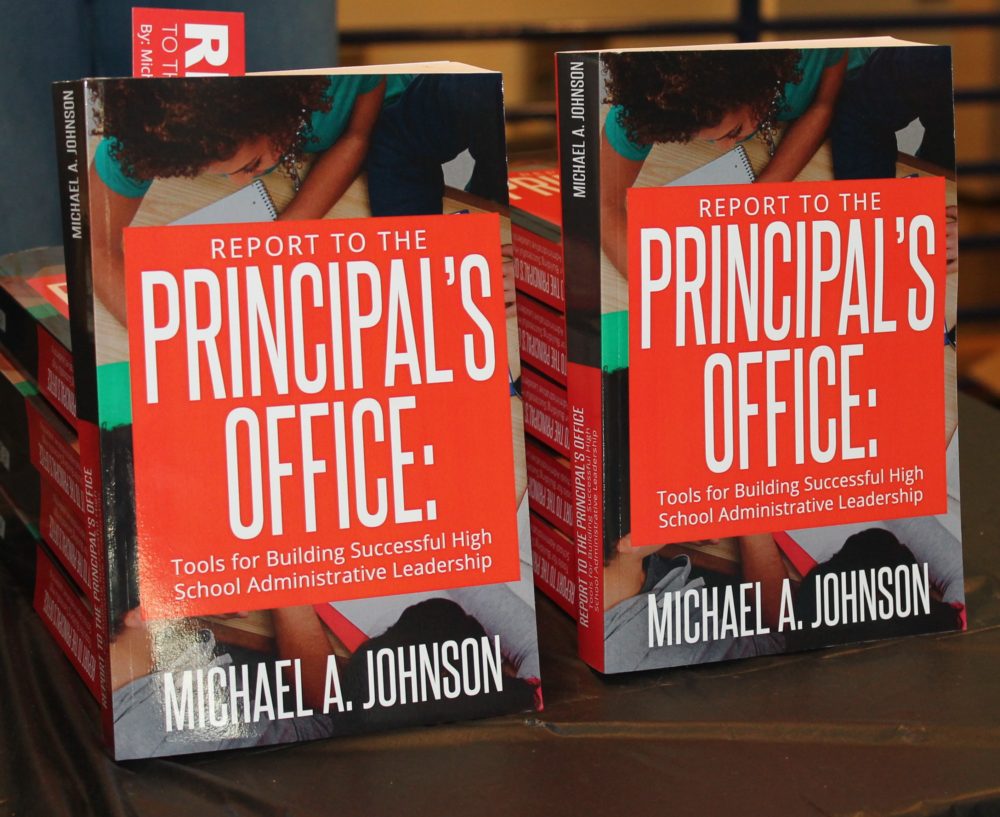
Michael A. Johnson is a former NYC teacher, principal, superintendent, and adjunct professor of education. He is the author of two books on school-building leadership: Report to the Principal’s Office: Tools for Building Successful High School Administrative Leadership and Report from the Principal’s Office: A 200-Day Inspirational and Aspirational School Leadership Journal.

Ending Kindergarten Gifted & Talented Screenings Is Right—But It’s a Superficial Political Fix for a Complicated Pedagogical Problem

Ending Kindergarten Gifted & Talented Screenings Is Right—But It’s a Superficial Political Fix for a Complicated Pedagogical Problem

Over the last few weeks, I’ve received numerous emails and calls from across the country asking for my professional opinion on one of New York City’s mayoral candidates’ promises to eliminate the NYCDOE’s Gifted & Talented (G&T) program—starting with kindergarten.

I can’t think of another question I’ve been asked in recent years that has produced more shocked reactions to my answer. I suppose people assumed, based on what they believe about my educational philosophy—or perhaps what they’ve read in media coverage like The New York Times’ “Scores Count” article or the American Association for the Advancement of Science (AAAS) journal piece on how my elementary and middle school students passed New York State high school math and science Regents exams. Folks can’t imagine that I would strongly oppose eliminating early G&T screenings.

It’s true that I’ve always advocated for the good educational purposes of standardized exams—as tools to strengthen students’ conceptual, competitive, and performance skills based on learning standards, and as instruments to inform instruction. But I’ve also been a consistent opponent of bad, and sometimes downright deleterious, assessment tools, especially those that confirm and perpetuate unfair advantages.

And this is the place where I usually get into trouble: I will always call out the hypocrisy of public education systems and elected officials. NYC’s Specialized High Schools Admissions Test (SHSAT), is just as educationally and morally problematic as the kindergarten G&T screening test, largely because it measures the quality of a student’s exposure to consistent, high-quality instruction year after year, something over which a child has absolutely no control.

When I earned my Master’s in Supervision and Administration from Bank Street College, I occasionally observed classes at the Bank Street School (the alma mater of one of the mayoral candidates). I spoke with administrators, teachers, and students. The Bank Street School’s entire educational program could, in many ways, be considered a G&T-based pedagogy. Its methodologies, rooted in Deweyan progressive education, emphasized critical thinking, problem-posing, and problem-solving skills. And yes, the staff also helped students build strong conceptual and technical test-taking skills. Their approach was designed to draw out each child’s inherent gifts and talents while preparing them to perform well on standardized assessments like the SHSAT.

My position, as some have miscategorized, is not about loving standardized exams, but as the old Brooklyn saying goes, my position is simple: “Don’t hate the player, hate the game.” And if these are the “gate-keeping” rules of the game, then let’s help the children of disenfranchisement master them.

“Change the joke and slip the yoke.” —Ralph Ellison

I have spent my professional life warning Black and Latino parents, while actively empowering their children educationally, about the twin dangers of liberal paternalism and conservative degradation. They sound and act differently, yet both lead us through endless cycles of centralization and decentralization, one failed and very expensive “closing-the-gap” initiative after another, and still these public-school systems continue to fail the same majority cohort of Black and Brown students.

This current gifted-and-talented debate (one of many over the years) will be no different, because elected officials either lack the knowledge or the will to create public schools where every child, regardless of the school they attend, receives the high-quality education they deserve. Anything less is campaign-commercial talk.

Even if a mayor and their chancellor abolished every K–8 G&T program in the city, the political elephant in the room remains: learning quality inequity would simply reorganize itself by zip code and schools. Some children would still receive G&T-level experiences, while others—trapped in the wrong zip codes and schools—would continue receiving an inferior education.

So let’s explore the educational, developmental, psychological, and social variables that distort or invalidate any attempt to administer or interpret a kindergarten G&T admissions exam accurately. And let’s also examine where both the “ban it” and “keep it” camps fall pedagogically and courageously short; for neither addresses how to effectively support children entering kindergarten who arrive at vastly different points along the pre-kindergarten learning spectrum—regardless of race or ethnicity.

The real question is: how do we design ethical early childhood education screenings, not for exclusionary labeling, but to guide instructional models that embraces “multiple intelligences” and adopts a more male-child-friendly, sound-developmental approach to early childhood teaching and learning?

High-Stakes Admission Testing for Four- and Five-Year-Olds—What Could Possibly Go Wrong? Well, everything.

The Ethical Flaws: Human Developmental and Racially Prejudicial Problems

Applying a high-stakes admissions exam to 4- or 5-year-olds presumes that “giftedness” is fixed at birth—and therefore measurable at that very early stage of human development. Worse, it assumes that giftedness is not equally distributed among the “being born” population. This idea, even if put forward by an atheist assumes that God is favoring some children to be giftedly great in this world and others to be something less-than-great. Or, that nature (for those atheistically inclined), in a random casino-gambling way, somehow placed “giftedness” in the heads of a select group of babies whose parents just happen to be mostly white, wealthy, and well-educated.

Both positions are morally and scientifically indefensible. Children at this age are in a state of rapid and constant neurodevelopmental fluctuation—their attention spans vary widely depending on external stimuli, the language of adults, emotional responses, and their willingness to please authority figures. Their test performance can swing unpredictably based on comfort with the examiner, prior exposure to testing, or even what they ate that morning. These variables are profoundly shaped by home environment, nutrition, access to enrichment, and socio-economic conditions—not by innate “giftedness.”

And let’s be honest: if high school principals like me have trouble convincing some teenagers, especially boys, to treat high-stakes exams as life-changing events, what hope do we have of convincing 4- or 5-year-olds? (Full-disclosure) When my own daughter took the G&T test, we didn’t even tell her what it was. We made up a story about why a friendly stranger wanted to ask her questions. Fortunately, she was a confident graduate of Brooklyn’s Little Sun People preschool, where she had spent years engaging with adults who weren’t her parents and learning in a rich, kindergarten-like environment. On test day, she went into full “please-the-adults” performance mode.

The truth, which educators know but rarely tell the public (perhaps out of fear of further lowering public confidence), is that despite the great work of developmental psychologists like Bruner, Vygotsky, and Piaget, there is still much about the brain and mind we do not know—certainly not enough to justify excluding children from future opportunities at such an early formative age.

What if the G&T exam is not measuring giftedness at all—but rather, a child’s unearned access to “parent-pushing power,” privileged affluence, early literacy exposure, and parental educational attainment? If so, this exam is not assessing brilliance—it’s auditing privilege, parental personalities and family priorities.

As a 40+ year public educator, I’ve quietly observed how veteran teachers, often unconsciously, change their tone and demeanor when two well-educated, well-spoken Black or Latino parents walk into the room. Professional educators, including test administrators, are human. My daughter’s charm, vocabulary, and background won the day—but the truth is her environment gave her enormous advantages: nightly reading, exposure to museums, modern ballet classes, a home library, and an academically rich preschool experience. Meanwhile, countless other children—whose parents, for reasons of work, awareness, or distrust, did not even bring them for G&T testing—were automatically excluded from consideration.

How About This: Let Professional Educators Make Educational Decisions

And finally, the primary reason this critical early childhood decision should be taken out of the hands of all politicians, regardless of party or ideology, and placed in the not-seeking-votes hands of dedicated professional educators. Public education fails large segments of families not because parents don’t care or because children lack ability, but because a high-quality educational product is not equally distributed across the system.

In schools like Bank Street, Stuyvesant, and Bronx Science, there is zero tolerance for instructional incompetence. The open secret of public education is that in too many schools, often those serving our poorest students, there is too much teacher turnover, too many inexperienced teachers for school administrators to coach effectively, and not enough of a critical mass of veteran, very-good to mastery-level teachers capable of sustaining high levels of instructional excellence, that matches high expectations of student capabilities.

And those “very good to mastery-level” teachers, and their school leaders, must operate from what I call, a place of Essential Efficacy: the conviction that educators bear full responsibility for a child’s success, independent of the student’s socio-economic status, language background, or parental influence.

Many of us who led high-performing Title I schools achieved this by becoming Entrepreneurial Principals (see Report from the Principal’s Office, pp. 556–564), closing the resource gap by raising huge amounts of additional funds and building high-efficacy instructional cultures. But more importantly, we succeeded because we, and our staff, believed—deeply—that all children arrive in this world with a unique set of skills and talents, and that it is the sacred duty of professional educators to find and draw out those gifts.

So yes, ending kindergarten G&T testing is the right decision—but for the wrong reasons and in the wrong way. It’s an easy political-rhetorical win, but a meaningless gesture that doesn’t address the deeper disease of educational quality inequity.

And, until we build a system that cultivates every child’s potential with the same fervor, we now reserve for labeling a few as “gifted,” we will keep playing the same mis/under educated rigged game.

The goal isn’t to find the gifted, it’s to bravely grow the gifts inherently existing in all of our students.


Social media platforms are political shark tanks, and they’re not the place where educators who aspire to be or desire to remain school-building or district-level administrators would want to cut themselves.

Professional educators should be careful about what they post on social media platforms. I speak specifically to those who presently serve or aspire to be an assistant principal, principal, deputy superintendent, superintendent, or district-level administrator. You could be dealing with folks in powerful positions who are guided by and operating in a mean, ugly and wanting to hurt you or your kids’ spirit. Stay calm and focused, lead with your mind and leave your hyper-emotions behind, and engage in affirming and gaining power for those disenfranchised and dismissed students of our nation who are under your care. Think of the immense impact you can have on these children if you can remain in or get into a school-based or district-level leadership position. Don’t let your adversaries know your thoughts; act audaciously and powerfully, and with student success supporting intentionality, but don’t talk about those actions publicly. Every highly valued and highly effectual school leader is a “rule maker-braker-bender.” You want to be able to say after you have acted boldly on behalf of your students (tongue firmly in cheek and a contrived look of sincere contrition), “Oh my goodness, I didn’t know I couldn’t do that, (and since it’s too late now), I am so sorry, and please accept my sincere apology!” (hopefully, my former superintendent won’t see this!:-) Remember, your positive and thoughtful actions can make a profound difference in the lives of your students.

School Employee Disciplinary Procedures and Outcomes are Complex. And so, Just a Brief Note For Aspiring School-Based Leaders.

School Employee Disciplinary Procedures and Outcomes are Complex. And so, Just a Brief Note For Aspiring School-Based Leaders.

“Maryland teacher under investigation, ‘reassigned’ out of classroom after video shows students unbraiding hair, painting his nails in class…”

There’s a lot to unpack here…

This blog post is dedicated to those educators aspiring to become school-building leaders (APs or principals). My goal is to shed some light on a highly complex topic of utmost importance in any school-based supervisory experience. I’ll also discuss some preventative pre-crises actions that those desiring to be school-based administrators should consider. A brief, outsider “first glance” look can be very deceiving regarding public school employees’ disciplinary procedures and final determination outcomes. I aim to walk you through this complex (although very common) public education phenomenon, highlighting several vital points that must be considered:

First, any public (civil service) school employee who is being either investigated (reassigned while receiving full pay, including all scheduled step increases) or disciplined has a First Amendment right to speak publicly, reach out to print or electronic news media sources, wage a campaign on social media platforms, and do radio/TV. interviews, contact elected officials (note exception: the district’s school board members should not get involved during the course of the investigation), speak at public meetings, etc. about the case “as they perceive it” (except for naming the possible students involved), they can also rant endlessly about the “wrongness,” “silliness,” incompetence, racism, bigotry, revengefulness, and any other so-called alleged bad acts against them by the school administrators or the school district involved.

However, the school administrators and district officials involved, based on perhaps local, state, or federal laws and local labor contractual agreements, don’t enjoy that same First Amendment right to tell their side of the story or to present some elements of the case that the employee has failed to reveal, or that the employee in question may not even know that these unmentioned pieces of critical evidence are in the district’s possession. All this is to say, be careful when we read and arrive at a “slam-dunk” right or wrong education news story because all of the facts of the case may not be present in the employee’s presentation of the situation, or the district’s “forced” silence on the matter.

It is also not uncommon for an employee (still speaking publicly) to claim that their class lesson evaluations are “excellent” or that they are popular with students and parents. But this is the proverbial apples-to-oranges comparison; instructional competence and student and parental “likability factor” (or the opposite) should not interfere with the school administrator’s or district’s ethical, professional, thorough, fair, and objective investigation of the incident(s).

There is a reason that school and district administrators must complete a mandatory course in “Education Law,” And that is because this “Education Law” (even though it contains elements of) is, in many significant ways, different from “regular law.” For example, as a high school principal, every year, my dean and I had a non-monetary fun wager about the earliest date when some ninth grader (and often also their parent) would make an uninformed claim that a student’s locker was part of their personal and private (requiring a search warrant) space––not it’s not! Or the student has a First Amendment right to “speak whatever is on their mind” in the middle of a teacher’s lesson––no, they don’t!

In the case of employee investigations, you will often observe a school district being inclined to act in a way that non-educators might interpret as being “extreme” or “doing-too-much” and that’s because school districts (like local Child Protective Agencies) must, if they err, “err on the side of caution” when it comes to the physical and emotional safety of children. Again, some non-educators might see the employee being temporarily removed or reassigned pending an investigation as the district has arrived at a “guilty verdict,” but this is inaccurate. Further, this incomplete and incorrect perception of “employee guilt” before the investigation is completed is often created by the employees themselves, who are busy “talking up” their side of the story to everybody (sometimes cynically trying to drum up student or parental support) who will listen, while the district, not just for legal and employee contractual reasons, but also to protect students, parents, mandated reporters, any witnesses, and the integrity of the investigation is prohibited from publicly providing any information about the case; even after a final determination has been arrived at.

After the investigation has been completed, the findings and facts of the case should still not be discussed publicly, and even the school board should go into a closed to the public “executive session,” which is the proper place to hear and review a personnel matter.

I would advise all educators to avoid posting pictures of students on social media platforms and especially avoid positing on non-district or the employees personal or commercial school media platforms (and, of course, with parental written permission, a small number of specific music performances, plays, team sporting events, etc. are okay). So many things can go wrong, especially in this age of AI, where pictures can be reassigned improperly, corrupted, and sent dangerously viral so easily.

A verbal “parent permission slip” is not worth the empty air it dissipates into once it has been given. There have been situations when an unfortunate incident occurred, and a parent, under the advice of their (now lawsuit-delivering) lawyer, suddenly lost their recollection of telling an educator that they had given permission over the phone for their child to go on a trip or do X with the educator.

Even when an educator receives a signed and dated legitimate written parent permission slip, it’s crucial to adhere to the specified activities strictly. In the case of students either grooming each other or the teacher, which would need to be stated explicitly in the social media posting parent permission form, not just a general: “I’m posting your child on my social media page, is that ok?” (ok for the child to do what?) And, of course, any permission form going out to parents should be reviewed by a school administrator, who would surely (my goodness, I hope!) cancel any “grooming” activity outside of a formal Career Technical Education (CTE) cosmetology program which would have those parent permission granting conversations and documents signed before the start of classes.

Many professional educators are unclear about the “legal protection power” of a signed parent permission form. Parents can’t sign away their right to sue, especially when a staff member is negligent, uses poor judgment, goes “off-curriculum,” introduces “controversial” books (not to be confused with the political banning of authorized books), films, pictures, or other materials not authorized by the SED, local district or school, commits a crime, goes outside of their official job description duties (being groomed by students could fall under that category), and perhaps ignorantly or deceptively omits some of the planned activities from the parent (granting) permission form.

Finally, one, two, three, or more parents being “Okay” with a particular activity does not allow them to speak for all of the parents in the class, team, or club, even if it is a class of 30 students and 29 parents say “go for it” that one dissenting parent’s concerns must be seriously considered and properly address without stigmatizing that parent or their child, which is why a school administrator should always be involved.

Keep students out of your personal business; I get it; adolescents will, in a nice inquisitive way, want to know more about you, but you should deflect and move on, perhaps with a joke, because they are most likely not being mean-spirited, just sweetly nosey, for example: Student: “Mr. Johnson, are you married?” Me: “Never mind about me; you just make sure that when you get older and marry someone, they are on the honor roll and not someone on the dishonor roll, so let’s get to work, or someone may not want to marry you!” They will laugh and maybe try once or twice more, and then it will end because, unlike many adults, children will pick up the context clues that you won’t let them into your personal business space.

Finally, there is what I believe is a false modern pedagogical view (held by some educators and parents) that students want you to be their “friends” when, in actuality, the way nature has planned it and what they expect and what makes them feel safe is that you educator (or parent) be the adult-in-the-room (and in their lives), set boundaries, establish standards of behavior, be a model of their evolving adulthood. Young people, even if they act in contradiction to this idea, want to see and respect you as an elder of the species who will provide them with your accumulated wisdom, which means that both you, the professional educator, and the student’s parents need to find friends your own age!

These are zero-tolerance issues: Don’t allow students to make any inappropriate (sexual harassment) comments about your anatomy, even in the form of a joke––immediately refer them to a school administrator (that was my policy as a principal).

Keep students away (and don’t encourage them) from inappropriately touching your body or clothing; intentions are not important here, as so much can go wrong once this line is crossed. Certain body areas, like hair and hands, can carry some intimacy aspects to them. Students may not be aware of these possibly dangerous zones; that’s where your professionalism and adult sensibilities should kick in.

An excellent guiding behavior and comments question to ask yourself: “Would you say X or do Y if a school administrator or the superintendent was in the classroom if a colleague’s spouse or that student’s parent was in the room?” Besides, when it comes to students “grooming you,” you are working (and should be teaching, by the way) and, therefore, should have the money to go to an outside-of-school commercial grooming facility (nail or hair salon, barbershop, etc.) to have those personal matters tended to.

Further, check first with your school administrator if you are unsure if an activity is prohibited or carries great possibilities of something going terribly wrong; trust me, unless your school administrators have a professional career death wish, they won’t steer you wrong. Besides, there are so many ways to inspire and connect with students and gain their emotional trust without them touching your body. Now, some of my former students might remark: “But you hugged us in the mornings every day at the front door or at graduations,” that would be true, but I was always careful to give my female students “church hugs” in other words the same “sideways” hug, I gave to the elder mothers of my church.

Get a well-informed and experienced mentor(s)! If you are a teacher, an aspiring, newly appointed, or a veteran AP or principal, get a trusted group of peer and “above-your-grade” highly competent and keeping-things-confidential mentors to help you navigate the uncodified job descriptions and rules of any professional education (especially school leadership) job. A great deal of having a successful educational career is knowing what you don’t know but need to know. However, a very dangerous place to be is not knowing what you need to know, not having someone to tell you what you don’t know, or ignoring when someone does tell you those unwritten but rigorously enforced workplace rules.

Finally, there is a reason that the novel Lord of the Flies, a classic literary work that explores the dynamics of a group of boys stranded on an uninhabited island, has lasted so many years on the MS/HS favored reading list. Despite their outward bravado and bold verbosity, adolescents actually don’t want (and are unsettlingly frightened) to manage their school or a classroom. Our young people are anthropologically and biologically (albeit perhaps unconsciously) inclined to want and seek guidance from grownups on how to safely and effectively transition (survive and fit) into the adult versions of our species.

The vast majority of students come to school daily to learn, including students who, unfortunately, attend chronically underperforming schools. This means our first professional prime directive is to teach them intellectual, emotional, moral, and the open and “hidden” social survival techniques, along with those critically important hard and “soft” professional skills.

Even if they seem to express the opposite, students want a school environment where the adults are in managerial and instructional charge. Many students who may live in neighborhoods where they could be subjected to random acts of violence desperately want those precious hours they spend in a school to be a time period that will allow them to exist in a secure, well-organized, predictable, and standards of expectations and clarity of rules, adult-led school building.

Don’t get confused when you get push-back on this issue (they’ll thank you later, or maybe they won’t), for the “push-back” against adult authority is the student’s way of testing the adults (“are you serious when you say that you care about us?”) in the building to determine if the school staff really care enough about them to do the hard work of consistently establishing the perimeters of acceptable language and behaviors. In other words, “Can I get what I need from this school, which at this point I may not even know clearly all that I need, to move me toward a winning future adult life?”

Based on the cognitive development theories of Jean Piaget, we should not (it’s pedagogically wrong and professionally unethical) ask students to make life-defining decisions that their current developmental psychological stage has not prepared them to make (e.g., allowing Black and Latino male students to purposely underperform academically). This counseling and guidance work must be especially well thought out in middle schools because those students are in that very complex and challenging to navigate psychological stage where they are (and it can be day to day) struggling as children while facing their rapidly emerging adult feelings; it’s the complicated place of still being something, and yet, also being driven to be something else; these students need a clear and thoughtful service of values clarification instruction in those middle school grades.

Teaching students the boundaries of acceptable language and behaviors prepares them to successfully negotiate the unforgiving and painfully punishing post-public school world. We, the adult educators, should provide students with the inspiration and power to execute safe, sound, and self-empowering choices within the context of adult, well-informed, and experientially driven decisions, what we call in the profession: “guidance” so when they leave us and walk into their full adulthood, they can function in their own and in society’s best interest.

Michael A. Johnson is a native New Yorker and a proud product of the NYC Public School System. This is also the city where he spent the majority of his professional life serving as a public-school teacher, high school principal, and school district superintendent, and as an adjunct professor of science education in the School of Education at St. John’s University. He led the design, development, and building of two science, technology, engineering, and mathematics-career technical education (STEM-CTE) high schools: Science Skills Center High School, NYC and Phelps Architecture, Construction, and Engineering High School, Washington DC.

Books by Michael A. Johnson:
(2018) REPORT TO THE PRINCIPAL’S OFFICE: Tools for Building Successful High School Administrative Leadership.

(2021) REPORT FROM THE PRINCIPAL’S OFFICE: A 200-Day Inspirational and Aspirational School Leadership Journal.

If you want to start as a public school-based administrator (SBA), then get the process started right!

If you want to start as a public school-based administrator (SBA), then get the process started right!

(Excerpts from an upcoming book for aspiring to school-based leadership educators)

Part 1: Aspiring to the Assistant Principalship

Being a school-based AP or principal is one of the most critical personal and professional decisions an educator can make. The quality of your career life and the quality-of-life futures of your potential School Family Members (students, staff, parents) are at stake. How you qualitatively start out with the School Based Administrator (SBA) job acquisition process is how you will qualitatively carry out that process and, ultimately, how the process will qualitatively end up for you!

“I am presently a teacher (or: dean, librarian, guidance counselor, staff developer, instructional coach, etc.), and I want to be an assistant principal––what do I do next?”

“What do I do next in my school leadership career journey?”

First, be an excellent, exemplary and highly-efficacious educator in your present job assignment!
Which means, I hope you have professionally distinguished yourself based on objective, operational performance standards in your current job position. In addition, you have received positive competency performance feedback from the district-level leadership (e.g., content directors) team. Further, your school-based supervisory administration team’s formal and informal ratings and evaluations (and maybe even written commendations) are noteworthily positive. You may have been called upon on the school or district level to present yourself or your classroom as a demonstrated example and model of high effectiveness and excellence. Or you have been asked to serve in the role of a professional development presenter? As a teacher, you may already hold a selective, distinguished leadership position in the school (e.g., mentoring, content or grade leader, departmental chairperson, curriculum writer, instructional coach, staff developer, or teacher PD center facilitator). You may be serving on a school or district-level task force or committee or have done so in the past. Your collegial peers consider you eminently respected and highly regarded. And (an excellent sign), when visiting your school, the superintendent, a deputy, or district director/coordinator (privately) ask you if you have ever considered pursuing an AP position! It is a good guess to think that they would only ask you that question if they felt you fit the AP profile and the district would benefit by your being in that SBA position-seeking “pool.” And finally, most importantly, the students under your pedagogical care make significant academic or social progress despite the challenges and deficiencies they may bring to your classroom.

Even if you are committed to pursuing an educational leadership position, remember the real-world impact of your potential role. Strive to be the best in your current role, not just for the sake of your school-building leadership job aspirations but because your actions can shape the future of children. Wait, observe, think, and listen for the authentic ‘heart’ and ‘head’ calling you into a leadership role. If the calling is true and accurate, it will persist until you answer correctly and purposely. Remember, schools deal with real people, not widgets. Your leadership can turn dreams and aspirations into reality; SFMs are not just abstract data points or names attached to official documents.

Perhaps the career advancement grass looks greener on your neighbor’s (appointed AP or principal) side of the fence because you don’t see all the extra time, hard work, planning, and strategic commitment to unpaid hours they put in to make those positions work! —So, be careful and know what you are asking for aspiring school administrators because (after studying this book) you might get that position!

Next: Part 2, The state/local SBA job requirements, the official administrative SBA job posting, and the applying process is the process, so meet and follow them faithfully.