Responding to Racist Attacks on Popular and Heroic Black Public Figures: An Educational Imperative for Adaptive, Corrective, and Protective Lesson and School-Wide Response Planning

As the bulk of the decent, non-prejudiced poisoned citizens left in America express, justifiably so, righteous anger and moral indignation at the U.S. President’s escalation toward more explicit visual expressions of the ugly beliefs and policies that undergird his reign of racism; professional educators, who are human beings and ethically embarrassed citizens (we take any form of ignorance personally), will also feel the pain of this moment. And that pain will not be limited to Black educators only. We therefore must “stay focused, and stay on the job.”

First, we must recognize, from a pedagogical perspective, what Barack and Michelle Obama meant, not only (but especially) to Black children in our own country and beyond, but also to children of every color, ethnicity, and nationality, in schools not just across the United States, but in schools all over the world.

So, our first job is to develop age- and grade-appropriate lesson plans, across multiple content areas, including active involvement with guidance and counseling departments, that support healthy healing, conceptual correction, and, particularly in light of the current ICE brutal assaults on human beings, a reassuring sense of both group and personal protection.

We know enough developmental psychology to understand that when young people are hurt, angry, or frightened, they will not always express or act out those feelings in the most positive or productive ways; therefore, professional educators must step in directly into the present fray, and help students process this disgraceful moment in our history in the most positively edifying and emotionally strengthening manner possible.

Each school-based administrator must make a personal and professional decision regarding how far to go, and in what format; therefore, I would not offer a blanket recommendation for how school leaders should respond to these types of historical moments.
That said, based on my past experiential practice as a high school principal, where we understood that whatever major event existed in the public atmosphere, our students already knew about it, so instead of hiding from the obvious, what I did then, and what I would do now, is to shift into full response mode.

I would immediately convene a crash cabinet, school-leadership and departmental emergency meeting to design a school-wide classroom, and guidance-counseling response strategy, beginning with four grade-level assemblies that I would personally lead. After all, we invested a great deal of time—eight years—building students’ pride, resilience, hope, and aspirations around the exemplary model and public leadership excellence of the Obama family; and we cannot allow all of that deliberate self-esteem-building work to be attacked without a purposeful teaching-and-learning response.

A note of caution for principals: understand that superintendents are, by job description, though not necessarily by personal preference, both educational and political actors. You must therefore read the present situation within that dual context and know your superintendent’s position on this matter before acting.

As for me, I have articulated my own self-guiding response position to moments such as these across several chapters of my book, Report From the Principal’s Office: A 200-Day Inspirational and Aspirational School Leadership Journal, including:

13. The Ethical Principalship.
20. Ethical Righteous Authority Means You Can’t Always Ask for Permission to Act.
21. Wise Righteous Authority Means There Are Times When You Should Ask for Permission to Act.
32. The Authentic Principalship.
64. The Mindful Principalship.
And very relevant to our present concern:
75. Part of the Effective Principalship Practice Is Not Throwing Yourself Under the Bus!

So, act according to your ethical inclinations, pedagogical responsibilities and your district political realities.

I do not want to get any principal in trouble, so full disclosure: my leadership style is my leadership style, and even when teaching future school administrators, I always explain my leadership approach with a clearly stated warning label. That said, I firmly believe that the most moral, ethical, and pedagogically sincere educators, and especially educational leaders, are, in fact, made in and for this moment.

This is not a moment for professional silence, instructional avoidance, or moral retreat disguised as neutrality. Racist attacks on major well-known by students Black public figures, particularly those who represent dignity, excellence, and aspirational possibility, inevitably, one way or another, land in our classrooms, whether we invite them or not.

The question before educators is not whether students will be affected, but whether we will meet them with intentional guidance, protective care, and intellectually honest instructional practices. If we truly believe that education is both a moral and civic endeavor, then this is precisely the moment when principled, prepared, and courageous educational leadership must rise to meet the work.

Michael A. Johnson has served as a NYC public school teacher, an award-winning principal, and a school district superintendent. A former adjunct professor of education and the author of two books on school-building leadership, he writes about educational equity, policy, and the ethical and moral obligations that come with safeguarding the educational lives and promising futures of all children. Inspired by ancestral heroes such as Dr. Gerald Deas, John Lewis, and W.E.B. Du Bois, he strives to make as much “good trouble” as possible before closing his eyes for the final time.

If the New NYC Mayor Truly Wants System-Wide Quality Learning, He Must See Through the Fog of the Fake “Class Size” Misdirection War

Ask any principal: “Is a class size of twenty students better than a class size of thirty students?” The answer you will probably get from most principals is, “Yes, absolutely!”—especially when class size impacts underperforming students and those who are struggling to meet conceptual and skills performance standards.

But then ask the question in a different way: “Would you rather have an experienced and proven master teacher teach a class of thirty students, or a less-than-stellar, not-meeting-the-instructional-quality-standards teacher instruct a class of twenty students?” You might get a different answer—and I know which option I would, and did, take.

As a high school principal, in organizing two departmental courses—9th-grade Algebra and 9th-grade English Language Arts—I placed my “weakest” students (based on transcript and 4th/8th-grade standardized testing scores) in classes of twenty with some of the strongest and most masterly skilled teachers; and I offset the cost by programming larger student class-size numbers in my advanced junior–senior-level classes and in my Advanced Placement (AP) courses.

So, I am the last to say that class size does not matter, because from a principal’s strategic vision to make it possible for all students to succeed in a system structured to only make a few entitled students academically successful, one of those leadership tools that must be used is to absolutely manipulate class size—and it works—as was reported in The New York Times (“Scores Count,” Sara Mosle, September 8, 1996), where a former student who was interviewed was from that coming-from-middle-school, underperforming and below-grade-level cohort; that student went on to take Physics and other advanced courses as a senior.

Therefore, strategically and contextually, class size will always matter, but it should never be considered a substitute for high-quality instruction and dedicated, efficacious practices.

This politically popularized, but pedagogically shallow and falsely binary, “either/or” framing of the class-size question is beneath serious professional debate and actively undermines the learning needs of real students in real schools. Well-informed policymakers and professional educators should instead be engaged in a rigorous, system-level conversation about how class size is deployed strategically—by different schools, grade band, subject area, academic course requirements (e.g., CTE classes), developmental psychology, student need, instructional capability strength, and the overarching school mission—across the entire PreK–12 continuum.

This standardized political approach of, “Well, we don’t know what to do, so let’s just do something that sounds right—and that we can sell to parents and taxpayers as if it will truly and significantly raise student academic achievement,” when in fact these chronically ineffective actions only succeed in wasting a great deal of money (millions) and squandering the precious learning windows of opportunity for thousands of children at all academic performance levels.

With every new mayoral change, the consultants, educational businesses, and those lobbying for someone other than children—who have no lobbyist—come out of the woodwork to “love bomb” and create a fog of confusion around the new mayor, all claiming that what they want (as opposed to what they really want and won’t say, which is a lucrative contract or more dues-paying members) is in the best interest of children, when what they want has no intention of helping children—especially those children in the city who will benefit the least, or not at all, from these expensive but useless initiatives.

Many (I won’t name them out of respect for the very dedicated employees involved) Title 1 school districts—destinations North, South, East, and West in our country—have some of the lowest class-size numbers in the nation; and yet these very high per-pupil-allocation districts don’t see their lower class sizes translate into higher academic-achievement performance, particularly for their most (usually the majority) politically disenfranchised children of color. We can’t blame this on direct racism, although an indirect neocolonial case could be made, because the primary governance officials—the local, state, and federal elected officials, and the district and school administrators—primarily share the same racial and cultural heritage as the vast number of chronically underreaching proficiency-level students. So, what’s up with that?

In the electoral-political sphere, it’s the economy (affordability); in public education, it’s the quality of instruction!

No school or school district (and the New York City Department of Education is technically a school district) can create significant, demonstrative, all-lives-changing, and sustainable high student academic performance—and I’m not talking about the press-kit fiddling with a few percentage-point “improvements” generated by averaging the higher-performing students with the lowest-performing students (like averaging my salary with Jeff Bezos’s salary and then calling me a multi-millionaire)—without establishing an extensive culture of high levels of instructional quality that the child receives year-grade after year-grade and when moving from class to class in middle and high schools.

I am hoping—and every speech I have heard from Zohran Mamdani suggests that my hope is not in vain—that he is smart enough to ignore the peddling pedagogical merchants who want to enrich themselves and not the educational experience of children. Many of these undereducated children are the very ones most in need of a high-quality public educational experience to break them out of a generational cycle of poverty and disappointment.

I am also betting my hope on the fact that two schools Mr. Mamdani attended, and that I visited several times—Bank Street School for Children and The Bronx High School of Science—were schools where the City’s elected officials, parents, school administrators, and the governing oversight bodies had little tolerance for a second-rate, not-properly-preparing-students-for-the-next-level, and terribly inferior educational learning climate. These two schools efficaciously did whatever it took to make their students successful.

Once, a NYC Specialized High School (SHS) principal colleague/friend called me about an African American teacher I was mentoring and had written a letter of recommendation for, who was now seeking a transfer from her present Manhattan high school to the SHS. The principal asked, “She is a great teacher, but does she know what she is in for?” The principal did not need to explain what that “what she is in for” statement meant, because I had already met with the teacher and had a keeping-it-real-honest conversation where I explained, “You will need to operate at your A+ level best every day of school, because those SHS parents are very politically connected, so there is no space for you to show up one day and think you could just ‘phone it in’ with these students” (not that I thought she ever would, but I wanted us to be clear-eyed about this SHS transfer she was seeking). And so, I explained that although she was technically tenured, no labor contract would protect her if she did not teach, as she now does, at a mastery level.

If Mayor-Elect Zohran Mamdani can simply focus on the types of schools he attended—schools that represented excellent, innovative instructional practices, high expectations for students, and an efficacious teaching model—as a standard offering for every NYC child, then the deceiving or misinformed “class size” whisperers will be ignored and will go away, allowing him to embark on an uncompromising pursuit of realizing school-system-wide instructional excellence.

If the new mayor truly wants system-wide quality learning, he must concentrate on the one policy lever that actually moves student achievement: sustained and high levels of instructional excellence in every classroom. That requires rejecting the fog of the fake “class size” misdirection war and instead embracing the school-cultural imperatives that guide places like the Bank Street School for Children, The Bronx High School of Science, and other NYC Specialized High Schools, and programs that demand, expect, and protect rigorous, next-level-preparing teaching every single day. Their leaders and parents do not tolerate weak instructional products, excuses, or adult-centered diversions, because they operate from a clear ethical directive: children deserve the best, and only the best, educational product we can provide.

If the mayor adopts that same standard for all of NYC’s children, the class-size-type distractions will fall away, the fog will lift, and the city can finally begin the urgent work of building a school system defined not by slogans or classroom seating gimmicks, but by real instructional excellence and authentic student success.

Michael A. Johnson is a former NYC public school teacher, award-winning principal, and school district superintendent. A past adjunct professor of science education and the author of two books on school-building leadership, he writes frequently about educational equity, policy, authentic school improvement, and the moral obligations of those entrusted with the lives of children.

Those Who Wanted a Mamdani–Trump Fight Reveal Their True Priorities—And NYC’s Children Aren’t Among Them

Somewhere around my third year as a principal, I vowed to stop saying, “Now I’ve seen everything!” I’m glad I made that vow, because even in my 11th and final year, I left the principalship still being surprised—by the amazing events, both good and bad, that can unfold when leading an urban high school.

So here I am in my 75th year, watching C-SPAN, and I don’t think I’ve ever seen a POTUS throw both the GOP and the DNC under the bus at the same time, in the same press conference.

I can only imagine what some Republicans must be thinking as they watch the same broadcast: “Wait… I built my entire present or future election/reelection campaign on ‘otherizing’ Mr. Mamdani—playing to anti-people-of-color biases, Muslim prejudice, and the widespread ignorance about the difference between communism and democratic socialism (see: https://majmuse.net/2025/11/10/why-so-many-u-s-high-school-graduates-cant-tell-the-difference-between-democratic-socialism-and-communism/). And here is the head of our own party offering praise, adulation, and promises of support for the very man we hoped to demonize.”

And then you had their fellow Democratic Party “under-the-bus mates,” who twisted themselves into knots trying to play the part of the cowardly lion—running away from Mr. Mamdani—only to hear the leader of the opposition party they claim to despise praise Zohran as rational and admirable. No name-calling. No ridicule. No dismissive put-downs. Meanwhile, these DNC folks literally sprinted in the opposite direction of their own constituents, even allowing themselves to be goaded into voting for that ridiculous “anti-socialism” bill, without a moment’s thought about how deeply it would offend many of our closest allies—Finland, Sweden, Switzerland, Denmark. Did these folks skip their high school civics course, or was it simply taught badly? Yes: forms of democratic governance and extensive democratic-socialism systems can coexist—in the same nation, at the same time, without contradiction.

A Large Part of Public Civil-Service Leadership is Taking Responsibility for Real People

Every school-district superintendent knows that nothing good for children can emerge from a public fight with a city, county, or state chief executive. Your first duty as a superintendent is to ensure that no physical, emotional, or educational harm comes to the children under your care. And that means avoiding reckless provocations of those in power—especially individuals who possess the authority to directly or indirectly harm your students. Responsible leadership requires strategic restraint, wise words, not performative bravado.

Mr. Mamdani, soon to be responsible for eight million people, was vocabulary, tone, and pitch-perfect on point, and, interestingly, so was Mr. Trump. Both men demonstrated the discipline to stay on message despite the press gaggle’s repeated invitations to “hold their coats” in hopes of witnessing, and reporting on, an Oval Office brawl. I’ve warned students for years: anyone eager to hold your coat while you fight is not your friend. And the same holds true for those on both ends of the political spectrum who were rooting for a rumble in the White House.

Mr. Mamdani, and, in fairness, Mr. Trump as well (I must “tell the truth and shame the devil”), modeled what strong school-based and district-level leaders do every day: stay focused on the work of making the present world better for young people while preparing them to create a better future.

Those of us who have spent many years working in NYC schools understand the immigration documentation and legal-residency challenges faced by countless numbers of NYC students and their families.

If you, as I have, have ever had a crying 12th-grade honor-roll, model student sitting in your office while you work with lawyers, immigration officials, a U.S. Senator’s office, and the State Department to figure out how to help that student realize a well-deserved college dream, trust me—those moments, and the ultimate victories, never leave your memory. If Mr. Mamdani can buy those wonderful young people and their families some desperately needed time, then his trip to Washington, and the intelligently dignified way he conducted himself, was unquestionably worth it.

Michael A. Johnson is a former NYC public school teacher, award-winning principal, and school-district superintendent. A past adjunct professor of science education and the author of two books on school-building leadership, he writes frequently about educational equity, policy, authentic school improvement, and the moral obligations of those entrusted with the lives of children.

For NYC Schools to Succeed for All Children, the New Mayor Must Heed the Experientially Wise Counsel of School-Building Supervisors and Administrators

One of the most important leadership decisions—and some would say the most important—made by a superintendent is the appointment of School-Building Administrators (SBAs), that is, school-based supervisors, assistant principals, and principals.

A school can survive a great many challenges and still thrive academically, but one thing it is very hard for any school to overcome is the presence of incompetent, unethical, or ineffective school leadership. That’s why the highest-performing—and most entitled—private and public schools invest so heavily in getting the principalship appointment decision right. They understand that a wrong decision can inflict severe and long-term damage on the future success of children and on the well-being of the staff entrusted with serving them.

This became shockingly clear to me when a group of parents from a specialized high school approached me quietly at a high school fair and asked if I would consider applying to replace their departing principal. It was evident that this majority-white parent group was not concerned about my being an African American; their sole focus was on securing the best possible educational opportunities for their children. I thanked them, told them I was honored by their confidence, but respectfully declined.

School-Building Leadership Matters. School-District Leadership Matters. School-System Leadership Matters. And the Quality of Children’s Futures Depends on All Three.

Needless to say, the SBA screening and selection process a superintendent employs must adhere to the highest standards of school-building leadership practices: professional knowledge, skills, competencies, ethical conduct, emotional steadiness, and sound temperament. But it is also a principled moral decision on the part of the superintendent—one that must place the emotional and educational well-being of children above all other considerations.

This is the same challenge that mayor-elect Zohran Mamdani now faces as he contemplates who he will select as the next NYC Chancellor. And the overarching question is this: Will his decision be driven primarily by future electoral values or ethical pedagogical values?

There are many essential questions that mayor-elect Mamdani must pose to prospective chancellor candidates, questions they must be able to answer not through rhetoric alone, but through demonstrated past actions that show a courageous commitment to just, equitable, significant, and sustainable school improvement that reaches every zip code and neighborhood in the city.

NYC’s most underserved and vulnerable students cannot endure yet another status-quo, “political favor” chancellor appointment. The parents of these students are desperately pleading for educational quality justice. Yet for too many years, these Black and Latino voices have been unable to reach the great halls of state and municipal power.

This newly elected NYC mayor has repeatedly promised to uplift the city’s least heard and most locked-out citizens. His chancellor selection offers him the opportunity to make good on those powerful, uplifting, and in the case of public education, children’s dreams lifting words.

If the next Chancellor cannot articulate a credible plan for producing equity, sustainable improvement, and system-wide instructional excellence, then they should not be hired.

Recently, when watching an interview with the mayor-elect and his designated first deputy mayor, Dean Fuleihan, I noticed that when the interviewer pressed them about “getting those hard policy things done,” they confidently affirmed their commitment and stayed on a positively focused message: “We are starting from a place of yes!”

NYC parents therefore have every right to expect that a “starting from a place of yes” philosophy in public education translates into a no-excuses approach—one that refuses to accept any rationale for why every NYC child cannot receive the highest-quality education available. The city needs a Chancellor who understands that educational justice and academic achievement are inseparable—and who can articulate concrete, actionable proposals rather than slogans.

After decades of uneven progress—progress often misleadingly claimed through statistically averaged performance scores that conceal the city’s academic underperforming deserts—only candidates willing to confront structural inequities with courage and competence deserve serious consideration.

The next NYC Chancellor must be prepared to disrupt and dismantle entrenched bureaucratic failures, not cosmetically repackage them. And they must accomplish this feat without lowering standards or punishing any students who are already performing at or above grade-level and at the highest academic achievement levels. Serving all students well, at every performance level, is the essence of educational leadership excellence.

For hundreds of thousands of children, the difference between a profound visionary, and serous actionary Chancellor and a status-quo manager is life-changing. And for entire neighborhoods, it can determine whether they experience long-denied generational-improvement leaps—an essential objective of public education—or continue to endure the recurring nightmare of Black and Latino community underdevelopment.

This moment should push both the mayor and his chosen Chancellor out of their “play-it-political-safe” comfort zone—and it should—because that difficult, truth-facing space is the only place where the children of disenfranchisement have any real chance of receiving the quality education they deserve.

Further, the mayor-elect’s chancellor choice will determine whether NYC schools move toward real improvement or drift deeper into the kind of performative reform that makes consultants rich while leaving most of the city’s children educationally poor.

The question is simple: Is this new administration prepared to lead on the issue of quality education for all, or are they merely prepared to talk about it?

If any prospective chancellor candidate’s interview with the mayor-elect falls back on the standard educational “throw-away” lines:

“It takes a village…”
(Let’s begin with the village’s professional educators doing their jobs—taking professional responsibility at a higher, better, and more effectual level.)

“All children can learn!”
(We already know that; the real challenge is how you actually make that happen with real children in real schools.)

“Children First!”
(That’s not going to happen in a system where children are too often placed second to satisfying adult employment needs.)

“Empower parents and teachers to have more say in the running of schools.”
(Often used as a good political soundbite—a faux-collaborative distraction trap that enables civic authorities and public-school leaders to abdicate any real responsibility for whether children learn. If everybody is responsible, then no one is responsible)

If these four, and similar sounding statements represent the type of oratorical drivel the mayor-elect hears from a chancellor candidate, then he should politely end the interview, thank them for their time, and move on. NYC’s school system is far too large and far too complex to waste time entertaining amateuristic pretenders. He should continue interviewing until he finds a serious candidate willing to risk everything—including political safety—to save children.

Explore All Avenues of Information and Knowledge—Not Just the Self-Serving and Politically Motivated Entitled

School-Building Administrators (Assistant Principals, Supervisors, and Principals) represent a critical catalytic force behind any academic improvement that happens inside a school—and therefore across the entire system. Thus, a central question becomes:
What is the new mayor’s plan to consult with, and incorporate the insights of, SBAs in his effort to make the NYCDOE a first-class educating system for all students—not only those from the city’s most entitled zip codes?

Will he include, as authentic partners, the Council of Supervisors and Administrators (CSA) in discussions around the chancellor selection, major policy decisions, or system-wide initiatives? SBA exclusion has been a painful issue for many school-based supervisors, assistant principals, and principals (myself included) for far too many years. Out of professionalism and commitment to their schools, SBAs have largely remained quiet about this marginalization.

But something I learned as a superintendent is that the quickest—and most sustainably effective—way to raise student achievement performance is to ensure that every school has highly effectual school-building leaders. These leaders serve as the most powerful individual forces in making a school succeed for all of its children.

Yes, I understand the political reality: elected officials are often inclined to shape decisions around the groups with the most electoral weight. But the ethically correct move—the morally grounded move—is to do what is in the best interest of children, not what pleases this or that adult interest group.

If the mayor-elect’s first act is not to include the voices of educational leaders—superintendents, deputy superintendents, supervisors, and SBAs—then the system will remain stuck in its long-standing, professionally ineffective default mode. In that mode, parents can only hope and pray that their child happens to land in a school led by a radically off-beat, good-trouble-making group of school administrators and a courageous efficacious teaching and support staff—a team willing to do everything in their power to make the school work for every child in that building.

District-Level and School-Based Supervisors and Administrators Hold a Wealth of Institutional Knowledge and Wisdom

This valuable information can stop the destructive cycle in which every new “face of school governance” repeats the same ineffective (and very taxpayers expensive) decisions—decisions that have historically failed the majority of NYC’s students.

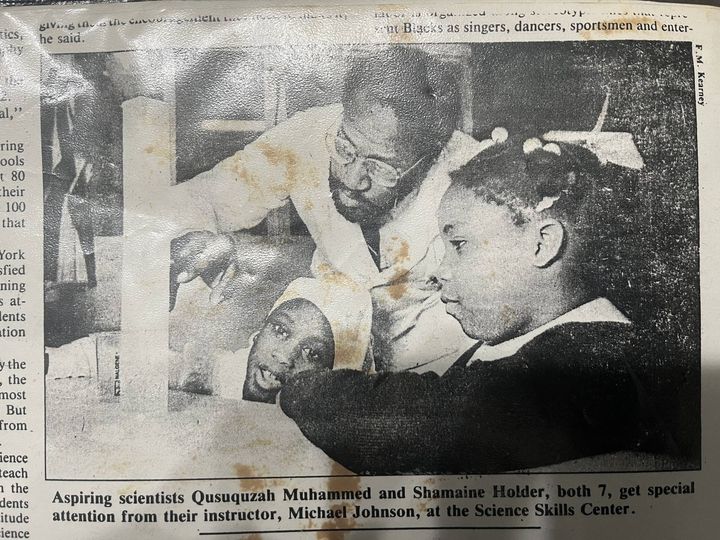
The best NYC principals spend an unbelievable portion of their day breaking or bending school-system rules so that children can learn. As a former NYC principal (Science Skills Center High School) of what many inside and outside the profession labeled a “good and effective school,” I must admit something I am not proud to confess that a staggering amount of my daily leadership time was spent breaking or bending bureaucratic rules, regulations, and blocking politically driven procedures that—ironically—worked against the very mission the public school system proclaims: effectively educating all children.

I also, every year, had to raise—beyond my standard budget allocation—hundreds of thousands of dollars through the school’s 501(c)(3) foundation to provide my Title I students not only with basic living and school supplies needs, but also with educational, cultural, and informal learning opportunities, as well as advanced enrichment learning experiences. For example, I once had to raise $20,000 in just two weeks to send our FIRST Robotics team to the national finals in Florida. These are opportunities normally reserved for NYC’s most wealthy and entitled children. I’m not complaining; I did what I had to do. But the enormous resource inequalities that still exist in the NYC public school system make any rhetorical claim of “quality education for all” ring insincerely hollow.

And I learned quickly that my principalship experience was not unique. When I became a NYC superintendent, I found myself once again engaged in a constant cycle of corrective actions—undoing bad policies, practices, and regulations, and closing opportunity gaps that were actively harming good teaching and learning experiences. It was déjà vu, only now with higher district-level stakes.

This is the painful truth: we have a school system that often seems structurally designed to undermine its own stated mission—one that loudly proclaims it will do “everything possible” to ensure that all children have a promising future rather than a path to prison. Yet the internal machinery of that same system frequently drives outcomes that contradict those noble aspirations.

There is something profoundly wrong—ethically, operationally, and organizationally—when the very school leaders most directly responsible for student learning must spend so much of their time “tricking” the system simply to help children succeed. When principals and superintendents feel compelled to constantly perform work-arounds in order for the system to fulfill its primary mission, that institution is not merely misaligned—it is in desperate need of dramatic, dynamic repair, and certainly not the kind delivered by lofty, superficial word-playing games.

My years as principal and superintendent taught me that the people who know the system best—and who can make it work at its best—are often the ones forced to fight it the hardest. That contradiction is neither sustainable nor morally defensible. The next NYC Chancellor must recognize that the wisdom of school-building administrators is not optional—it is essential. And, until the city embraces that truth, the burden of “tricking and offsetting the system” will continue to fall on those fighting to save children, instead of on the leaders empowered to fix what is failing them.

Michael A. Johnson is a former New York City public school teacher, principal, and superintendent (Community School District 29, Queens), a district STEM education program director, and a former adjunct college professor of science education. He is the author of two books on school leadership, designed to prepare the next generation of Assistant Principals and Principals. Johnson writes frequently on educational equity, leadership ethics, and real systemic reform in public education.

PreK-12 educators must uphold the valuable pedagogical principles of Diversity, Equity, Equality, and Inclusion in their conceptual and behavioral learning objectives.

As professional educators, we must take an enlightened and ethical step up and away from the common uninformed and often divisive ‘politically toxic’ current conversations concerning the application of the principles of Diversity, Equity, Equality, and Inclusion (DEEI). We understand the educational value of each DEEI principle individually and how they work together in a school building. Additionally, we recognize that, operationally and pedagogically, Equity and Equality are profoundly different teaching and learning strategies. And even if some of our university colleagues, now under political and financial siege, are forced to abandon the efficacious teaching and learning power of applying (or even discussing) DEEI, we must hold the line. For in our PreK-12 world, these core doctrinal conceptual and behavioral learning standards are inseparable from the type of schools we want to create, the learning objectives we want to teach, and the profiles of the kinds of students we want to send into a very diversely integrated and growing internationally-interactional nation and planet. We must seek to empower students with a broad spectrum of communicative competencies and a rich reservoir of applicable knowledge and intelligences. Their neighborhood, the city, the state, and the region of the nation where they reside, along with their nation itself, is not the entire planetary humanity story, not even close! Our job as intellectual capacity builders is to broaden and not limit and shrink the child’s locus of power and influence. In a good and wise Democracy, its public education system will build a greater unity of purpose that fully embraces and develops the gifts and talents of all of its citizen children.

As professional educators, we must upgrade our game for teaching personal responsibility skills.

This is not just an academic task but a professional, ethical mission to inspire and motivate our students to take charge of their living well in the future possibilities.

For eleven years, I treated the Principal’s Office (or should I say it treated me) as a classroom for understanding human psychology. I learned so much about life and human motivations in that space.

One of the first things I learned was the transformative power of effective communication. Many of the parents I met with in the principal’s office often applied very different parenting methods than the ones I experienced as a 1950s first-generation immigrant Caribbean-American public-school child. The differences in both chronological time and family-raising culture were profound, and I quickly realized that if I hoped to communicate effectively with many of my school parents, then I needed to bridge the gap between my upbringing and the way students were being raised in the current (then 1990’s) era.

The first significant difference I noticed between my professional principal experience and my own public schooling experience was around this critical concept of personal responsibility. I participated in so many “odd” parent conferences in my office where when there was a student who was seriously misbehaving and disrupting a classroom lesson (which is how and why they ended up in my office) or a student who was dramatically underperforming academically when their middle-school academic performance record and standardized test-scores indicated they could do much better. I was amazed when a parent, with all sincerity, asserted some versions of things like:

“The teacher (does not like) has it out for my child!”

“The teacher wants my child to fail the course (or the end-of-course standardized exam, e.g., Regents)!”

“This school is asking too much of students!” (“And you, principal Johnson is doing too much!”)

“He or She is associating with the wrong people!” (It’s fascinating when all the parents of the rambunctious group independently say the same thing about the other students in the group)

“This school (and often specifically me, the principal) doesn’t like my child!”

“My child has a First Amendment right to express their opinions on the lesson while it is being taught.”

“The teacher does not know how to teach (pick one: science, math, history…).”

“Other students in the class were doing the same or similar “bad” things!”

“How come you don’t ever suspend any of the students on the honor roll!” (I heard that one a lot)

It was always amazing to see parents cast their wanna-be bully child into the award-winning role of “victim.”

(And one of my all-time favorites from a father of a 9th grader being in-house suspended for blurting out in the middle of a lesson an extremely inappropriate remark about a part of a teacher’s anatomy) “Come on, Mr. Johnson, didn’t you have a crush on a teacher when you were in high school?” He said it in front of his victory-smiling son; I knew then I had a lot of work to do for the next four years.

Effective verbal and body language are critical tools in achieving personal and professional objectives.

Those themes ran throughout many (and thankfully for my emotional sake, not all) of these principal office ‘corrective-action’ parent meetings. Sadly, there was always something outside of the child’s power to reason with, control, or have the ability to independently manage that was the cause for their misbehaving or academic underperforming actions. Exempting, of course, those special education cases where the student was documented diagnostically struggling with control issues, but even in those IEP disciplinary situations, the objective was to grow that child self-control powers.
However, this parental abdication (for acting out and underperforming regular education students) of personal responsibility on the part of the student could be badly enhanced by parents who cherished their role of being the child’s “friend” over being a behavioral standards-setting adult parent.

Sometimes, parents would say, “It’s racism (as the cause)!” when the teacher was White, but that did not explain when the child exhibited the same negative behaviors or academic underperformance in a Black teacher’s classroom. For sure, our society is far away from removing the national stain and shame of its slavery past, a historical holocaust that has been changing in form but not in its practical expressions, even up to our modern era.
My concern, and a discussion I often had with my students, is that if everything that goes wrong in our personal lives is caused by racism (even when no White person is involved), then that removes all self-authority from our existing lives, essentially rendering us as less than human.

Perhaps a primary price of “Freedom” is taking personal responsibility, knowingly acting in our best interest, affirming our humanity by properly managing our behaviors, including managing our response to the harmful behaviors (e.g., racism) of others, and not waiting for permission to exercise our agency, meaning not simply always being in a state of reacting dependency. In many ways, and for many years, this has been a core pillar of my educational philosophy.

The ability to effectively advocate for oneself or for the good of others is an invaluable life skill!

As a science center director, I and Dr. Gerald Deas met with the then President of SUNY Downstate Medical Center (SDSMC) in Brooklyn, where we proposed a major groundbreaking summer program. This program, where the esteemed faculty of SDSMC would teach middle and high school students, had the potential to inspire and motivate the next generation of scientists and medical professionals. I was able to establish similar partnership programs at IBM, Brooklyn Union Gas, Polytechnic University, Pratt University, Pfizer, Bristol-Myers Squib, Columbia University, NYC Technical College, Office of Naval Research, The National Highway Traffic Safety Administration, Construction Trade Unions, The U.S. State Department, the U.S. Architect of the Capital, the National Science Foundation, etc., see: https://majmuse.net/a-little-about-me/

In addition, early in my personal professional journey, I had to appear before a board of examiners for the verbal portion of my seven-hour NYC principals licensing and certification exam. I approached this challenge as any good, standardized test-taker would: I stayed on mission-message. I reminded myself, “This isn’t about me. It’s about understanding the established standards and qualifying rubrics that the test-grading interviewers will use to determine whether I can serve as a public high school principal. If I don’t succeed, I won’t be in a position to help young people, many of whom share my ethnic, cultural, or socio-economic background. My commitment to these students is unwavering, and their success was my ultimate goal.”

In many situations where I needed to ‘make a pitch’ to secure resources and opportunities for young people, a central thought guided me: “This is not about me or how I feel; it’s about achieving my objective.” This perspective required me to engage in attitudinal-adjusting and “code-switching” communication techniques, powerful skills that allows us to adaptively transform our language, behavior, or appearance to fit and succeed in different social, professional, and educational contextual environments.

Code-switching is an essential life skill that not all young people have equal access to, yet it plays a crucial role in achieving career success. As professional educators, we have a responsibility to ensure that all students have this tool in their arsenal, leveling the playing field and empowering them for their future aspirations. That’s why I believed it was vital to teach students the appropriate techniques for code-switching and other professional “soft skills,” despite facing political backlash, often from privileged individuals who had already reached their own professional goals and were secretly imparting these skills to their children.
We regularly organized sessions on topics like “How to Dress for a Successful Interview” and “How to Present Your Best Personal and Professional Self” for students preparing for apprenticeship programs, college admissions, scholarships, internships, or job interviews.

I have always emphasized that some “old-fashioned” values such as self-discipline, compassion, perseverance, honesty, manners, civility, and good character are always in good personal standing fashion, In part because I used them to advance my own career. Why then would I hide these essential ‘soft-skills’ values from my students?

Unfortunately, in the current climate of our nation’s history, rash rudeness, vulgar disrespect, and bullying behaviors are often celebrated as strengths, while virtues like decency, respect and humility are mistakenly viewed as weaknesses. In this challenging context, we, as educators, must remain committed to instilling the timeless positive and good and best-life outcome producing values in our students, inspiring them to uphold these virtues and guiding them toward a successful future.

As a principal and superintendent, I interviewed many, many people for many different positions. So it was strange to see some of them saying things on social media like: “Let the brother be his unadjusted, nonadaptive, “keeping-it-real” natural self when interviewing for a job,” when they did not behave in that manner when they interviewed with me for a job! Or, I know of instances when their own children engaged in a life-enhancing interview scenario, and they did not advise them to: “Just be you boo, and make those folks interviewing you like and accept it!” Isn’t that the operational definition of hypocrisy?

“Good for thee, but not for me (or my children)!”

I’m often amazed at how many entertainment celebrities who project a “street credibility” persona of rejecting formal education, but who meticulously plan strong academic pathways for their own children to ensure their success in life. It starkly contrasts with the anti-academic lifestyle they will promote for their concert-paying or music-buying audiences!
And one of my grave disappointments during my many years of public education service is the number of professional educators who give one set of reasonable advice to their own children and a completely different, failing strategy to other people’s children. This, again, is what we call hypocrisy, and it’s crucial for parents to be aware of its ever-recurring low-expectations presence in our schools.

If at any point in your life you took and passed a specialized high school exam, met the creative arts performance standards for admission to a prestigious performing arts high school or college, passed a city or state assessment exam, earned an International Baccalaureate Program Diploma, or took the SAT, ACT, Advanced Placement (AP) exam, LSAT, Bar exam, MCATs, GRE, nursing, national teachers or principals exams, or any other qualifying exams, if you have earned an Associate, Bachelor’s, Master’s, or Doctoral degree, then you have submitted yourself to the rules, conditions, standards, and requirements necessary to achieve that recognized, personal and financially rewarding status. If this status applies to you, please do not send the message to young people—whether in person, in your classroom, or on social media—that the “reality” in their heads is the only reality that exists in the world. It is misleading to suggest that success in life can be achieved solely through their subjective evaluations and interpretations of what is required of them. This notion is hypocritical because you (and probably your children) did not follow this self-destructive approach.

Sometimes, courage in education (and parenting) is just simply telling the truth in a crowded circle of cowed individuals committed to not confronting uncomfortable realities.

But then again, what do I know? I’m just an old guy who is laser-focused on helping young people navigate the many societal gatekeeping systems—including various forms of bigotry and discrimination—by acquiring knowledge and mastering skills, learning all about how these gate-keeping systems operate, learning the established standards and evaluative rubrics these systems employ; and then applying the best practices rules of positive communitive engagement techniques to their quality-of-life advancement advantage.

Cell Phones in Schools Operational Follow-up: As a profession, how many bad policy historical experiences do we need?

Gallery

Yes, there have been many instances where some student somewhere, in some classroom, has used a pencil, pen or a computer in an unintended, not so good, and perhaps, even in a dangerous way, should we then ban those writing and educational instruments from schools? Continue reading

Social media platforms are political shark tanks, and they’re not the place where educators who aspire to be or desire to remain school-building or district-level administrators would want to cut themselves.

Professional educators should be careful about what they post on social media platforms. I speak specifically to those who presently serve or aspire to be an assistant principal, principal, deputy superintendent, superintendent, or district-level administrator. You could be dealing with folks in powerful positions who are guided by and operating in a mean, ugly and wanting to hurt you or your kids’ spirit. Stay calm and focused, lead with your mind and leave your hyper-emotions behind, and engage in affirming and gaining power for those disenfranchised and dismissed students of our nation who are under your care. Think of the immense impact you can have on these children if you can remain in or get into a school-based or district-level leadership position. Don’t let your adversaries know your thoughts; act audaciously and powerfully, and with student success supporting intentionality, but don’t talk about those actions publicly. Every highly valued and highly effectual school leader is a “rule maker-braker-bender.” You want to be able to say after you have acted boldly on behalf of your students (tongue firmly in cheek and a contrived look of sincere contrition), “Oh my goodness, I didn’t know I couldn’t do that, (and since it’s too late now), I am so sorry, and please accept my sincere apology!” (hopefully, my former superintendent won’t see this!:-) Remember, your positive and thoughtful actions can make a profound difference in the lives of your students.

If you want to start as a public school-based administrator (SBA), then get the process started right! Part 2: The state/local SBA job requirements, the official administrative SBA job posting, and the applying process is the process, so meet and follow them faithfully.

If you want to start as a public school-based administrator (SBA), then get the process started right! Part 2: The state/local SBA job requirements, the official administrative SBA job posting, and the applying process is the process, so meet and follow them faithfully.

(Excerpts from an upcoming book for educators aspiring to be or attain the next level of their school-based leadership careers.)

“…Seeing a discombobulated, disorganized, inattentive to details like spelling/grammatical errors on a CV or other personal, personnel office documents, a grossly unserious or clearly unstudied SBA applicant could cause the superintendent’s interviewing team to ask: “Well if they cannot organize and optimize their own personal and professional job search life, what does that say about their capabilities with taking on the awesome task of organizing and optimizing the people skills and talents of an entire school building family? But, not being fully certified and licensed is an automatic disqualifier. There is a long, unfortunate list of aspiring to the next leadership level SBAs who, in one way or another, were unprepared to “legally” step up and step in when a school-based leadership position suddenly and unexpectedly (and they do!) opened up. It’s crucial to be proactive in your preparation practices, taking serious responsibility for your future career advancement readiness….”

Once you have decided to become a school-based administrator, get School Supervision and Administration (SS&A) credentialed, become state (And if appropriate, locally) certified and licensed by a “recognized and respected” university’s school of education graduate SS&A graduate school program as soon as possible. The university SS&A graduate program should have some face-to-face residency requirements and a field experience component. People in SBA appointment decision-making positions may not want (for lawsuit reasons) to say this, but I will. Superintendents and their district-level screening teams can be suspicious of any SS&A graduate school degree-granting program that does not allow professional and experienced educational faculty to, for a considerable amount of time, at least “lay intense eyes on” the SS&A graduate student—my goodness, children’s emotional and academic well-being is at stake; and so who is being certified by these “emailing-it-in” graduate programs to serve as a school administrator?

You should only be able to partially email-it-in and study online to earn a full SS&A degree. There is a need to fully engage in person with a professor and other SS&A students. Understandably, the distance-learning approach might be the only realistic option for many (especially rural) educators who do not have easy access to an established private or public university SS&A graduate school program near them. Nevertheless, if you can, seek out a “physical residency” in-contact class (not completely virtual) SS&A graduate degree-granting program, even if it is structured for you to attend classes during the summer and concentrated “school-break” sessions. Dialogical interactions with a professor and fellow SS&A students are integral to the learning about school leadership process. I also can endorse taking the “local lane,” meaning taking the class load or credits per year you can manage with your present professional, personal, and family responsibilities; just be consistent with whatever full- or part-time schedule you choose.

Furthermore, whatever SS&A study path you choose, study with intense sincerity; this is not simply a SBA job search “check-off” box issue, but instead, it is an opportunity for you to invest time in serious leadership thinking, the learning of the many theoretical formations of the best school leadership practices, for there is much to be learned about the valuable craft of school operational and managerial techniques that can be taken from these SS&S courses. Some of the SS&A knowledge and information you acquire (e.g., the history of education, curriculum theory, etc.) may even seem to not be helpful or “relevant” to your imaginations of what school leadership work consists of, that is, until you are an appointed SBA, and then, the true applicable power, the “putting together” of all of your SS&A studies will make perfect sense.

In addition, the idea that all graduate SS&A programs are equal is untrue. For example, attending an SS&A graduate program rich with faculty members who themselves are former licensed, certified, and practiced SBAs means they have both school-based practical PreK-12 experiential and theoretical knowledge to share and (for SBA job searching benefits) even better if they served as a district-level officer (e.g., director of operations, content area specialist, etc., or in the superintendency).

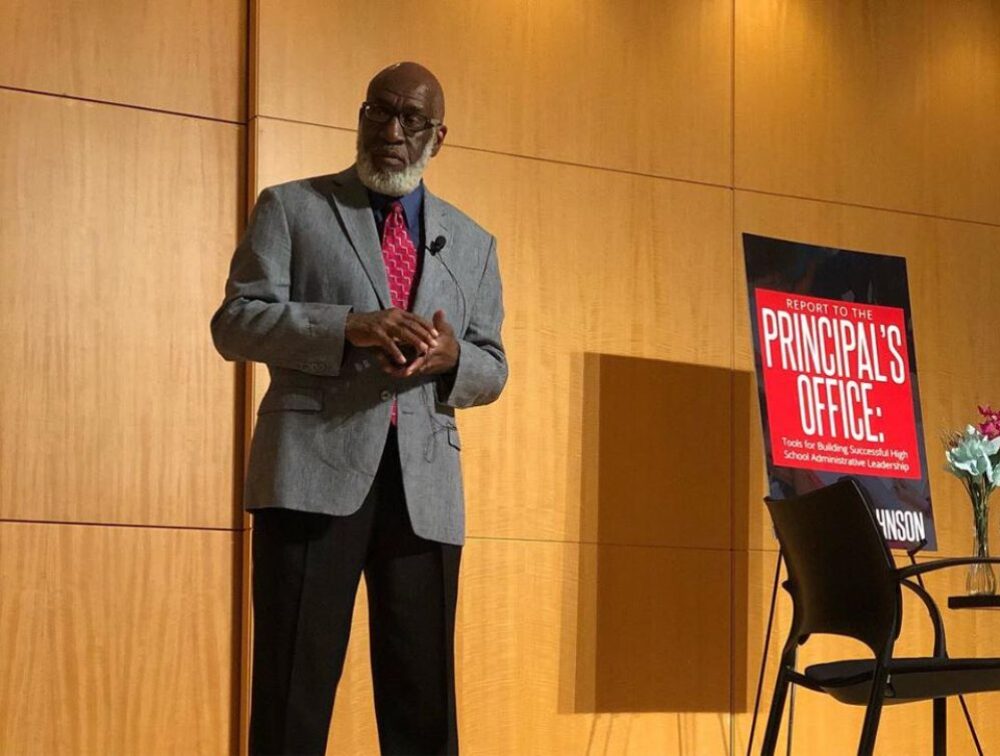
This practical knowledge and expertise they bring to the school leadership learning space are crucial because it takes an accomplished and qualified SBA to explain what the SS&A student will encounter with those many critical “hidden” and unwritten but absolutely required on-the-job description-expectations tasks I cover extensively in my two previous books: Report To The Principal’s Office: Tools for Building Successful High School Administrative Leadership (https://majmuse.net/report-to-the-principlas-office-tools-for-building-successful-administrative-leadership/ ). And, Report From The Principal’s Office: A 200-Day Inspirational and Aspirational School Leadership Journal (https://majmuse.net/report-from-the-principals-office-a-200-day-inspirational-and-aspirational-school-leadership-journal/).
Moreover, later in this book, I discuss how these not-so-soft school leadership skills and knowledge can significantly impact the SBA job search and selection process.

I admittedly have a personal bias here, and here it is, gained from interviewing a lot of AP and principal candidates, that for SBA job searching purposes, I believe those SS&A university programs that have a significant number of faculty members who have served in the job capacity of having been a classroom teacher, school-based administrator, district-level director, deputy or superintendent, will more easily be able to engage in real school world “what to do when or if…” practicum teaching and learning sessions. Further, faculty instructors who have served at the district level could be very familiar and helpful in sharing those “not-widely-known” aspects of the school system’s career ladder ascending and school leadership job promotion challenges. Additional job searching/acquiring benefits exist to having experienced school-based or district-level experienced administrators as your SS&A faculty instructors.

I talk later in the book about how the SBA job-seeking process is like an iceberg because so much of the “unofficial” (not to be confused with the unprincipled, political, or illegal) elements are known only to those who are informed by those who know the complete “inside” story. Then, there is the “helpful contacts factor,” which is always a factor in any employment sector situation and central to every aspect of the school leadership job-acquiring process. As a former superintendent serving on a university faculty, I was in touch with many presently serving superintendents and principals (many of whom I appointed) or APs I mentored, coached, and appointed who are now principals. I can honestly tell you that all letters of recommendation (LOR) are not equal. Some verbal or written referrals and recommendations carry more weight than others.

Furthermore, unofficial “off-the-record” assessments can carry the same influencing power as the official “on-the-record” assessments. Simply because your superintendent days are over, it does not mean that your “school leadership talent scouting” instincts disappear; besides, you want the principals you appointed to have the best APs, and your superintendent collogues/friends to have the best APs and principals. Moreover, you could be fortunate (as is my case as a former high school principal) to be in a position to help your former students who have arrived or are making their way up the school-building leadership career ladder. However, most importantly, for the educational well-being of children, you want to do the best preparation work for all SS&A students. Therefore, you want to get the best (of the best) SBA candidates in the best possible position to win a SBA appointment.

Full confession: As a rule, I never write a recommendation that I do not believe that I could stand 100% behind my laudatory assessment comments; yes, this, at times, has led me to say “no” to a request for a Letter of Recommendation (LOR), because I cannot comment insincerely when I know parents, staff members, and students’ lives are at stake. And based on the quality of some of the many AP or principal job candidates I have interviewed, I suspect that not everyone shares my approach of not providing an unearned and unwarranted “positive” LOR, or do we simply have different standards? In any event, the upside of those rare (because folks quickly figure out my standards) uncomfortable “no recommendation” moments is that principals, district-level staff, and superintendents know that when I endorse an SBA candidate, I am saying (because I do not know the present particulars of the school), that this person I am recommending should, all things being considered, at least be on your “finalist” list of SBA interviewees becouse of their highly-valued status (later in the book I talk about the psychological and practical importance of making it to the SBA job appointing final 3 or 4 top candidates).

In addition, as was the case in my own SS&A graduate school experience, faculty members can become a coach and mentor of your immediate SBA job search and appointment efforts; and long-term advisors and recommenders of promising SBA candidates after your AP or principal tenure begins. SS&A faculty mentoring involves tasks such as enhancing your CV and assisting with the organization of your Professional Performance Portfolio (PPP). Later in this book, I discuss how the PPP can serve as an effective self-study tool, empowering SBA candidates to strategically “guide” district-level interviewers toward their areas of expertise and strengths.

Finally, beware of the widespread flawed belief among some young educators that suggests you are living a failed career life if you are not an assistant principal by age twenty-five! How about “mastering” the instructional practitioner role, a model deanship, a highly efficacious guidance counselor, the teacher who is an excellent grade or content leader? Schools are emotionally dense, often politically tense, and psychologically complicated places; therefore, a calming, compassionate/passionate steady hand and a serious discerning maturity are needed to be an effective school-based leader. There is no reason to rush the process artificially. It is a case of earning the school leadership role by learning the many complex roles a school leader must play throughout a school day. Instead, take the time to acquire and work with a “proven” presently working or retired SBA mentor-coach, learn good and effective curriculum theory, school-building management strategies, “people skills,” budgeting, student/staff scheduling, explore school improvement/raising achievement ideas, and the best instructional coaching practices since a school’s success is primarily predicated on the quality of its learning culture environment, which is very much driven by the quality (and the quantity of that quality) of its teaching and learning activities.

Most importantly, take the time to study and get to know your(authentic)self as an educator and a seriously committed school leader of educators! You should also, for district-level interviewing purposes, take as much necessary time as you need to “sharpen” your gifts and talents, strengthen your areas of leadership skills and knowledge “weaknesses” (cue the mentor-coach), and eliminate those professional flaws, unprofessional people-to-people terrible tendencies, and behaviors (e.g., unbefitting of an AP social media postings) that question your school-building leadership “temperament” and thus weaken your ability to earn an AP appointment. Understand that the district is not professionally developing your job-search skills obligated or legally responsible for telling you why you were not selected for the AP position.
Your somehow “professionally connected” veteran SBA mentor-coach could discreetly, in some situations, find out your presentation/interviewing strengths and weaknesses. Try to gain a more complete and deeper understanding of what it means to be a professional educator, and specifically, what it means to take on the responsibility of an educational leadership position in today’s world, particularly in a Title-1 school where the children and staff desperately require maximum school leadership skills, not a mediocre and knowledge deficient performance. However, all schools surely do not need someone who rushed through their school leadership learning development stages, someone who could dangerously become a poorly performing and dream-killing ineffective assistant principal. You must be able to answer in a standards-based/rubrics-ruling way the following question honestly:

“Why would a superintendent want to appoint me as an AP?”