First, let’s go inside the thinking and practice of a highly effective principal leading a Title I school that is, academically speaking, “punching above its academic-achievement-expectations weight class.”
In any high-performing Title I school situation, it is predictable—In fact, I have never not seen it; that the school is led by a strategically smart, bravely audacious, and creatively thoughtful principal who daily knows when and how to bend, work around, and, when necessary, challenge those public-school-system rules and regulations that stand between Black, Latino, poor, or otherwise politically disenfranchised children and their ability to engage their innate gifts and talents and perform at very high academic levels.
For students attending many Title I schools, the combination of public education’s bureaucratic operating structures and its too-often adult-employment-happiness priorities can condemn them to an educational and dream-deferring death sentence.
And so, the only way to interrupt that cycle of not-learning and poor learning, and student underperformance, is for a principal to demonstrably interrupt the process itself. That means challenging, bending, or creatively working around all of those “bad” or “incomplete” rules that get in the way of students learning.
For many years, I heard that some highly successful Title 1 principals would deliberately over-program their highest-performing master instructional practitioners—with those teachers’ permission, of course—with classes larger than 34 students; for example, 39–44 students. And, of course, these principals found creative and legal ways to reward those teachers, although obviously not to the tune of $8,500. (Which, by the way, is one compelling reason every Title I school should establish a 501(c)(3) support foundation capable of raising the much-needed extra-budgetary funds that schools serving societally ignored, economically disadvantaged, and politically dismissed communities so desperately need.)
But this larger-class-size arrangement can accomplish two important school-mission reaching objectives.
1. Put More Students in Front of the School’s Best Teachers
Contrary to the beliefs of the pedagogically misinformed, it is the quality of instruction, not class size alone, that is the most important school-based factor in determining students’ ability to engage in high-quality learning.
This good-sounding political obsession with “class size” can become a convenient distraction, one that allows crucially positioned, powerful elected and appointed stakeholders to avoid confronting the far more difficult and consequential challenge: dramatically improving the quality of instruction, especially for our academically weakest and most instructionally vulnerable students.
However, by placing those additional five to ten students in the classrooms of master teachers, principals could increase the likelihood that those students would perform at higher academic-achievement levels, pass their courses, earn higher grades, become better prepared with the prerequisite knowledge and skills required for the next-level course or school year, and perform more successfully on standardized examinations. In high schools, this could also mean helping students remain on a positive credit-earning trajectory and ultimately graduate successfully.
The sad and morally troubling part of this process is that school administrators must painfully decide which students will receive access to those master teachers.
That selection is potentially a life-changing decision, for students—and one I am sure those school administrators wish they did not have to agonizingly make. Yet they still have to make it.
These principals most likely made those decisions in consultation with the teacher and other school-building leaders, using a “greatest-needs” criterion. In one case, I heard that high-potential but self-sabotaging and intentionally underperforming Black and Latino boys were deliberately placed in these oversized master-teacher classes—with amazingly positive results.
But morally and ethically, there is no legitimate way to claim that this is how we should be doing public schooling. Every child should have access to a high-quality teaching-and-learning environment.
Something I always warn prospective principals about is that, beginning with the creation of your annual school budget, you will be forced throughout your principalship tenure to make extraordinarily difficult choices. And you will quickly discover that very few of those decisions will involve choosing between a perfect good and a perfect evil. Most will involve choosing among imperfect options while trying to determine which choice will do the greatest educational good—and the least harm—to children.
2. Give New and Struggling Teachers Smaller Classes While Master Teachers Carry More Students
The way the public education system is structured, it is not unusual for Title I schools to be burdened with disproportionately high numbers of first-, second-, and third-year teachers.
When a school reaches a “tipping point” in the number of new teachers it must absorb, the problem can become self-perpetuating. Every new school year brings another large cohort of inexperienced teachers. Eventually, that number becomes too great for the school’s administrators and instructional leaders to effectively mentor, coach, supervise, and develop.
Some of those new teachers will frustratingly leave the profession.
But some first-, second-, and third-year teachers, after a Title I school has invested enormous amounts of mentoring and instructional-coaching time, and substantial professional-development resources, in helping them improve their practice, will become very good at their craft. And then, ironically, that very success can create another problem: they may either be actively recruited away or self-select to seek employment in a non-Title I district or school, where students are generally not confronting the same magnitude of social, economic, and parental resources challenges.
And so the destructive cycle continues:
New school year. Too many new teachers. Insufficient mentoring and coaching capacity. Teacher turnover. Another new school year. Another large group of new teachers.
In addition, one of the quiet “open secrets” of public education is that some school districts and schools do not experience—or tolerate—the same degree of instructional mediocrity. In part, that is because their entitled, politically connected, well-organized, well-informed, and highly active parent bodies simply will not tolerate mediocre instruction endangering their children’s futures.
In these more fortunate districts and schools, public officials are also more likely to see themselves first as public servants, obligated to act primarily in the best interests of the children and families they serve. Unfortunately, that same sense of urgency, responsiveness, and institutional accountability is not distributed equally across all communities.
How else, then, do we explain the stubborn persistence of what has been called the “school-to-prison pipeline”—a societal pathway in which some children are systematically provided with fewer high-quality educational opportunities, denied access to mind-expanding educative experiences, subjected to diminished expectations of their intellectual capabilities and potential, and ultimately excluded from the quality learning experiences that could dramatically alter the trajectory of their lives?
Meanwhile, Title I principals and superintendents, and the families they serve, do not enjoy that same level of powerful, societal, external political protection.
In such a system, one of the few instructional weapons available to a Title I principal trying to save children academically is to deliberately oversize the class of a Master Teacher while giving a new teacher—or an underperforming veteran teacher—a smaller class size.
I know someone reading this, someone in private industry, someone working in a private school, or perhaps someone who has never worked in the NYC public school system or another large urban public school district, is probably asking:
“Why doesn’t the principal just get rid of the underperforming veteran tenured teacher?”
For an NYC principal, that can mean investing an enormous amount of time, documentation, energy, and administrative work into a process they may very well lose. From the principal’s perspective, the arbitration and disciplinary system can make successfully removing an ineffective tenured teacher extraordinarily difficult.
And so, sadly, some principals conclude that it is easier to just try to “move the teacher along”—unfortunately, passing the problem on to another one of their principal colleagues somewhere else in the system. That does not solve the problem. It merely changes the school address where the problem resides.
So, What Could the $8,500 Large-Class-Size Teacher Bonus Accomplish?
The proposed $8,500 Large-Class-Size Teacher Bonus is not a perfect solution. And, to be honest, I am not optimistic that a Master Teacher/High Quality Instructional Practitioner requirement would ultimately be allowed.
But imagine if it were.
Imagine if eligibility for that $8,500 were strategically tied to demonstrated instructional excellence, so that principals could deliberately assign additional students to the highest-performing master teachers in their buildings—particularly in schools serving large numbers of academically struggling students.
And again, just in case a reader who has never worked in a public school is wondering, “Well, how will these best-of-the-best teachers be identified?”—that is not nearly as difficult as it might sound. The teachers in a school already know who the master instructional practitioners are. They know because they see their work, hear about their results, observe their instructional practices, and, perhaps most revealingly, those are the teachers in whose classrooms they would want their own children placed.
In fact, that “best-of-the-best” professional knowledge often extends beyond the walls of a single school. From a district perspective, information about “who the great teachers are in a school” travels informally between schools. Teachers will sometimes request the “professional courtesy” of having their own children placed in the classrooms of highly proficient teachers working in schools where they themselves do not work.
That tells us something important: the identification of instructional excellence is not some mysterious, unknowable process. The people working closest to teaching and learning generally know where and when exceptional teaching is taking place.
We proved this in Community School District 29 Queens (CSD 29Q) in the early 2000s, when we developed a professional-development activity titled The Best Instructional Practices Fair. Teacher-presenters were selected by their individual school-based teams, consisting of school administrators and teachers. And I do not recall hearing of a single school team experiencing any serious disagreement over who their school’s best instructional practitioners were—or who should represent their school at the Fair.
However, although we incorporated an awards system into the Fair, this proposed $8,500 incentive presents a very different situation. When substantial amounts of money are attached to being designated a “Master Instructional Practitioner,” I would not want to create unnecessary and unfriendly competition, resentment, or conflict among teachers by asking them to select one another for the award.
Therefore, I would place the selection responsibility with the school administrators, who already have access to multiple measures of teacher instructional performance. But those selections should be subject to strict superintendent and district-level supervisory oversight, with clearly established data-based selection criteria and safeguards designed to prevent favoritism, cronyism, or any other abuse of the process.
The goal should never be to create a popularity contest among teachers. The goal is to identify, as objectively and professionally as possible, those master instructional practitioners who have demonstrated the capacity to successfully teach more students—and then strategically place more students in front of them.
Now the $8,500 Large-Class-Size Teacher Bonus policy would become more than compensation for having additional students in a classroom. It could become an instructional intervention strategy.
The bonus could provide principals with a meaningful tool to place more academically vulnerable students in front of the teachers most capable of accelerating their learning, while simultaneously creating smaller instructional settings in which novice and developing teachers could improve their practice.
Would such a policy “over-help” schools that already enjoy significant entitlement advantages?
Probably.
But that is almost always a danger with every system-wide initiative. Schools with greater organizational capacity, politically influential parent communities, stronger staffing stability, are often better positioned to exploit any new resource or policy opportunity.
That reality should not stop us from pursuing a potentially useful idea. Rather, it places an even greater responsibility on serious and sincere Title I principals and superintendents to make this—or any other initiative—work in the best educational interests of their children.
Because in an imperfect public education system, the best principals will do this every day:
They take imperfect policies, imperfect rules, imperfect resources, and imperfect circumstances—and creatively transform them into the best possible educational opportunities for children.
And if NYC is going to spend $8,500 per teacher for oversized classes anyway, then we should at least ask the most important instructional quality question:
Why not deliberately place more struggling students in front of the teachers who have demonstrated that they can teach them exceptionally well?
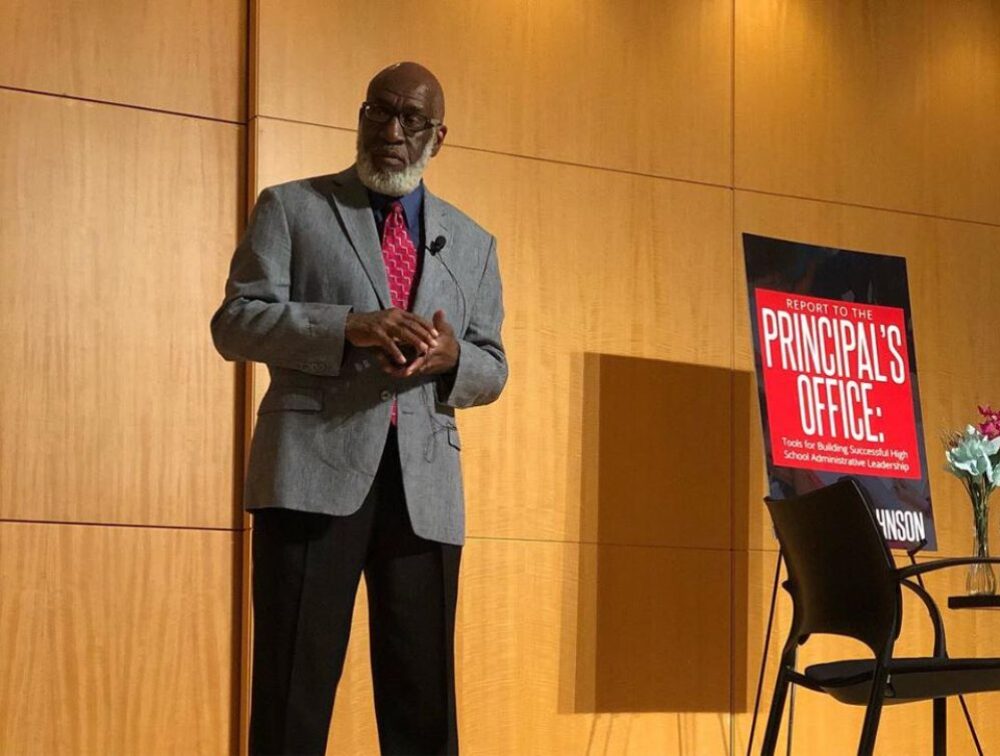
Michael A. Johnson is a veteran public school educator and former New York City public school teacher, principal, and school district superintendent. He has also served as an adjunct college professor of education, and has spent decades mentoring teachers, assistant principals, principals, aspiring school-building and district-level leaders. He is the author of Report to the Principal’s Office and Report from the Principal’s Office and writes the weekly blog, Michael A. Johnson’s Education Notes: A Site for Educaring Leaders and Learners, where he examines public education policies, school-building leadership issues, educational equity, and the moral responsibility of educators to act courageously in the best interests of children.