“…In writing this address, I have been told that this is the occasion to reset expectations, that I should use this opportunity to encourage the people of New York to ask for little and expect even less. I will do no such thing. The only expectation I seek to reset is that of small expectations. Beginning today, we will govern expansively and audaciously. We may not always succeed. But never will we be accused of lacking the courage to try.…A moment like this comes rarely. Seldom do we hold such an opportunity to transform and reinvent” — Excerpt from Mayor Zohran Mamdani’s inauguration speech.
Like many who listened to the newly sworn-in NYC mayor’s inaugural address, I felt both inspired and hopeful about what governing expansively and audaciously could mean for New York City’s children, particularly those who, mayor after mayor, still find themselves, to borrow from my former Columbia University Revson Fellowship mentor Eli Ginzberg, receiving the “short end” of the learning-quality stick.
As I have written previously (Winning NYC’s Affordability Fight Is Impossible Without Public School Accountability), closing New York City’s affordability gap is inseparable from closing its persistent teaching and learning quality gaps. Demographic reality makes clear that large-scale student reassignment schemes, based on race, often offered as morally deficient, and politically placating shortcuts, are neither mathematically feasible nor educationally responsible. There simply are not enough white students to redistribute, and such efforts would create a busing and public-transportation nightmare that would dismantle many great after-school programs, academic teams, athletic sports, and enrichment opportunities that currently sustain learning communities across more than 1,500 NYC schools.
From my eleven years as a Title I high-school principal, one conclusion is unavoidable: the fastest and most durable way to break generational cycles of poverty and despair, and to create genuine generational quality-of-life leaps opportunities, is for public education to do its most fundamental job well. That job is not symbolic integration or rhetorical reassurance, but the creation of learning environments where every child’s intellectual potential is deliberately surfaced, developed, and honored.
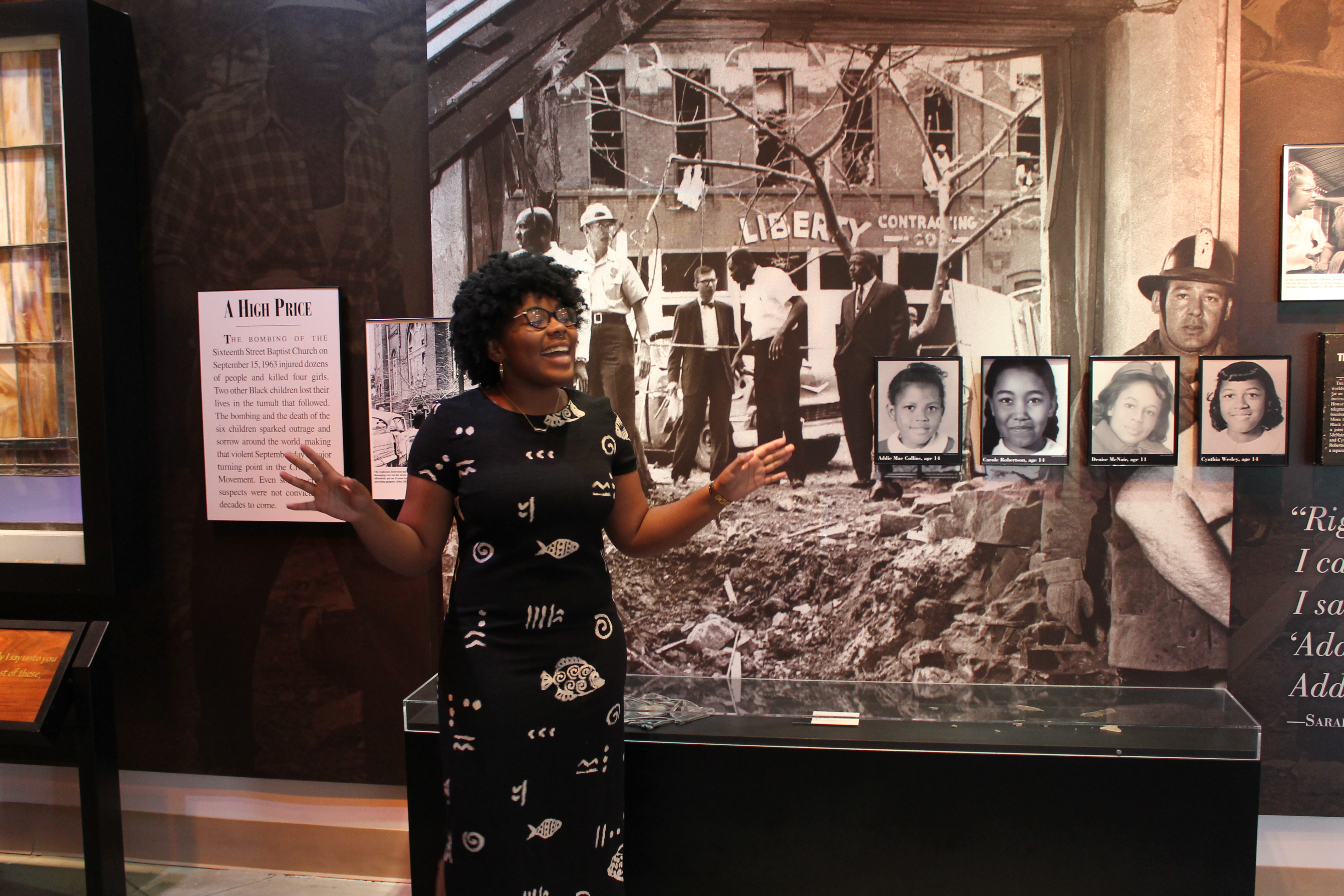
Closing the quality learning-opportunity gap is the unfinished, and most fiercely resisted, descendant of the 1954 Brown v. Board of Education decision. Brown did not merely challenge where Black children sat; it also challenged whether the nation would finally accept responsibility for how well Black children were being educated. It is true that separate was never intended to be equal, and that one of the tragic byproducts of so-called “integration” was the elimination of vast numbers of highly competent and highly efficacious Black teachers and school administrators.
What followed was not the end of educational segregation, but its reinvention. Society devised new, evilly ingenious ways to separate Black students from quality education, constructing parallel systems in the same districts and school buildings, that preserved inequality, low expectations, while cloaking it in the language of progressive education.
These systems remain firmly in place, even in the most liberal and bluest of states, including New York. The moment therefore demands a modern, updated Brown movement, one that confronts and dismantles this contemporary form of quality-learning segregation. Any substitution of that real instructional transformation with rhetorical flourishes or “magical” (often costly) initiatives merely extends the present status quo under a different name.
This leaves NYC elected officials and professional educators with a clarifying question they can no longer avoid: if we truly believe there is nothing wrong with the learning capacity of Black and Latino children, yet their academic outcomes consistently fall far short of their potential, then what are we doing wrong in how we organize, resource, conduct and lead schools, and why do we citizens tolerate this massive loss of societal intellectual wealth?
And if, instead, we quietly believe that race, poverty, immigration status, neighborhood conditions, parental education levels, or English-language fluency permanently limit a child’s educability, then professional honesty demands disclaimers. Parents and taxpayers deserve to be told outright that if your child falls into the “wrong” ZIP code or demographic category, the system cannot deliver on its promise to properly educate them.
After all, no rational consumer would purchase a kitchen appliance if the manufacturer warned in advance that there was a 70 percent chance it would fail the moment it was plugged in. Yet we, as citizens, have grown disturbingly numb to the unacceptable terrible outcomes of one of our most expensive, and consequential, civic undertakings: public education.
We already know multiple ways how to effectively educate all children. When we fail to do so, that failure is not pedagogical—it is political.
A physically easier way to avoid a massive school integration busing nightmare, at far less educational and financial cost, though unquestionably a more politically dangerous path; would be to mandate and declare the NYCDOE a Children-First Learning and Adult Accountability Priority Zone. Having served for many years as both a principal and a superintendent in New York City, I understand the extraordinary courage such a declaration would require. I know the system’s ugly undersides. I know the deeply entrenched political forces that have created, and continue to maintain, our present learning-quality apartheid system.
Which is why, if you encounter a principal leading a consistently high-performing Title I school, you should probably buy them a gift card, or a lottery ticket. For, their calm exterior often conceals the daily accumulation of emotional scars earned by serving as a constant rule-breaking and rule-bending counterforce within a system that routinely undermines its own stated mission: educating all children.
These leaders succeed not because the system supports them, but because they are willing to absorb personal, professional, and moral risk on behalf of children.
So when I return to the mayor’s speech and hear the word expansively used in connection with public education, I hear more than rhetorical flourish. I hear the possibility of a governing posture defined by spacious capacity, by a purposeful, strategic inclusion of all children. I hear a commitment that no cohort of students will be excluded from the city’s rich ecosystem of informal learning institutions, cultural resources, and enrichment opportunities. I hear an expansiveness of heart rooted in a moral responsibility to future generations, not merely political viability in the present.
I also share a biographical bond with both the new mayor and his chancellor. As a first-generation Caribbean American, I—like them—am living testimony to the power of education to make the highest promise of this nation real. What drew me, as a young college student in the 1970s, toward a life in professional education was an internal, largely unarticulated conviction that transcends policy and politics: the idea that every child enters the world with inherent worth and untapped potential, and that society bears a sacred obligation to cultivate those gifts rather than squander them.
Public education, at its best, is not merely a workforce pipeline, or, tragically for too many, an incarceration pipeline, it is a moral undertaking, a collective act of faith in human possibility, and a covenant with generations yet to come.
But if expansively signals intentional, ethically mandated inclusion; audaciously signals courage, real courage, untainted by a stage magician’s illusionary distractions.
Audacity is what it looks like when civic, religious, political, and educational leaders fully understand the cost of acting and doing what’s right and then act anyway. It is Harriet Tubman courage. It is Dietrich Bonhoeffer courage. It is Nelson Mandela courage. It is the recognition that once you cross the rubicon of righteous responsibility, there is no turning back, no compromise deal to be struck, no rhetorical cover to be offered for systems that continue to produce educational suffering while claiming it’s reform.
We already know how to effectively educate all children; there is ample evidence to tell us exactly what it would take to achieve that objective. When we nevertheless choose not to educate large numbers of children, that failure is political and ethical, not experientially educational. For example, we know we must address the negative “tipping-point” concentration of inexperienced teachers, the related chronic teacher-turnover problem in high-poverty (Title I) schools, and the blatant disconnection of our most highly experienced, mastery-level instructional practitioners from our most academically struggling students.
To govern expansively and audaciously in NYC public schools would mean declaring, without hesitation, without ineffective initiatives, and without recycling public education’s familiar “greatest hits” of verbal vacillations; that children’s learning is the city’s first priority, even when doing so is politically dangerous, professionally career-threatening, and morally challenging.
It would also require the NYCDOE to confront two decisions it has long avoided. First, whether the purpose of public education, like too much of our criminal-justice system, has been reduced to employment acquirement and containment compliance, rather than human healing, intellectual development, and democratic evolution. Second, whether the system is finally willing to acknowledge that ground zero of any serious, system-wide quality-learning improvement effort is the individual school building itself. That acknowledgment would demand granting principals and their school-based leadership teams, real staffing authority, adequate and stable resources, and sustained professional development so they can become highly valued and highly effective school-building leaders, and then holding them to uncompromising, no-excuses, compelled to pursue high standards for the academic performance success of all students under their charge.
Expansive governance means standing with principals who succeed only by bending and breaking rules in a system that routinely undermines its own stated mission, extending the full reach of the city’s cultural and learning institutions to every child, and rejecting cowardly thinking disguised as realism. Audacious leadership demands courage without illusion, the kind that understands there is no rhetorical compromise capable of justifying the continued educational suffering produced by present conditions.
History is unambiguous: those who acted audaciously knew there was no turning back, no big pay-day for children harming behaviors, no political deal to be struck, no softening narrative to be offered for injustice. We will soon learn whether these words, expansive and audacious, were merely elegant sounds delivered in a speech, or a governing promise finally kept for the most educationally disenfranchised and dismissed children of New York City.

Michael A. Johnson is a former NYC public school teacher, award-winning principal, and school district superintendent. A past adjunct professor of science education and the author of two books on school-building leadership, he writes frequently about educational equity, policy, authentic school improvement, and the moral obligations of those entrusted with the lives of children.